Sometimes I make bakuchiol serum, and sometimes I rub olive oil on my face while making dinner and check “evening skincare” off my to-do list. Now that I’m firmly in midlife, though, there’s one more thing I seem to be doing a lot more of:
Researching all the compounds that keep showing up in my social media feed.
Lately, it’s skin peptides.
Because while yes, I’m grateful for every trip around the sun, I also care about how I feel and function along the way. And when it comes to my skin, I’m definitely interested in supporting the processes that help skin stay strong, resilient, and well-hydrated over time.
If you’ve been seeing peptides everywhere lately, you’re definitely not the only one. They’re showing up in serums, moisturizers, eye creams, and all kinds of products promising smoother, firmer, healthier-looking skin. They’re also included in scalp formulas aimed at concerns like thinning, increased shedding, and reduced fullness.
Here’s the catch, though: “peptides” is a category, not an ingredient. Saying a skincare product contains peptides is a little like saying a supplement contains vitamins. Which ones? How much? And what, exactly, are they supposed to do?
Different peptides can work in very different ways, and some have a lot more research behind them than others. So before giving up valuable space on my bathroom counter – which has become my “lab” for testing everything from plastic-free toothbrushes to red light devices – I decided to find out which ones are most worth considering.
In this guide, we’ll walk through what skin peptides are, how they’re thought to work, what the research says so far, and what to look for in a formulation.
So, What Are Peptides?
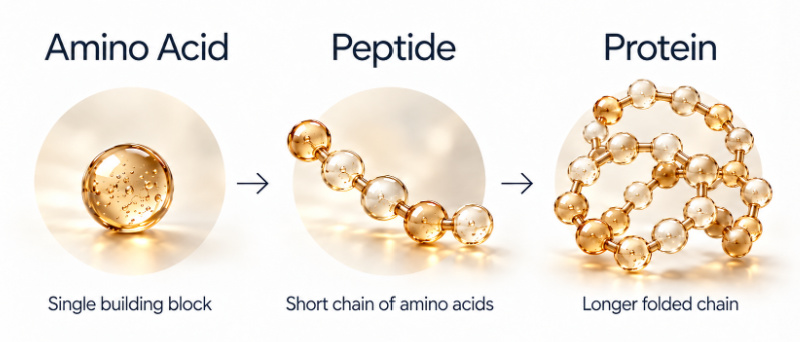
Peptides are short chains of amino acids, which are the building blocks our bodies use to make proteins.
That includes proteins like collagen and elastin, which help give skin its structure, firmness, and ability to stretch and bounce back.
But peptides aren’t just tiny pieces of protein. Some also carry instructions. Peptide sequences can act as biological signals, influencing processes involved in things like repair, inflammation, and tissue remodeling. (1)
When used topically, peptides can mimic or influence some of those signals and processes.
What Do Peptides Actually Do For Your Skin?
One explanation you’ll sometimes hear is that topical peptides tell the skin to “act younger.”
That’s a shorthand way of saying that certain peptides are designed to nudge skin cells toward processes that tend to slow with age, including collagen production, repair, barrier maintenance, and the processes that help skin retain moisture. (1)
They don’t all work the same way, though. Different peptide sequences can carry very different messages.
One peptide may act as a signal involved in collagen production. Another may carry copper needed for tissue repair, and another may help slow the breakdown of structural proteins.
Depending on the peptide, those effects can translate to skin that looks a little more lifted and “bouncy.” Peptides that support barrier function may also help skin hold onto moisture better, which can mean better hydration and less dryness, roughness, or crepey texture.
So the benefits depend on which peptide is actually in the formula.
4 Types of Skin Peptides You’ll Hear About Most
There are a lot of ways to classify peptides, and some overlap between categories, but these are the four you’ll see mentioned most often in skincare. (2)
1. Signal Peptides
Signal peptides act a little like biological messages, influencing cells involved in making structural components of skin.
Some of the most well-known examples are used with the goal of supporting collagen, elastin, and other parts of the extracellular matrix. (3) For skin, that can mean skin that looks firmer and smoother, with better elasticity, softer-looking fine lines, and more “bounce.”
You’ll sometimes see ingredients such as palmitoyl tripeptide-1, palmitoyl tetrapeptide-7, or trademarked peptide complexes like Matrixyl in this category.
One newer example is OS-01, the peptide developed by OneSkin. The company describes it as being designed “to reverse skin’s visible biological age,” meaning it counters some of the visible effects associated with senescent, or dysfunctional aging, cells.
It has been studied for effects on collagen, hyaluronic acid, skin barrier function, and other markers associated with healthier, younger-functioning skin.
OS-01 is the peptide I decided to start with, and I’ll explain why in a minute.
2. Carrier Peptides
Instead of primarily delivering a “make more of this” type of signal, carrier peptides bind to and transport minerals involved in biological processes.
The most popular example is GHK-Cu, also known as copper tripeptide-1.
Copper is needed for several enzymes involved in tissue repair and collagen formation, and GHK-Cu has been studied for its potential role in wound healing, remodeling, inflammation, and other aspects of skin repair. (4)
3. Enzyme-Inhibiting Peptides
Instead of telling skin to make more structural proteins, some peptides may help slow processes that break those proteins down.
Certain enzymes naturally participate in the breakdown and remodeling of collagen and other components of skin. That’s a healthy and necessary process – until the balance starts shifting toward breaking down more than we rebuild.
That can happen over time as oxidative stress and other age-related changes increase the activity of matrix metalloproteinases (MMPs), a family of enzymes that break down collagen and other parts of the skin’s structural matrix. (5) At the same time, the natural inhibitors that usually help keep those enzymes in check don’t necessarily increase to match them.
Estrogen decline may play a role here too, which is especially worth knowing in midlife. (6) Lower estrogen levels after menopause have been associated with increased MMP activity along with losses in collagen, elastin, and fibroblast function.
So the goal of enzyme-inhibiting peptides isn’t to shut down normal remodeling. It’s to help restore some balance when breakdown starts outpacing repair.
That’s why some peptides are valued for helping skin build, while others may help it hold onto what it already has.
4. Neurotransmitter-Inhibiting Peptides
This category is sometimes marketed as an alternative to Botox injections. The main peptide I came across – acetyl hexapeptide-8 (Argireline) – is thought to work by mildly relaxing facial tension.
Argireline is not a neurotoxin and does not disable the nerve-muscle connection the way Botox does. It’s included in formulas to gradually and mildly dampen the signaling involved in muscle contractions that contribute to expression lines. The effect is temporary and fades when use is discontinued.
Now, my personal goal is to always support function, not work against it, so I had a lot of questions as I researched this category.
From a broader wellness perspective, not all external “calm down” signals are a problem. We take steps to inhibit inflammation when it becomes excessive. We use methods like oil cleansing to reduce excess sebum production. We massage muscles or apply magnesium oil to ease excess tension.
Facial muscles can develop increased resting tone or chronic tension as we age – some may even become physically shorter and tighter in ways that reshape our surface skin architecture. (7) These peptides might help ease some tension in those cases.
I’m still researching this category before I form a strong opinion, but I’m including it here so that you know what you’re looking at when you read ingredient labels.
✅ Where I’m Starting
Right now, there are hundreds of peptides used in skincare formulations. These are relatively large molecules, so even the most research-backed ones can’t do much if they’re not formulated in a way that helps them cross the skin barrier. (8)
They can also be sensitive to things like pH, light, heat, and interactions with other ingredients, which means keeping them stable and active in a finished product takes quite a bit of work.
You know I love a good DIY beauty recipe, but that’s a lot to sort through, so I decided to look for a formula where the stability, compatibility, and delivery challenges had already been worked out.
Why OS-01 Got My Attention
When I was eight, I simmered rose petals in water to try to make rose water. My method came surprisingly close to what actually works, but it wasn’t quite there . . . and that knowledge gap made all the difference.
When it comes to skin peptides, I think a lot of companies are still in their “simmering rose petals” era – and while I hope they continue to improve and refine their formulations, I wanted something more evidence-based.
So I looked for a company that had already figured out how to get a particular peptide where it needs to go, keep it stable, and test whether the finished product actually does what it’s supposed to do.
OneSkin – which was founded by four PhD scientists with backgrounds in things like skin regeneration and stem cell biology – screened and tested over 900 peptide sequences before identifying a lead candidate, the OS-01 peptide (Decapeptide-52).
That’s a lot of R&D.
It makes sense, though, because they weren’t just looking for a peptide that could help with one surface-level change. Instead, they were looking for one that could influence some of the cellular changes that make skin function differently as it ages.
Their focus was cellular senescence – which is when aging or damaged cells stop functioning normally but remain active. Sometimes called “zombie cells,” they can release inflammatory signals that can affect nearby cells and encourage more of them to become senescent too. Over time, that buildup can contribute to slower repair, weaker barrier function, collagen breakdown, and other changes we see in aging skin.
OS-01 was selected because it showed strong potential for interrupting part of that cycle. In subsequent lab testing, the peptide reduced senescent cells in human skin samples and dialed down some of the inflammatory signaling associated with senescence, which can help limit the effect those cells have on their neighbors. (9)
That’s what OneSkin means when it says OS-01 is designed to help reverse the visible effects of cellular senescence, helping skin look, feel, and act younger and healthier over time.
They’ve also applied the same cellular-senescence approach to the scalp, where aging follicle cells may contribute to thinning, increased shedding, and loss of density. Their hair serum is designed to support a healthier hair cycle, with the goal of reducing visible shedding and helping hair look thicker and fuller over time.
📈 Real Skin Results
What convinced me to actually try OneSkin, though, wasn’t the laboratory claim that OS-01 could influence biological age. It was what happened when they tested whether those results translated into measurable changes in real skin.
In one double-blind study, participants used OneSkin’s moisturizer on one side of their face and the same formula without OS-01 on the other. After six weeks, the OS-01 side showed a nearly four times greater improvement in skin barrier function – meaning it did a better job holding onto moisture – and skin texture was significantly better after 12 weeks. (10)
That study design matters to me because it helps answer a question that’s surprisingly difficult with skincare: Is the hero ingredient actually doing anything, or is this just a really nice moisturizer?
The answer, at least in this small study, appears to be that OS-01 added a measurable benefit.
Curious about OS-01? → See OneSkin
What I’m Testing Now
I’m not looking for a cream to do the job of sleep, nourishing food, movement, healthy hormones, or sensible sun habits. But with those foundations in place, I’m always interested in non-toxic topical options that can help my skin function better, too.
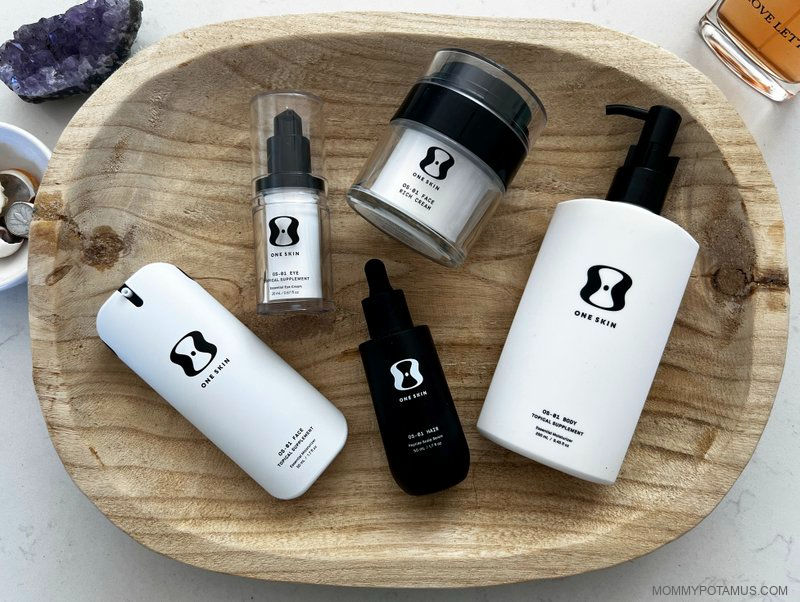
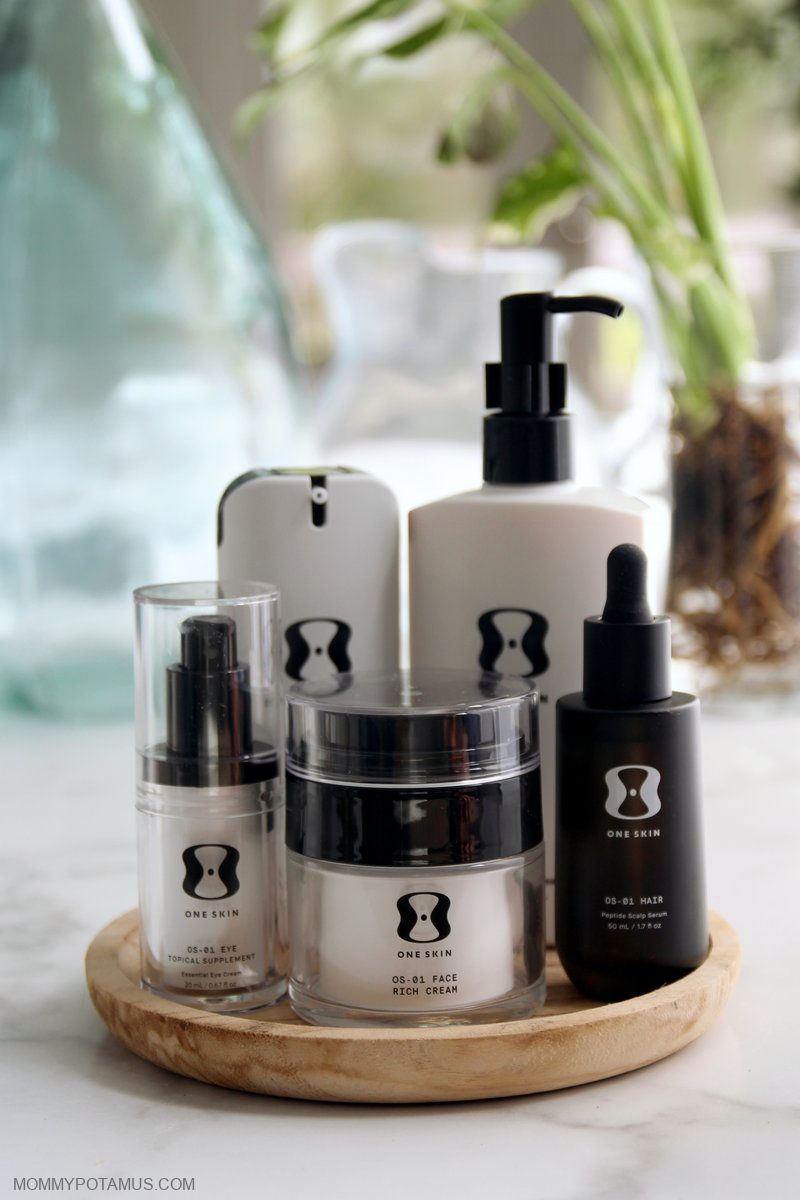
OneSkin recently sent me several products to try, including their new OS-01 Face Rich Cream, which launched this week.
I’ve only recently started using them, so this is not my OneSkin review.
Over the next few months, I’m adding their face cream, face moisturizer, eye cream, and body moisturizer to my routine while paying close attention to:
- hydration and how well my skin holds onto moisture
- texture and “bounce”
- fine lines and firmness
- and overall skin resilience
I’m not clearing everything else off my bathroom counter, though.
OneSkin says its products can be incorporated into an existing skincare routine, so for now I’m treating them as additions that still make room for a few core products I use and love. Several of you have also asked about peptides for hair thickness, so I’ll also be testing their scalp serum.
It’s not unusual for me to test products for 9+ months, 2 years, or even longer before mentioning a brand, so you might be wondering why I am now.
There are two reasons.
First, I’ve received several messages about hair thickness and specific skin concerns that peptide products are potentially a good fit for, and I wanted to create a resource for those of you who are already trying to figure out what these ingredients actually do.
Second, after spending so much time looking at the research, OS-01 is the peptide I personally decided to start with.
Lately I’ve been leaning a little too heavily on the idea that olive oil applied while making dinner counts as an evening skincare routine, but now that I’ve told all of you I’m testing this, I’m actually going to have to use it consistently.
(It really is good olive oil, though.)
If you’ve been curious about peptides and want to try OS-01 with me, you can explore OneSkin here. I’m starting my test now, and I’ll keep adding what I learn – and what I notice – as I go.
✋ Before You Go, Grab This Free Midlife Guide
If you’ve ever found yourself thinking, “Why doesn’t my body respond the way it used to?” . . . this guide was written for you.
Midlife can change the rules for everything from sleep and energy to workouts, recovery, body composition, and more. Knowing what’s changing can help you let go of strategies that no longer fit – and start focusing on what supports your body now.
Inside, I’ll walk you through 10 things I wish I’d known sooner, so you can make more sense of what you’re experiencing and get clearer about where to go from here.
Enter your email below and I’ll send it right over. You’ll also receive my weekly newsletter with practical wellness tips, recipes, and new guides like this one.
Sources
- Pintea, A., Manea, A., Pintea, C., Vlad, R.-A., Bîrsan, M., Antonoaea, P., Rédai, E. M., & Ciurba, A. (2025). Peptides: Emerging candidates for the prevention and treatment of skin senescence: A review. Biomolecules, 15(1), 88.
- Gorouhi, F., & Maibach, H. I. (2009). Role of topical peptides in preventing or treating aged skin. International Journal of Cosmetic Science, 31(5), 327–345.
- Nukaly, H. Y., Halawani, I. R., Irtaza, H. M., Alturkistani, T., Serafi, M. R., Alhawsawi, W., et al. (2026). Oral and topical peptides for skin aging: Systematic review and meta-analysis of randomized controlled trials. Frontiers in Medicine, 13.
- Mortazavi, S. M., Mohammadi Vadoud, S. A., & Moghimi, H. R. (2025). Topically applied GHK as an anti-wrinkle peptide: Advantages, problems and prospective. BioImpacts, 15, 30071.
- Shin, J.-W., Kwon, S.-H., Choi, J.-Y., Na, J.-I., Huh, C.-H., Choi, H.-R., & Park, K.-C. (2019). Molecular mechanisms of dermal aging and antiaging approaches. International Journal of Molecular Sciences, 20(9), 2126.
- Lephart, E. D., & Naftolin, F. (2021). Menopause and the skin: Old favorites and new innovations in cosmeceuticals for estrogen-deficient skin. Dermatology and Therapy, 11(1), 53–69.
- Yi, K.-H., & Wan, J. (2025). The aging process of facial muscles. Journal of Cosmetic Dermatology, 24(12), e70590.
- Zdrada-Nowak, J., Surgiel-Gemza, A., & Szatkowska, M. (2025). Acetyl Hexapeptide-8 in cosmeceuticals—A review of skin permeability and efficacy. International Journal of Molecular Sciences, 26(12), 5722.
- Zonari, A., Brace, L. E., Al-Katib, K., Porto, W. F., Foyt, D., Guiang, M., Ochoa Cruz, E. A., Marshall, B., Gentz, M., Rapozo Guimarães, G., Franco, O. L., Oliveira, C. R., Boroni, M., & Carvalho, J. L. (2023). Senotherapeutic peptide treatment reduces biological age and senescence burden in human skin models. npj Aging, 9, Article 10.
- Zonari, A., Brace, L. E., Harder, N. H. O., Harker, C., Oliveira, C. R., Boroni, M., & Carvalho, J. L. (2024). Double-blind, vehicle-controlled clinical investigation of peptide OS-01 for skin rejuvenation. Journal of Cosmetic Dermatology, 23(6), 2135–2144.