Retinol gets glowing reviews for its ability to smooth fine lines, brighten skin and boost collagen, but it’s also known for being harsh, especially on sensitive skin. If you’ve held off because of the potential side effects (think dryness, flaking, and sun sensitivity), I’ve got good news:
There’s a gentle, plant-based ingredient that’s often called a natural alternative to retinol, and for good reason. Bakuchiol offers similar skin-renewing benefits – like softening the appearance of fine lines, supporting collagen production, and evening out skin tone – without irritating your skin barrier.
I’ll share my simple formula for making your own bakuchiol serum below, but first, let’s talk about why this retinol-like compound deserves a spot in your skincare routine.
🌸 What Is Bakuchiol?
Bakuchiol (pronounced buh-koo-chee-all) is the active compound found in babchi oil, which is extracted from the seeds and leaves of the babchi plant (Psoralea corylifolia).
Used for centuries in Ayurvedic and Traditional Chinese Medicine, babchi was traditionally ground into a paste and applied to the skin to help with everything from rashes and blemishes to inflammation and discoloration. That rich tradition of use is part of what led researchers to take a closer look at bakuchiol as a natural alternative to retinol and other retinoids.
This bioactive plant-derived compound works with your skin’s natural regenerative processes to create change over time. While it’s not a vitamin A derivative like retinol, it behaves similarly in the skin – all without the usual side effects like redness, peeling, or sun sensitivity.
Research shows that it helps stimulate collagen and elastin production, which supports skin elasticity and firmness. It’s also packed with antioxidants that help neutralize free radicals , which are unstable molecules that contribute to premature aging.
Also, thanks to its anti-inflammatory properties, bakuchiol can be especially helpful for calming sensitive or reactive skin.
✨ Benefits of Bakuchiol in Skincare
✓ Suitable for all skin types. Whether your skin is dry, sensitive, acne-prone, or mature, bakuchiol supports radiance and resilience.
✓ Softens the appearance of fine lines + wrinkles. Clinical research shows that 0.5% bakuchiol can improve skin elasticity and firmness with results comparable to 0.5% retinol – without the irritation. (1)
✓ Evens out skin tone + reduces dark spots. The same study found that bakuchiol helped reduce hyperpigmentation and improve skin tone over a 12-week period. (1)
✓ Supports collagen production. Like retinol, bakuchiol stimulates collagen synthesis, helping skin stay supple and supported over time. (2)
✓ Antioxidant support. Bakuchiol helps neutralize free radicals – unstable molecules that can damage skin cells and accelerate aging.
✓ Doesn’t increase sun sensitivity. Unlike retinoids, bakuchiol won’t make your skin more prone to burning. That makes it safe to use morning and night – even in the summer.
✓ Hydrating + barrier-friendly. When blended with oils like jojoba or rosehip seed, bakuchiol helps lock in moisture and protect the skin barrier.
✓ May soothe breakouts. Research shows that bakuchiol can help reduce blemishes, inflammation, and post‑acne discoloration—making it a soothing, gentle option for acne‑prone skin. (3)
✓ Gentle enough for pregnancy. While you should always check with your healthcare provider, bakuchiol is generally considered a safer alternative to retinol for those who are pregnant or breastfeeding.
Bakuchi Oil vs. Bakuchiol Extract: What’s the Difference?
Babchi oil (also called bakuchi oil) is a carrier oil that naturally contains about 1.5-12% bakuchiol, the compound known for its skin-renewing benefits. Since most skincare formulations aim for 0.5–2% bakuchiol, it might seem like cold-pressed babchi oil just needs a little dilution to be ready for use.
But here’s where it becomes important to read the fine print.
Cold-pressed babchi oil contains other naturally occurring compounds—like furocoumarins, including psoralen—that can make skin more sensitive to UV light. In some cases, this can lead to a reaction called phytophotodermatitis, which mimics sunburn, especially if the skin is exposed to sunlight after application. (4)
Bakuchiol extract offers a skin-safe alternative. It’s typically produced through CO₂ extraction, a selective process that isolates the beneficial bakuchiol while removing compounds associated with phototoxicity. That means you get the best of what babchi has to offer – without the UV sensitivity concerns.
Plus, because bakuchiol extract is purified and standardized, you can precisely control the amount in your final formula. That matters, because:
- A little goes a long way. Most formulations use 0.5–1% bakuchiol – enough to be effective, but still gentle on the skin.
- At the same time, you want to make sure your serum actually contains enough to make a difference—which can be tricky with unrefined babchi oil, since the natural bakuchiol content can vary from batch to batch.
DIY Bakuchiol Serum Recipe
Equipment
- Digital scale that measures in 0.1 gram increments (I use this one)
- Clean glass measuring cup
- Clean metal spoon or butter knife for mixing
- One 4 ounce dropper bottle, Two 2 oz dropper bottles, Or four 15 ml dropper bottles
- Small funnel (optional, but helpful for pouring)
Ingredients
- 30 grams rosehip seed oil (approximately 1 ounce)
- 19 grams jojoba oil
- 0.25-0.5 grams bakuchiol extract (99%) (This 10 ml bottle will make at least 2-4 batches depending on the concentration you use)
- 0.5 grams vitamin E mixed tocopherols
- 1–5 drops of lavender or chamomile essential oil (optional – 5 drops is a 0.5% dilution)
Instructions
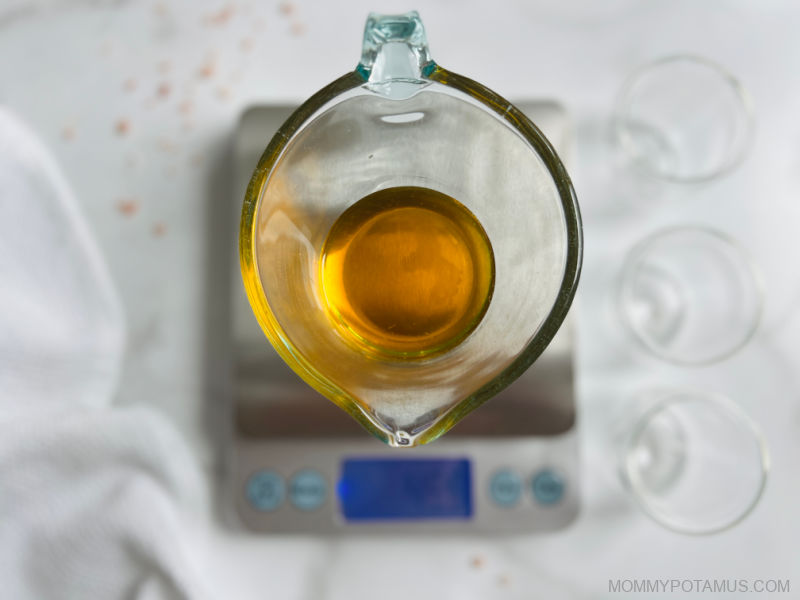
- Zero (tare) your scale with the empty measuring cup on it.
- One by one, weigh each ingredient, pressing “tare” between each addition so your scale resets to zero before the next.
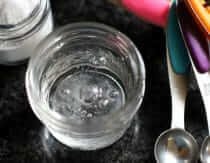
- Once all ingredients are in the jar, stir thoroughly with a clean spoon or butter knife until the mixture is well blended and uniform in color and consistency.
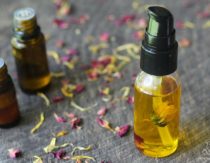
- Using a small funnel if needed, transfer your serum into the dropper bottle.
- Label your bottle and store it in a cool, dark place.
✨ How to Use Your Bakuchiol Serum
Before you dive in, do a quick patch test to make sure your skin loves it:
Apply a small amount to your inner wrist or just behind your ear. Wait 24 hours and check for any redness, itching, or irritation.
Once you’re in the clear, it’s time to treat your skin to something special.
After cleansing, apply 3–5 drops of serum to slightly damp skin. Warm it between your palms and press gently into your face, allowing the nourishing oils to absorb fully.
This serum works beautifully morning or night. Feel free to layer it over a hyaluronic acid serum for extra hydration. Just avoid combining bakuchiol with strong vitamin C, retinoids, or exfoliating acids unless it’s contained in a product that was professionally formulated alongside those ingredients.
🧴 Tip for sensitive skin:
Start slow. Apply every other day to begin, and increase as your skin adjusts. If you notice any irritation, dial it back or try a lower concentration.
Want The Glow Without The Prep?
If you’d rather skip the sourcing and mixing, two of my favorite non-toxic skincare companies offer options that are thoughtfully formulated with bakuchiol and other skin-loving botanicals.
Toups & Co. Reparative Serum – This blend of bakuchiol, squalane, and prickly pear absorbs quickly and leaves skin feeling soft, nourished, and balanced. I was gifted a bottle last year and it’s truly good stuff.
Primally Pure Plumping Serum – This blend of bakuchiol and antioxidant-rich oils is deeply hydrating and gives the skin a healthy, radiant glow. I’ve also tested this one and it’s equally good. Five stars for both.
Primally Pure Plumping Cream – I haven’t personally tested this one, but it’s formulated for deep hydration and includes bakuchiol. I’ve been impressed by everything I’ve tried from Primally Pure, so I’d expect this to be luxurious and effective.
Storage Bottle Recommendations
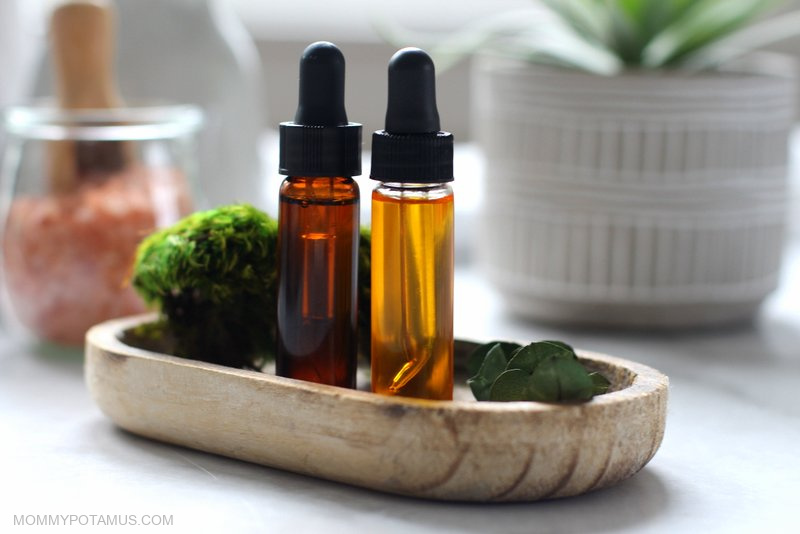
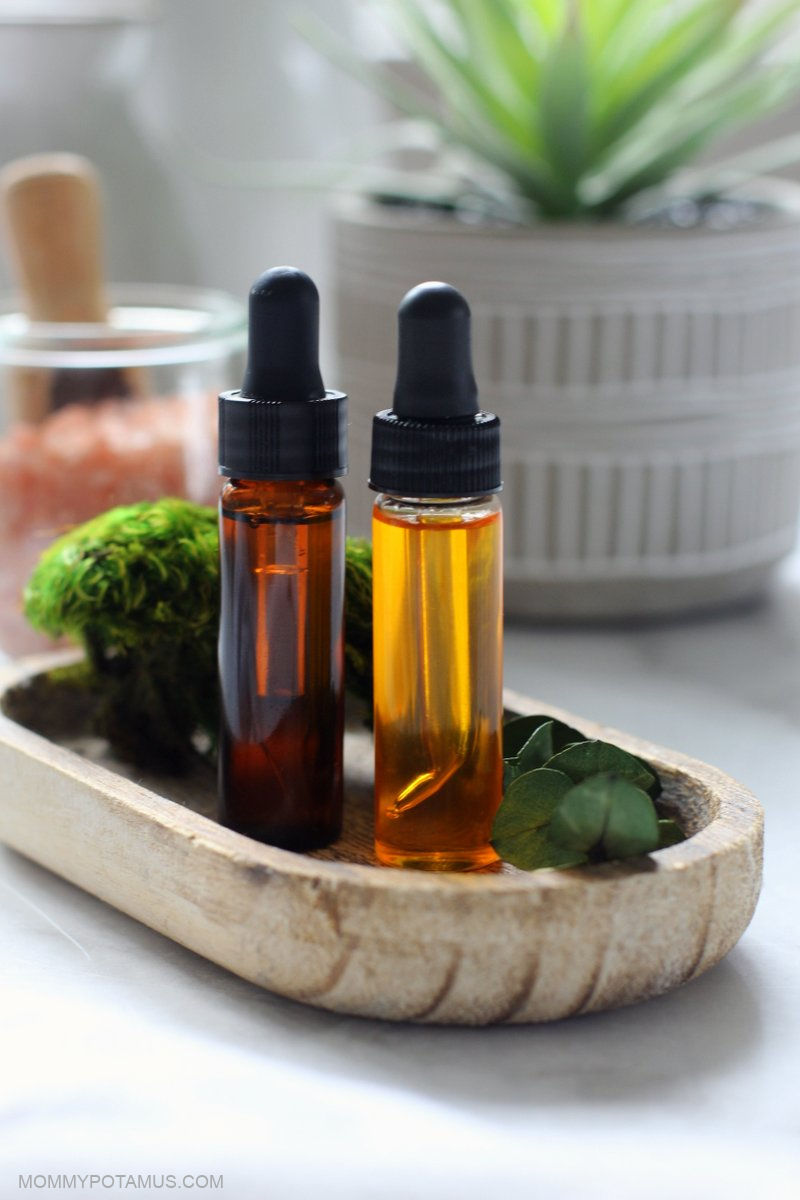
In the photos for this article I used one clear dropper bottle so you can see the serum, plus an amber bottle which is what I recommend for storage. Amber glass helps protect the serum from oxidation via UV light. I recommend using one of the following for this recipe:
- One 4 ounce dropper bottle
- Two 2 oz dropper bottles
- Four 15 ml dropper bottles – The ones pictured are bottles I repurposed, but these are a good alternative
FREE Ebook: DIY Body Care Gifts Made Simple
Do you want to give gorgeous, handcrafted gifts for family and friends, without spending a bunch of time on them?
Then I’d love to give you a free copy of DIY Body Care Gifts Made Simple – my step-by-step guide to making gorgeous handcrafted gifts without stressing yourself out – as a gift for signing up for my newsletter. I’ll show you how to make vintage labels, luxurious lotion bars, lip balms, sugar scrubs, body sprays and more like a pro. Sign up for my newsletter and you’ll be redirected to the download page immediately!
Sources
- Dhaliwal, S., Rybak, I., Ellis, S. R., Notay, M., et. al. (2018). Prospective, randomized, double-blind assessment of topical bakuchiol and retinol for facial photoageing. British Journal of Dermatology.
- Chaudhuri, R. K., & Bojanowski, K. (2014). Bakuchiol: a retinol‑like functional compound revealed by gene expression profiling and clinically proven to have anti‑aging effects. International Journal of Cosmetic Science.
- Chaudhuri, R. K., & Marchio, F. (2011). Bakuchiol in the management of acne‑affected skin. Cosmetics & Toiletries.
- Botanical Formulations Team. (~2021). Babchi oil monograph: phototoxicity, traditional uses, chemical composition. Botanical Formulations.