
Yesterday my husband walked into our bedroom carrying a plate of freshly-baked kale chips in one hand and his phone – hoisted high above his head like a boom box while blasting a love song from the neon-and-hairspray era – in the other.
That’s midlife, right?
We get to be our quirkiest selves, but we also have to make sure we use all the vegetables in the fridge before the next grocery run.
And eat protein, of course.
Because even if – like me – you never bought into the whole “training for your summer body” idea, you’re probably reading this because you’re training for a different kind of body: one with strong muscles, dense bones, healthy blood sugar, good balance, and the ability to carry your own groceries, travel, and stay fully engaged in life for decades to come.
Protein plays a role in all of those things. It provides the building blocks for muscle tissue, enzymes, hormones, immune molecules, and countless repair processes throughout the body. We naturally lose muscle mass as we age, so getting enough protein becomes increasingly important for maintaining strength, stability, and resilience.
Skeletal muscle is one of the body’s most metabolically active tissues. It helps regulate blood sugar, influences inflammation, supports healthy immune function, and produces signaling molecules that affect everything from metabolism to brain health.
That’s why I’ve been experimenting with high-protein ice cream.
Not because I’m training for bikini season.
I’m training for my old-lady era.
And while I’m willing to put scrambled eggs in my smoothie on occasion, I also believe food should bring joy. I eat fewer desserts these days, but I enjoy them more, especially when they help me hit my protein goals.
Why Protein Ice Cream Is Tricky
Protein ice cream sounds simple enough: take a healthy ice cream base, add protein powder, freeze, and enjoy.
In reality, getting the right texture is a little more complicated than it sounds.
Traditional ice cream gets its creamy, scoopable texture from a careful balance of fat, sugar, solids, and air. When you reduce the sugar, lower the fat, and add more protein, the texture tends to be less “creamy dessert” and more “icy brick.”
That’s one reason the Ninja Creami has become so popular for protein ice cream. It can take a frozen solid base and re-spin it into something creamy, even when the recipe is lower in sugar or fat.
A regular ice cream maker works differently. It churns while the base freezes, which is wonderful for traditional ice cream, but lower-sugar, higher-protein mixtures can freeze too hard too quickly around the edges before the center has a chance to churn properly. The result is often icy, crystallized, or just not worth the effort.
I wanted a creamy texture without having to buy another piece of equipment or add weird thickeners, so I started experimenting with cottage cheese.
When blended until completely smooth, it does a lot of the work that sugar and stabilizers usually do. It adds protein, creaminess, body, and enough structure to give it an ice cream texture.
Does it taste exactly like traditional ice cream? No – it has a bit of a tang that gives it more of a “cream cheese” note, so I leaned into that.
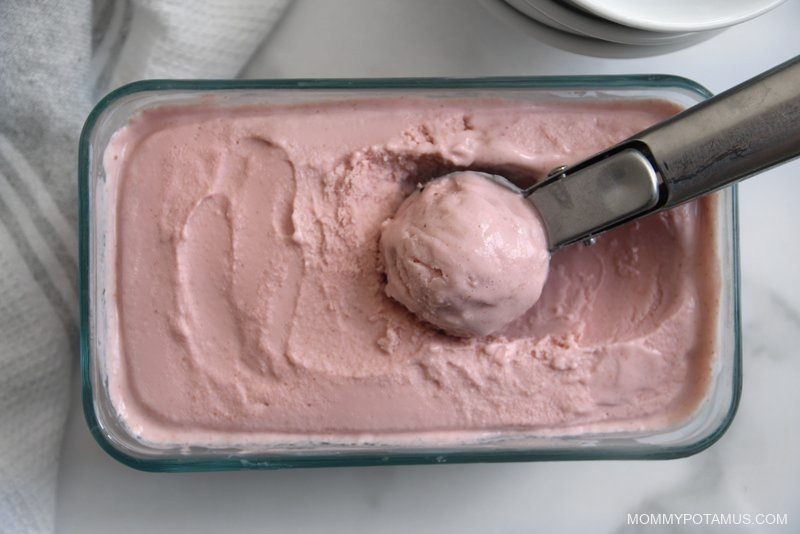
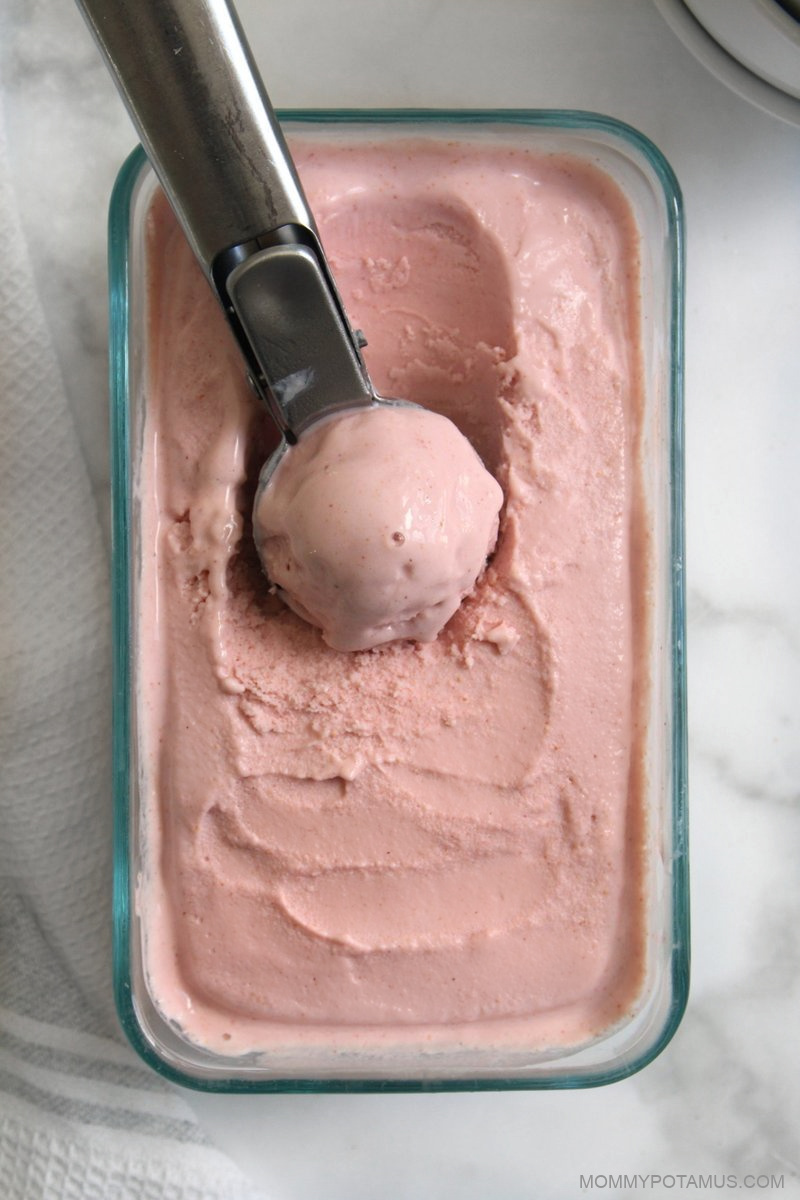
The final recipe lands somewhere between frozen cheesecake and strawberry sorbet, but with a protein boost.
One thing to be aware of is that some brands use more salt than others, and that can affect the final flavor. I tried a few and the one I liked best is Good Culture 4%. On its own, it leaned a bit salty, so I added strawberries round out the flavor.
I kept the overall sugar content lower than traditional ice cream, so I figured this recipe would be safe from the not-so-tiny humans in my house.
I was wrong – they polished off the first test batch less than a day after I made it.
So, how much protein is in this recipe?
The exact amount will vary depending on a few factors, including which protein powder you choose, and even how much air gets incorporated during churning.
In other words, your numbers may not match mine exactly.
To give you a ballpark, using two scoops of Heart & Soil Whey yields about 10 grams of protein per ½-cup serving. That’s a lot more protein than traditional ice cream – enough to make meaningful progress toward daily protein goals, one delicious spoonful at a time.
Strawberry Cream Cheese Protein Ice Cream Recipe
Equipment
- High speed blender
- ice cream maker (optional)
Ingredients
- 2 cups whole milk cottage cheese (I recommend 4% milkfat)
- 1 tbsp vanilla extract (If using vanilla protein powder, start with 1 teaspoon and increase to taste)
- ¼ cup maple syrup
- 2 cups chopped strawberries
- 25-30 grams unflavored or vanilla protein powder (Optional – I used 2 scoops Heart & Soil Whey)
Optional Toppings
- freshly chopped berries
- homemade graham crackers, crumbled into pieces
Instructions
Ice Cream Maker Method
- Blend in a high powered blender until very smooth.
- Pour the mixture into your ice cream maker and churn according to your manufacturer's instructions.
- When the ice cream is ready it should have a soft serve consistency. You can eat it right away, or if you prefer a firmer consistency transfer it into an airtight container and place in the freezer for 2-4 hours. I like to use a glass loaf pan with a lid.
- To Serve:If you decide to freeze the ice cream for a firmer texture, you'll get the creamiest results by letting it soften a bit before serving. I like to think of it more as "well chilled" than deeply frozen. Because cottage cheese-based ice cream can become a little icy when frozen solid, letting it rest on the counter allows it to soften into a smoother, creamier texture that tastes more like traditional ice cream. Depending on the size and depth of your container, this can take anywhere from 10 to 20 minutes.
No Ice Cream Maker Method
- Blend the ingredients in a high-powered blender until very smooth.
- Transfer the mixture to a freezer-safe container and place it in the freezer. To help keep the texture creamy, give it a good fold with a spatula every 30 minutes or so. This helps break up ice crystals as they form.
- Once the mixture becomes too firm to fold easily, just leave it alone and continue chilling until it reaches your desired consistency, about 3–4 hours total.
- To Serve:Because cottage cheese-based ice cream can become a little icy when frozen solid, letting it rest on the counter allows it to soften into a smoother, creamier texture that tastes more like traditional ice cream. Depending on the size and depth of your container, this usually takes about 10–20 minutes.
Notes
Nutrition
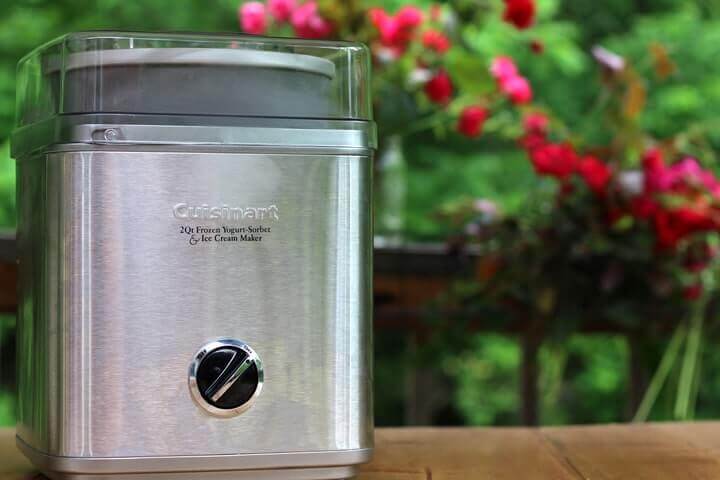
A Note On Ice Cream Makers
When I bought this ice cream maker many years ago, the only materials listed on the product description were stainless steel and plastic. I discovered after it arrived that the inner tub is actually made with anodized aluminum, which is not ideal. Back then, I couldn’t find a truly stainless steel option so I kept it to use on occasion.
Truly stainless steel options are available now, so I’m thinking about replacing mine with the Whynter Ice Cream Maker. It comes in two sizes and uses a powerful built-in compressor freezer that allows you to make ice cream, gelato or sorbet anytime (without needing to pre-freeze the inner canister). The inner bowl is stainless steel and the churn blade is BPA-free plastic.
If budget were not a consideration, I’d go for the Lello 4080 Musso Lussino 1.5-Quart Ice Cream Maker. The bowl and paddle are made with stainless steel, and it has a 4.6 star rating and over 1,000 reviews.
✋ Before You Go, Grab This Free Midlife Guide
If you’ve ever found yourself thinking,“Why doesn’t my body respond the way it used to?” . . . this guide was written for you.
Midlife can change the rules for everything from sleep and energy to workouts, recovery, body composition, and more. Knowing what’s changing can help you let go of strategies that no longer fit – and start focusing on what supports your body now.
Inside, I’ll walk you through 10 things I wish I’d known sooner, so you can make more sense of what you’re experiencing and get clearer about where to go from here.
Enter your email below and I’ll send it right over. You’ll also receive my weekly newsletter with practical wellness tips, recipes, and new guides like this one.
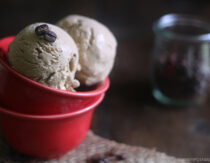

I did this after I was speaking to a person in a grocery store who told me about whipped cottage cheese. I had never seen or heard of such yet she said it was really creamy. I decided to check it out with a ripe mango I had…no recipe just a whipped up experiment that turned out yummy. I did find it amazing that what I use was almost the recipe showed yet I am a cook with many decades of experience in cooking and I love to create my own from scratch so no big to know what was needed. And yes, it is essential to have this soft serve especially if using a fibrous fruit such as I did.