
You’ve got a built-in body clock that resets every 24 hours. But did you know there’s another one that runs on a monthly cycle – and it’s been shaping everything from your energy levels to your cravings?
It’s called the infradian rhythm, and for women with menstrual cycles, it’s the real-time driver behind those “why do I feel so different this week?” moments.
In this article, we’ll talk about what your infradian rhythm is, why honoring it matters so much, and how syncing with it can support everything from energy levels and cravings to blood sugar and immune system function.
As always, this is not medical advice and is not intended to diagnose or treat any condition. Now let’s dive in.
What Is an Infradian Rhythm?
“Circa” means “around” in Latin, and “dian” means “day,” so circadian literally translates as “around a day.” The circadian rhythm is your body’s 24-hour clock.
“Infra” means beyond, so it translates as “beyond a day.” And that’s exactly what it is: a cycle that stretches beyond the daily rhythm.
Unlike the daily rise-and-fall of circadian hormones, the infradian rhythm of the menstrual cycle unfolds over a longer period of time – typically around 28 days – and is shaped by the natural fluctuations of estrogen, progesterone, luteinizing hormone (LH), follicle-stimulating hormone (FSH) and others.
There are other infradian rhythms, such as our responses to seasonal changes in light, but for pre- and perimenopausal women, the hormonal rhythm that governs our menstrual cycle is probably the most powerful infradian cycle.
It influences:
- Metabolism and blood sugar regulation (1)(2)
- Energy and mental acuity (3)(4)
- Emotional resilience (4)
- Immune system function (5)
- Sleep quality (6)
- Cravings and food preferences (7)(8)
- Libido (9)
- Stress response (10)
- Recovery from exercise and more (11)
In short: your infradian rhythm affects how you feel on every level.
Most Health Research Is Based on Men. That’s a Problem for Women.
Unfortunately, most of our wellness advice – from productivity hacks to fitness routines to dietary trends – is based on studies done on 24-hour male hormone cycles. Before 1993, women were rarely included in clinical trials, and even today they’re still often overlooked in research. (12)
The exclusion of women in studies has led to a “male model” of medical treatment, where findings from male-only research is often generalized to women, despite significant biological and physiological differences.
Here’s why that matters: Men experience relatively stable hormone levels on a daily loop, with testosterone rising and falling like clockwork every 24 hours.
Women, on the other hand, have four distinct phases governed by fluctuating levels of estrogen, progesterone, luteinizing hormone (LH), and more. These hormonal shifts mean that women feel, perform, and recover differently throughout their cycle.
That’s why trying to force yourself into a “same every day” wellness plan often backfires. You’re doing something wrong . . . your biology is doing something right, and syncing your habits with it can unlock more ease and flow in daily life.
Meet the Four Phases of Your Cycle (a.k.a. Your Infradian Rhythm)
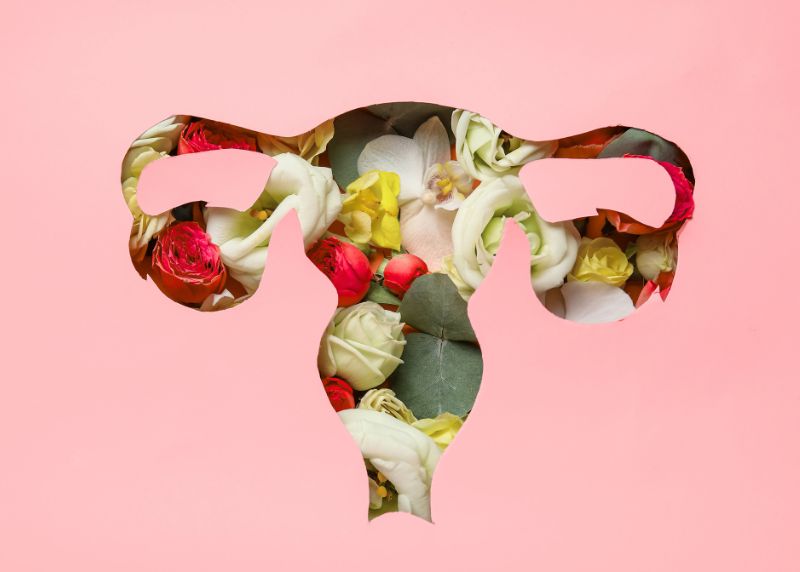
Throughout the month, your body flows through four distinct hormonal phases, each shaped by shifting levels of hormones that influence your mood, energy, metabolism, sleep, and even how your brain processes information.
Understanding each phase can help you adjust your daily activities to work with your body instead of pushing against it.
🩸 Menstrual Phase (Around days 1–5)
At the start of your period, estrogen and progesterone levels drop sharply. That drop – especially in estrogen – can lead to lower serotonin levels, which may affect your mood, sleep, appetite, and digestion. (13)
This is a time when you may feel introspective, fatigued, or low-energy. It’s a natural window for rest, reflection, gentle movement, and giving your body space to reset.
🌱 Follicular Phase (Around days 6–14)
After your period ends, estrogen begins to rise, and FSH helps stimulate the development of follicles in the ovaries. This hormonal lift often brings more motivation, mental clarity, and an improved mood. You may feel more resilient to stress, making this an ideal time to:
- Increase workout intensity (for example, by adding bodyweight training to your daily walk with a weighted vest)
- Tackle creative or strategic projects
- Try new things socially or professionally (14)
🌸 Ovulation (Around Day 14)
Mid-cycle, estrogen peaks, triggering a surge in LH that leads to the release of an egg. Many women notice a boost in energy, confidence, and verbal fluency during this time. You might feel more outgoing, socially connected, or at ease in communication-heavy environments.
This is your body’s fertile window – and whether or not you’re trying to conceive, you may feel naturally more radiant.
🌙 Luteal Phase (Around days 15–28)
After ovulation, progesterone rises, bringing a more grounded, inward-focused energy. It’s a great time for finishing projects, organizing spaces, and checking things off your list – particularly the behind-the-scenes kind.
It’s also the phase where cravings, PMS symptoms, and blood sugar dips are more likely to show up – especially if stress has been high and cortisol levels are elevated. Supporting this phase with balanced meals, gentle movement, and extra rest can go a long way in smoothing out the transition back to menstruation.
Why It Matters (Especially If You’re in Perimenopause)
Even if your cycle is irregular or changing due to perimenopause, your infradian rhythm still influences how your body responds to food, stress, sleep, and movement.
Supporting your natural rhythm through these transitions can often ease symptoms like:
- Mood swings and irritability
- Sleep challenges
- Fatigue and brain fog
- Cravings
- Feelings of overwhelm
How To Work With Your Infradian Rhythm
Here are some ways to honor your cycle and reduce the friction between your body and your lifestyle:
1. Cycle-Sync Your Workouts
In the follicular and ovulation phases, you may feel amazing doing HIIT, strength training, or sprinting. During your luteal and menstrual phases, opt for gentler movement – think weighted vest walking, Pilates, Japanese walking, yoga, or stretching (don’t forget the non-toxic yoga mat!).
2. Adjust Your Nutrition
Your metabolism speeds up in the luteal phase, which is why hunger and cravings often spike. (15) Don’t ignore them—honor them with balanced meals that include protein, healthy fat, and fiber. This supports blood sugar, mood, and progesterone production.
Some women also find seed cycling helpful – eating flax and pumpkin seeds in the first half of the cycle and sunflower and sesame in the second. While evidence is limited, many report improved PMS symptoms and cycle regularity. Click here for a detailed guide to getting started.
3. Rethink Productivity
The idea that you should feel the same every day isn’t just unrealistic – it’s unsustainable. You might find your creativity and planning thrive in the follicular phase, while the luteal phase is better for task execution and wrapping up projects. Use that rhythm to your advantage.
4. Prioritize Sleep
If you’ve ever tossed and turned in the week before and during your period, you’re not alone. Fluctuating levels of estrogen and progesterone during the luteal and menstrual phases can interfere with melatonin production and alter your brain’s sleep architecture. (16)
A 2018 review confirms that many women report poorer sleep quality during the late luteal (premenstrual) phase and menstruation, especially women experiencing PMS or menstrual cramps. Self-reported sleep disturbances are most common in these phases. (17)
Studies also show that during the luteal phase, REM sleep—the deep, dream-rich stage of restorative sleep—often decreases while light sleep stages increase. (18)
If restorative sleep feels harder to come by during these phases, it’s not necessarily a sign that you’ve fallen off track – it could be a biological signal that your body needs more intentional rest and relaxation. Building in extra time to wind down can make a meaningful difference.
Here’s how to optimize your biology for sleep, and here’s the science behind creating a cozy sleep space that supports deep rest.
You’re Not Inconsistent – You’re Rhythmic

The more we understand infradian rhythms, the more obvious it becomes: health strategies built on male-centered research weren’t designed with our biology in mind.
You’re wired for cycles, for shifts, for seasons. And when you honor those rhythms instead of trying to “push through,” everything gets easier – your energy, your focus, your emotional well-being.
Your infradian rhythm isn’t something to fix or fight. The more you work with it, the more life works with you.
✋ Before You Go, Grab This Free Midlife Guide
If you’ve ever found yourself thinking,“Why doesn’t my body respond the way it used to?” . . . this guide was written for you.
Midlife can change the rules for everything from sleep and energy to workouts, recovery, body composition, and more. Knowing what’s changing can help you let go of strategies that no longer fit – and start focusing on what supports your body now.
Inside, I’ll walk you through 10 things I wish I’d known sooner, so you can make more sense of what you’re experiencing and get clearer about where to go from here.
Enter your email below and I’ll send it right over. You’ll also receive my weekly newsletter with practical wellness tips, recipes, and new guides like this one.
Sources
- Solomon, S. J., Kurzer, M. S., & Calloway, D. H. (1982). Menstrual cycle and basal metabolic rate in women. American Journal of Clinical Nutrition.
- Mahalingaiah, S., & Apple Women’s Health Study Team. (2023). Studying the link between the menstrual cycle and blood sugar. Harvard T.H. Chan School of Public Health News.
- Cycle Syncing: How to Understand Your Menstrual Cycle to Reduce Period Symptoms. (2023). NewYork‑Presbyterian HealthMatters.
- Sundström Poromaa, I., & Gingnell, M. (2014). Menstrual cycle influence on cognitive function and emotion: a review. Frontiers In Neuroscience.
- Notbohm, H. L., Moser, F., Goh, J., Feuerbacher, et. al. (2023). The effects of menstrual cycle phases on immune function and inflammation at rest and after acute exercise: A systematic review and meta‑analysis. Acta physiologica.
- Haufe, A., & Leeners, B. (2023). Sleep Disturbances Across a Woman’s Lifespan: What Is the Role of Reproductive Hormones? Journal of the Endocrine Society.
- Souza, L. B., Martins, K. A., Cordeiro, M. M., et. al. (2018). Do Food Intake and Food Cravings Change during the Menstrual Cycle of Young Women? Revista Brasileira de Ginecologia e Obstetrícia.
- Solis‑Moreira, J. (2023). Period Food Cravings Are Real. A New Brain Finding Could Explain Why They Happen. Scientific American.
- Roney, J. R., Simmons, Z. L., & Gray, P. B. (2013). Hormonal predictors of sexual motivation in natural menstrual cycles. Hormones and Behavior.
- Duchesne, A., & Pruessner, J. C. (2013). Association between subjective and cortisol stress response depends on the menstrual cycle phase. Psychoneuroendocrinology.
- Benito, P. J., Alfaro‑Magallanes, V. M., Rael, B.,et. al. (2023). Effect of menstrual cycle phase on the recovery process of high-intensity interval exercise – a cross‑sectional observational study. International Journal of Environmental Research and Public Health.
- Barrett, S. (2025). Why We Know So Little About Women’s Health. University of Utah Health.
- Gudipally, P. R., & Sharma, G. K. (2023). Premenstrual Syndrome. StatPearls.
- Hamidovic, A., Karapetyan, K., Serdarevic, F., et. al. (2020). Higher circulating cortisol in the follicular vs. luteal phase of the menstrual cycle: A meta-analysis. Psychoneuroendocrinology.
- Benton, M. J., Hutchins, A. M., & Dawes, J. J. (2020). Effect of menstrual cycle on resting metabolism: A systematic review and meta‑analysis. PLOS ONE.
- Cherpak, C. E., & Van Lare, S. J. (2019). Menstrual Cycle Fluctuations of Progesterone and the Effect on Sleep Regulation. Journal of Restorative Medicine.
- Alzueta, E., & Baker, F. C. (2023). The menstrual cycle and sleep. Sleep Medicine Clinics.
- Driver, H. S., Werth, E., Dijk, D.-J., & Borbély, A. A. (2008). The menstrual cycle effects on sleep. Sleep Medicine Clinics.


Hi Heather! How about if you had a hysterectomy (but kept ovaries) and now might also be in menopause (54 this year), I can’t tell! Just wondering about these rhythms if you no longer have a cycle. Thanks!
Hi, I would love to know more about seed cycling, please. Thank you!
Hi! I’m interested in seed cycling 🙂 thank you!
It was in the late 1980s that my colleagues and I first noticed that the “ideal” model of health was based on the healthy 25-year old white male, which meant that was the “standard” and we all were “abnormal” if we didn’t fit it. I am so happy to see this being brought to attention. Thanks so much!
Hi Heather, so interesting! What about us older post menopause gals. Are we completly out of rhythm ?
Hi Marcia, that’s such a good question. After menopause, the monthly menstrual-cycle version of the infradian rhythm is no longer active in the same way, because ovulation and the follicular/luteal hormone pattern have ended. That said, we’re never “out of rhythm” – after menopause, we’re still influenced by circadian and seasonal rhythms.
For seed cycling specifically, the strongest argument for incorporating the seeds after menopause is less about “cycling” with ovulation and more about the seeds themselves. Flax and sesame contain lignans that may support healthy estrogen metabolism, and pumpkin/sunflower seeds provide minerals, vitamin E, fiber, and healthy fats that support overall metabolic, cardiovascular, and hormone health. The research on the full seed cycling protocol after menopause is still limited, so I’d think of it as a gentle food-based support rather than a highly researched approach.
If you want to try it, you could either rotate the seeds every two weeks or simply include a mix of freshly ground seeds regularly and see how your body responds. ❤️
MANY Thanks always for your insightful, well researched articles.
I would appreciate knowing how the inflation rhythm affects bodies such as my 67 year old one 🙂
AND would love to read more about Seed Cycling for my age group.
May you stay blessed Mommypotamus. You are a wonderful, nurturing angel.
Thank you Always for sharing your knowledge so freely.
Mariejo
Western Cape
South Africa
Mariejo, thank you so much for your kind words.
Such a good question. After menopause, the monthly menstrual-cycle version of the infradian rhythm is no longer active in the same way, because ovulation and the follicular/luteal hormone pattern have ended. That said, we’re still influenced by circadian and seasonal rhythms.
For seed cycling specifically, the strongest argument for incorporating the seeds after menopause is less about “cycling” with ovulation and more about the seeds themselves. Flax and sesame contain lignans that may support healthy estrogen metabolism, and pumpkin/sunflower seeds provide minerals, vitamin E, fiber, and healthy fats that support overall metabolic, cardiovascular, and hormone health. The research on the full seed cycling protocol after menopause is still limited, so I’d think of it as a gentle food-based support rather than a highly researched approach.
If you want to try it, you could either rotate the seeds every two weeks or simply include a mix of freshly ground seeds regularly and see how your body responds. ❤️
Thank you for the great information! I would like your seed cycle guide please!
Hi Amanda, I’m so glad you found the info helpful! I published the guide awhile back but forgot to update this article – you can find it here 🙂 https://mommypotamus.com/seed-cycling/