
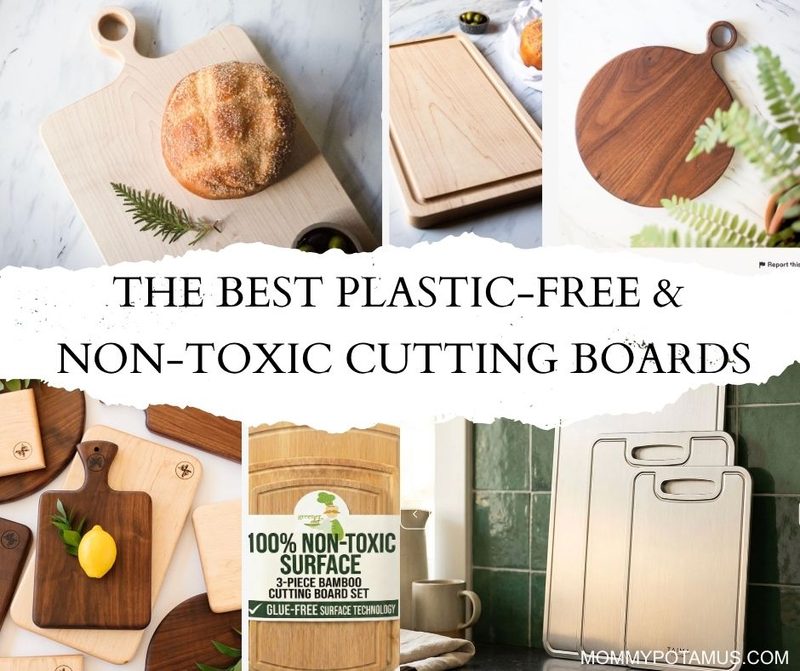
My last plastic cutting board perished 18+ years ago in an accident that was entirely my fault – one involving a matchbox-size kitchen with very little counter space, a spiral cooktop burner that hadn’t cooled completely, and the nauseating smell of melting plastic.
I replaced it with what I thought was a healthier option.
And then I replaced that a few years later.
So while a lot of articles about non-toxic cutting boards assume you’re finally ditching plastic, I’m guessing at least some of you already have. If so, you already know that’s the easy part.
Figuring out what to use instead is the hard part.
Maybe, like me, you started with a bamboo board that seemed like a natural, sustainable choice, but didn’t pass muster when you started looking into formaldehyde resin glues. Or maybe you tried a different material that didn’t hold up over time . . . or didn’t live up to its non-toxic claims.
That’s why I’ve put together this guide – we’ll cover the pros and cons of different materials, what’s worth buying, what I would avoid, and specific product recommendations for each category.
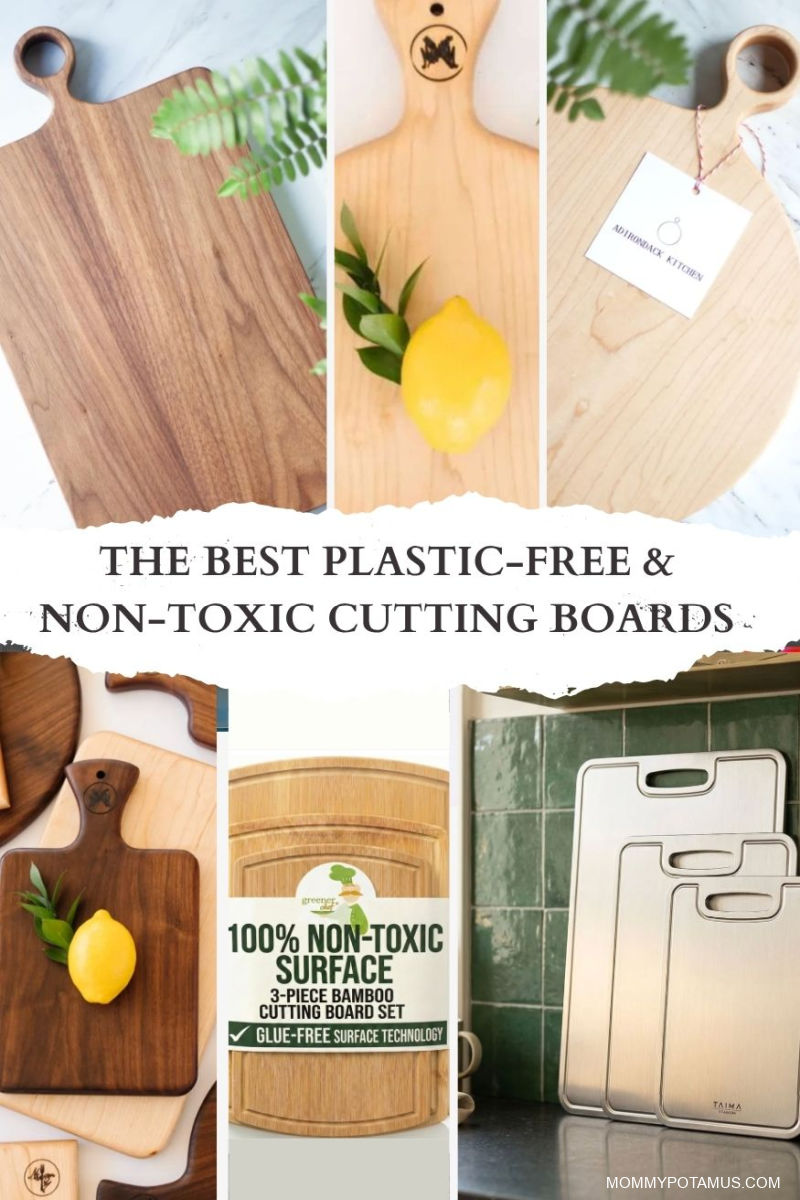
✋ My Quick Picks
If you’re short on time and want to skip to my top recommendations, here are the options I’d look at first.
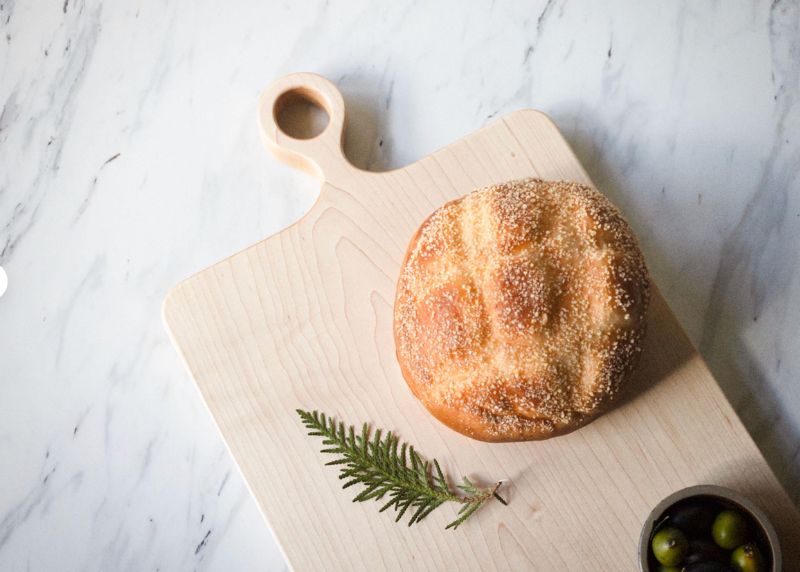
Best handcrafted value
Adirondack Kitchen
Solid maple, cherry, or walnut with no glue, finished with organic coconut oil and beeswax. The styles are beautiful enough to leave out on the counter, and the prices are surprisingly approachable for handmade, one-piece boards.
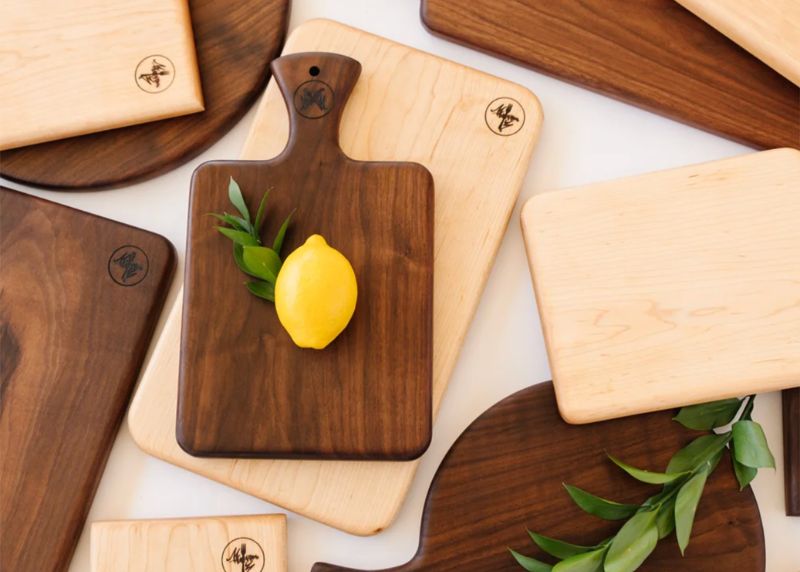
Best modern heirloom
Mamma Mangia
Another excellent one-piece option, with maple or black walnut, no glue or synthetic sealers, and a fractionated coconut oil + beeswax finish. The styling is a little more modern and substantial.
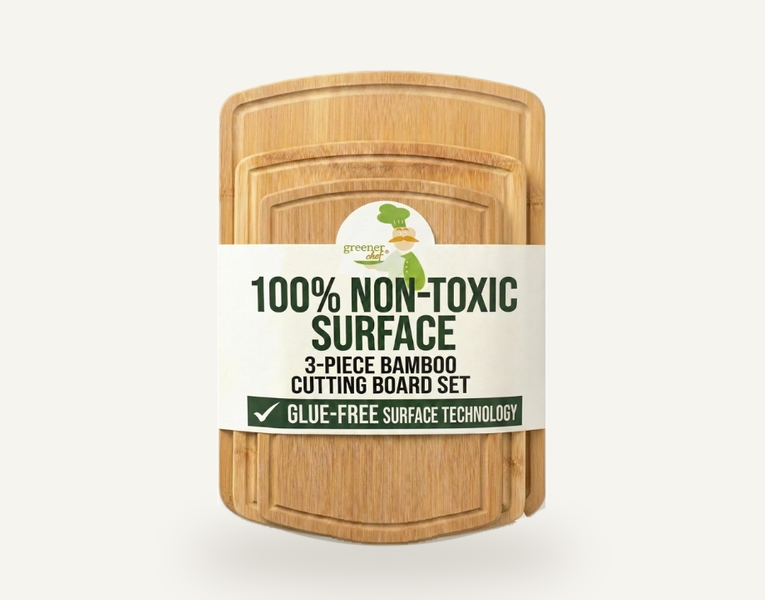
Best budget-friendly option
Greener Chef Bamboo
A good choice if solid hardwood isn’t in the budget. The cutting surface is glue-free and the boards arrive raw and untreated, so you can season it with the food-grade oil of your choice (they recommend walnut).
I’ve included additional recommendations- including hinoki and a dishwasher-safe option – later in the article.
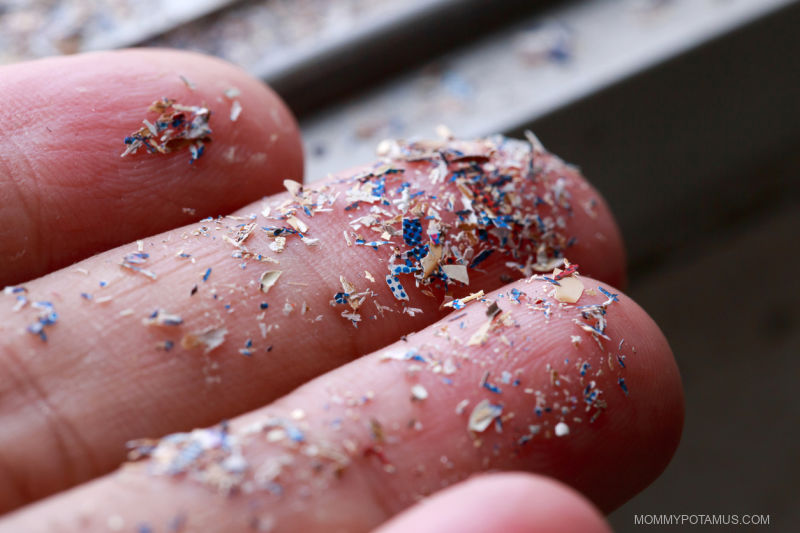
The Problem With Plastic: Microplastics & Bacteria
Plastic cutting boards have always been convenient. They’re lightweight and inexpensive, and for a long time they were treated as the hygienic default.
The problem is that every time a knife cuts into one, it can also cut away tiny pieces of the board itself.
That’s where microplastics come in.
A 2023 study found that chopping on polyethylene and polypropylene cutting boards can release hundreds – or even more than a thousand -microplastic particles during a single food-prep session. Based on how much plastic was released in their experiments, the researchers estimated that regular use could expose someone to as much as about 50 grams of cutting-board microplastics per year. (1)
That’s roughly the weight of 10 credit cards. (2)

To be clear, that’s an estimate based on the researchers’ assumptions about how often people use their cutting boards – not a measurement showing that everyone with a plastic board actually eats 10 credit cards’ worth of plastic every year. But the underlying finding is pretty hard to argue with: when a knife repeatedly cuts into plastic, some of that plastic comes off.
And somewhat ironically, the more fresh food you chop at home, the more opportunities there are for that exposure.
I’ve written more about what we currently know – and don’t know – about microplastics and health here, along with some of the research on ways our bodies may eliminate them here.
That’s not the only issue, though. For decades, we were told plastic was the most hygienic choice because it’s non-porous and can be sanitized in the dishwasher.
But plastic is soft enough to accumulate knife scars, and once those grooves get deep, they can become harder to clean. One well-known study found that bacteria placed on wood quickly became undetectable, while bacteria on plastic remained detectable much longer. (3)
Wood: My First Choice For Cutting Boards
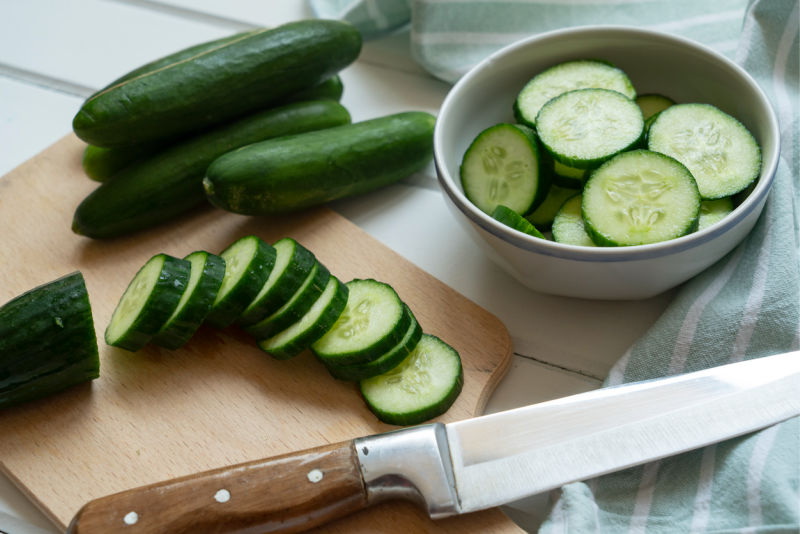
Wood is durable, easy on knives, renewable, repairable, and available in several constructions. But “wood cutting board” can mean several very different things.
Here’s what I look for:
1. Solid wood construction
When it comes to cutting boards, simple is a selling point.
A board made from one solid piece of wood has one obvious advantage: there’s no glue to research, no manufacturer to email, and no question about whether the adhesive is exposed at the cutting surface. That matters because many common food-safe wood glues are synthetic polymers, so if the goal is to avoid plastic-like materials entirely, one-piece construction makes the selection process easier.
That doesn’t automatically mean every glued board is unsafe – some boards use glue in ways that don’t come into contact with the cutting surface – but it does mean there’s one more material to factor in.
2. The Best Woods for Cutting Boards
Hardwoods strike a good balance between durability and “forgiveness” – they’re hard enough to resist deep gouging but soft enough to keep your knife edge sharp. I’ll start with three North American classics – maple, walnut and cherry – plus a few more worth considering.
Maple
Maple is popular for good reason: It’s hard enough to hold up well to daily chopping, but still relatively gentle on knives. Its fine, tight grain gives it a smooth cutting surface, and its light color makes it easy to see when the board needs cleaning.
Walnut
A favorite for its rich chocolate tones, walnut is slightly softer than maple. Its darker color hides stains and wears beautifully, and it’s another relatively knife-friendly hardwood.
Cherry
Cherry is also softer than maple and typically a little softer than walnut too, so it’s another knife-friendly option.
It starts out lighter and develops a deep reddish-brown color with age and exposure to light, which gives it a really warm, lived-in look over time. It will show wear more than maple, but for many people that’s part of its charm.
Beech
Beech is another solid option for cutting boards – it’s hard, fine-grained, relatively affordable, and has a long history of use in kitchen tools and butcher blocks.
There’s also some interesting research behind it. In a 2023 study comparing four cutting-board woods, unfinished European beech generally had the lowest amount of detectable bacteria remaining on the surface. The study didn’t include American beech, so I wouldn’t assume the results apply perfectly to both species, but the two are closely related and structurally similar enough that I consider the findings encouraging. (4)
Its main downside is that American beech tends to shrink and swell quite a bit as its moisture content changes, which can make it more prone to warping if it’s soaked or allowed to dry unevenly.
Acacia
Acacia has become incredibly popular because it’s beautiful, affordable, and naturally rich in oils that help it resist moisture.
However, it’s often harvested at a young age, so planks tend to be smaller. Cutting boards are usually made by joining lots of planks or blocks together. Joining means using glue, which may mean emailing the manufacturer to find out exactly what they use.
Titebond III Ultimate Wood Glue is one of the better options I’ve come across so far – it’s waterproof once cured and compliant for indirect food contact, which is why the company recommends it for cutting boards. Still, “indirect food contact” is not the same thing as approval for use as a direct cutting surface, which is one reason I still prefer a solid piece of wood when I can find one.
Hinoki
Hinoki is the outlier here, in the best possible way.
It’s actually a softwood -Japanese cypress – not a hardwood. Normally “soft” is considered a drawback in a cutting board, but hinoki is prized precisely because it has a little more give under the knife.
That makes it exceptionally gentle on fine blades, like those used to prepare sushi.
It’s also lightweight, aromatic, and naturally resistant to decay and fungal growth.
A few things to know:
- It can “self-heal” a bit: The soft wood fibers swell slightly when washed, which can help shallow knife marks close back up.
- It can warp if it stays wet unevenly: Don’t leave it sitting flat on a wet counter or towel. Let it dry upright so air can circulate around both sides.
- Heavy chopping can leave deeper marks: Cleavers and serrated knives are more likely to gouge the soft surface.
- Traditional unfinished boards are often wetted before use: This helps reduce absorption of food odors and stains.
- Care varies: Most traditional hinoki boards are not oiled, but some are, so follow the manufacturer’s instructions.
3. Simple, Food-Safe Finishes
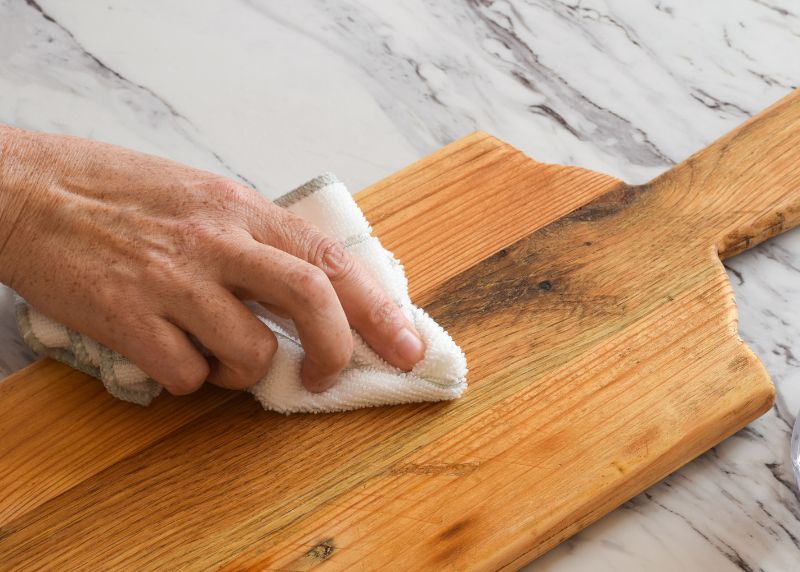
Most cutting board makers use food-grade mineral oil because it’s inexpensive and easy to apply. Occasionally, though, you’ll find boards finished with beeswax, carnauba wax, fractionated coconut oil, pure tung oil, linseed oil, or blends of several of these.
I prefer natural oils and waxes when they’re available because:
- Mineral oil is petroleum-derived. Food-grade mineral oil (sometimes called liquid paraffin) is different from technical grade because it’s refined to remove carcinogenic polycyclic aromatic hydrocarbons. Still, it’s not my first choice for a surface that comes into direct contact with food.
- It doesn’t cure or harden in the wood. Mineral oil stays liquid, gradually washes out with use, and needs to be reapplied fairly often.
- Some plant oils offer more durable protection. Pure tung oil, for example, polymerizes as it cures, helping cutting boards resist water much better over time.
That difference shows up pretty clearly in real-world testing, too. In one comparison of common food-safe wood finishes, mineral oil provided the least durable protection under repeated water exposure, while pure tung oil held up much better. (5)
With that said, if budget and aesthetics are a consideration and I find a beautiful or affordable cutting board that checks every other box, mineral oil wouldn’t stop me from buying it.
It washes away relatively easily anyway, so my personal approach has been to wash the board thoroughly, use it, and then maintain it going forward with a natural oil or wax I prefer.
4. The Maintenance Factor: Oils & Waxes
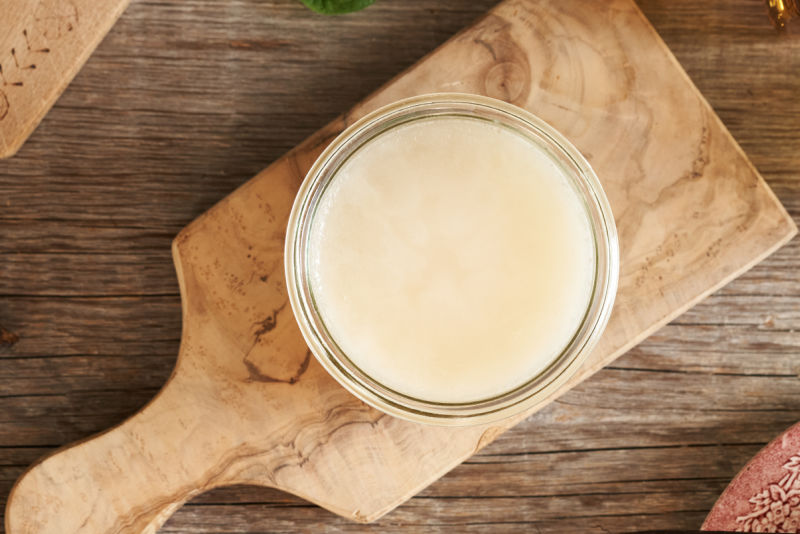
Even a great wooden cutting board needs a little maintenance. Periodically conditioning the wood helps slow moisture absorption, reduces drying and cracking, and can help prevent warping over time.
The good news is that this part doesn’t need to be complicated. A few options I like are:
- Fractionated coconut oil: Soaks into the wood and helps keep it from drying out. It’s also much more oxidation-resistant than regular coconut oil and many other cooking oils, so it’s less likely to go rancid.
- Beeswax: Stays closer to the surface, where it adds a little more water resistance and helps slow down how quickly the oil washes out.
- Carnauba wax: A harder plant wax that can be added to beeswax/oil blends for a firmer, more durable surface finish.
That’s why you’ll often see cutting board conditioners made from a blend of oil + wax rather than just one or the other.
Tung oil and linseed oil work a little differently. Unlike fractionated coconut oil, they’re drying oils, which means they react with oxygen and gradually polymerize as they cure. Instead of remaining liquid in the wood, they harden and create a more durable, water-resistant finish.
- Pure tung oil is one of my favorite options for that reason, although it needs adequate curing time between coats and before the board is used. Just make sure it really is pure tung oil – products labeled “tung oil finish” can contain other oils, solvents, or additives.
- Linseed oil can work similarly, but the label matters. Raw linseed oil is very different from conventional hardware-store “boiled linseed oil,” which often contains added metallic drying agents to speed up curing.
I generally avoid using regular kitchen oils like olive, avocado, or unrefined coconut oil because they can oxidize and eventually develop off odors.
How often a board needs conditioning depends on the wood, how often you wash it, and what it was originally finished with. I usually go by feel: if the surface starts looking pale, dry, or rough, it’s probably ready for a little attention.
And if a solid wood board gets really worn, that doesn’t necessarily mean it’s finished. Many can be lightly sanded to remove shallow knife marks and roughness, then reconditioned with oil or wax to give the surface a fresh start.
Eventually, of course, every cutting board reaches the end of its useful life. USDA recommends replacing boards once they become excessively worn or develop grooves that are difficult to clean.
Is Wood Safe For Raw Meat?
Yes. USDA says both wood and nonporous cutting boards can be used for raw meat and poultry, although it recommends keeping a separate board for raw proteins when possible to reduce cross-contamination. (6)
Part of the confusion around wood comes from the assumption that porous = unhygienic. But research suggests it’s not that simple.
In a well-known experiment comparing wood and plastic, bacteria placed on wooden boards quickly became difficult to detect at the surface, while bacteria on plastic remained detectable much longer. (3) More recently, a 2025 study comparing sugar maple with HDPE plastic found a similar pattern: E. coli on maple dropped to the study’s detection limit within two hours, while significantly more remained detectable on plastic. (7)
That doesn’t mean wooden boards don’t need to be washed, dried well, and refreshed or replaced when they become excessively worn. It does mean that wood isn’t automatically the less hygienic choice just because it’s porous.
A Quick Note About Edge Grain & End Grain
When you shop for wood cutting boards, you’ll run into terms like face grain, edge grain, and end grain. They sound complicated, but they’re really just describing which direction the wood fibers are facing.
Imagine a plank of wood as a bundle of long straws:
- Face grain: You’re cutting on the broad side of the bundle.
- Edge grain: Turn that bundle onto its narrow edge.
- End grain: Cut the bundle into short sections, stand them upright, and look down into the ends of the “straws.”
End-grain boards are usually the most knife-friendly because the blade can slip slightly between the fibers rather than repeatedly cutting across them. They also tend to hide knife marks well and hold up well under heavy chopping.
The tradeoff is construction: end-grain boards have to be made from lots of smaller blocks glued together.
Edge-grain boards are generally simpler and more affordable, but many are made from glued strips too.
That’s separate from one-piece or solid-slab construction, which simply means the board is made from one continuous piece of wood with no glued seams.
So, very broadly:
- Simplest construction: one-piece solid wood
- Most knife-friendly: end grain
- Middle ground: edge grain
For me, the no-glue advantage of a one-piece board usually wins, but there are some beautifully made edge- and end-grain boards worth considering too.
Bamboo: A Good Option With A Few Caveats
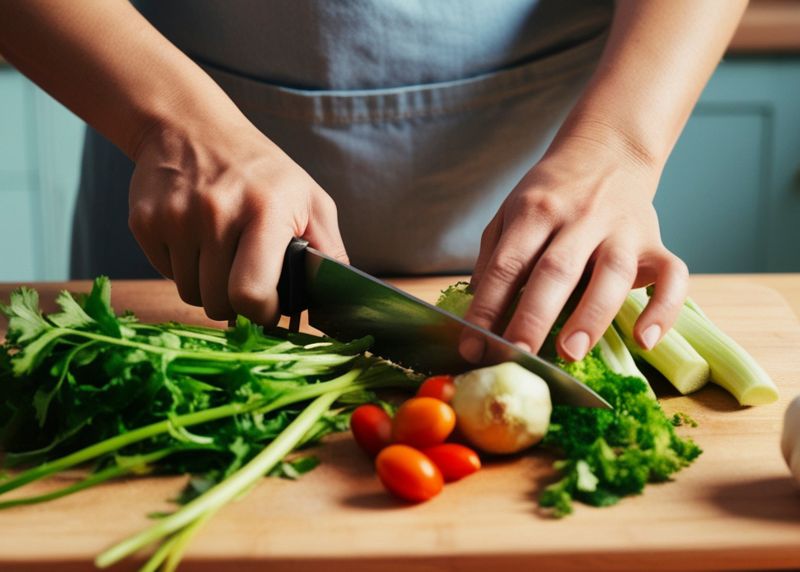
Bamboo is technically a grass, not a wood. It grows incredibly fast, which is one reason it’s often described as a sustainable material. It’s lightweight, resists water better than many hardwoods and – probably most importantly for families on a budget – is often one of the most affordable plastic-free cutting board options.
However, a lot of bamboo products – including cutting boards and clothing – come with “eco-friendly” and “non-toxic” marketing claims that don’t always hold up under scrutiny. That’s not to say there aren’t good options – there are – but it’s important to know what to watch out for, and what to look for instead.
Because bamboo grows in hollow stalks rather than thick slabs of lumber, cutting boards usually have to be built from multiple pieces or layers.
With conventional bamboo boards, that often means lots of narrow strips joined together, with glue lines running right through the cutting surface.
That’s where “mystery glue” becomes an issue for me. Manufacturers don’t always disclose exactly what adhesive they use, but we do know that some engineered bamboo products are made with formaldehyde-based resins. Even when an adhesive is considered food-safe, it’s typically a synthetic polymer – another consideration if the goal is to minimize plastic-like materials in direct contact with food.
A board constructed with a glue-free cutting surface is different. Some newer bamboo boards use broad, flattened sections of bamboo for the outer layers, so there are no adhesive seams where your knife and food make contact. There may still be adhesive inside the board, but for me that’s less of a concern.
Bamboo also tends to be fairly hard. That makes it durable, but generally less forgiving on knife edges than woods like walnut, cherry, or hinoki.
Titanium and Stainless Steel: Simple, Nonporous Options
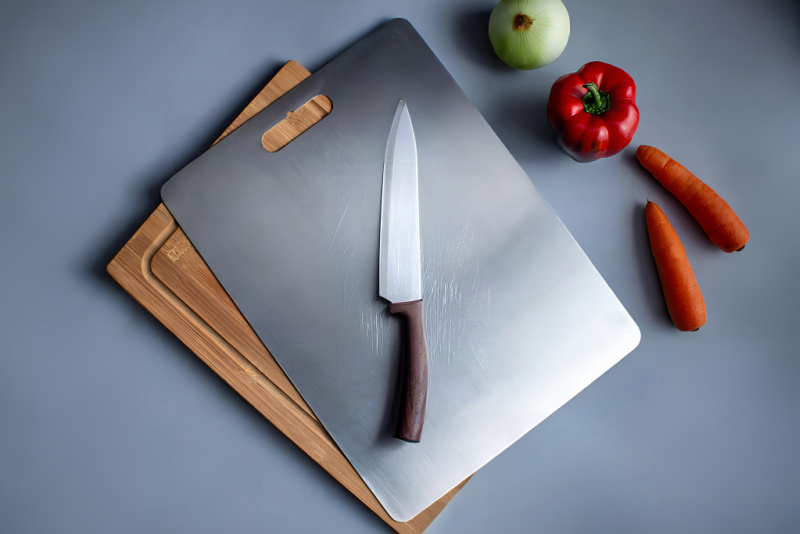
Metal cutting boards are gaining traction, especially for messy jobs like handling raw meat or fish.
Both stainless steel and titanium have some obvious advantages: they’re nonporous, plastic-free, don’t absorb odors or food juices, and are very easy to clean. Many are dishwasher-safe, too.
The biggest tradeoff with either one is knife wear.
Some titanium cutting-board manufacturers argue that titanium should be gentler on knives because it’s softer than the hardened steel used in most kitchen blades.
But real-world testing doesn’t necessarily support that conclusion. In at least one direct comparison, both stainless steel and titanium dulled knives significantly faster than wood or rubber, and titanium actually caused more loss of sharpness than stainless steel under the conditions tested. (8) Serious Eats also found substantial dulling after testing a titanium board. (9)
Titanium does have a few other advantages that may matter on a cutting surface. It’s much lighter than stainless steel and exceptionally resistant to corrosion, including in many chloride-rich environments. That could be useful on a board that regularly comes into contact with salt and acidic foods.
I haven’t personally used either type of metal cutting board, so I can’t speak from experience about how they feel in everyday use.
For now, I see both as more of a specialty cutting surface than an everyday board – something I might use for breaking down a chicken or other messy prep, then switch back to wood for most of my chopping.
If you choose titanium, there’s one additional thing to check: make sure it’s actually titanium. Some products marketed as “titanium” are stainless steel, layered materials, or metal with a titanium coating. I’d look for a company that clearly discloses the grade or purity rather than relying on the word “titanium” in the product name.
I’ve included a verified titanium option later in the article.
Glass: Easy To Clean, Hard On Knives
Glass is non-toxic, affordable, nonporous, and easy to sanitize . . . but I don’t recommend it for everyday chopping.
The biggest issue is your knives. Glass is much harder than wood, so every chop puts more stress on the blade edge and can dull or roll it surprisingly quickly. It’s also loud and can be slippery, which makes prep less comfortable and potentially less safe.
For serving, rolling dough, or other prep that doesn’t involve much cutting, glass can be very useful. As an everyday cutting surface, though, I’d choose something else.
Rubber Boards: Not As Natural As They Sound
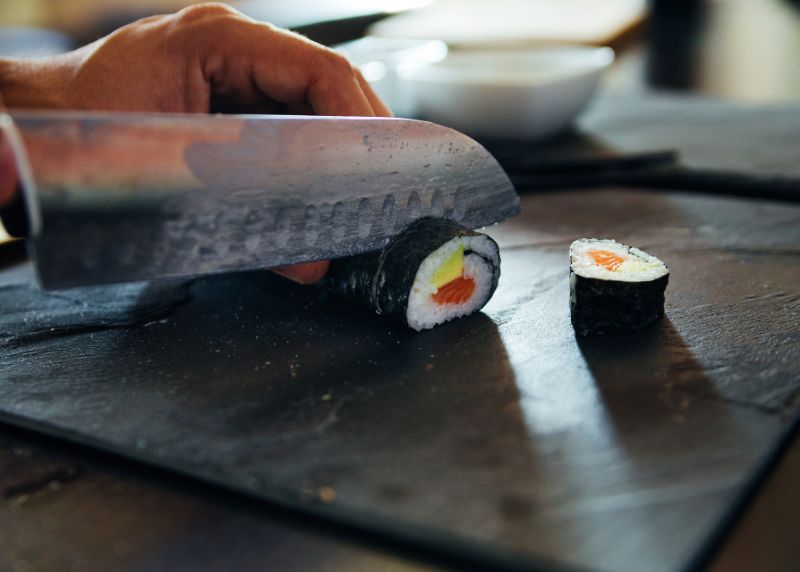
At first, rubber seems like an ideal choice for cutting boards – it’s soft enough to protect knives and easy to clean. Unfortunately, what manufacturers are calling “rubber” is not natural latex made from the milky white sap of the Hevea brasiliensis tree.
Instead, these boards are made from a variety of engineered materials. Some are described simply as proprietary “synthetic rubber” or high-density rubber compounds, while others use synthetic elastomers or materials such as polyvinyl acetate (PVAc). Some incorporate polyethylene or other additives, and some are reinforced with wood pulp or built around a wood core.
In other words, “rubber cutting board” doesn’t really tell you very much about what the cutting surface is actually made from – and many manufacturers don’t disclose the full formulation.
So, while they are far gentler on knives than standard plastic, they still shed mystery polymers into food. And one more thing to be aware of is that some manufacturers blend antimicrobial compounds including MicroStop® directly into the rubber matrix. MicroStop® is considered proprietary, so we don’t actually know what’s in it.
I’ve looked around for cutting boards made with natural rubber, and as far as I can tell they don’t exist. So despite the fact that synthetic rubber boards are famously gentle on knives, this is one category I personally skip.
Marble & Granite: Better For Serving Than Chopping
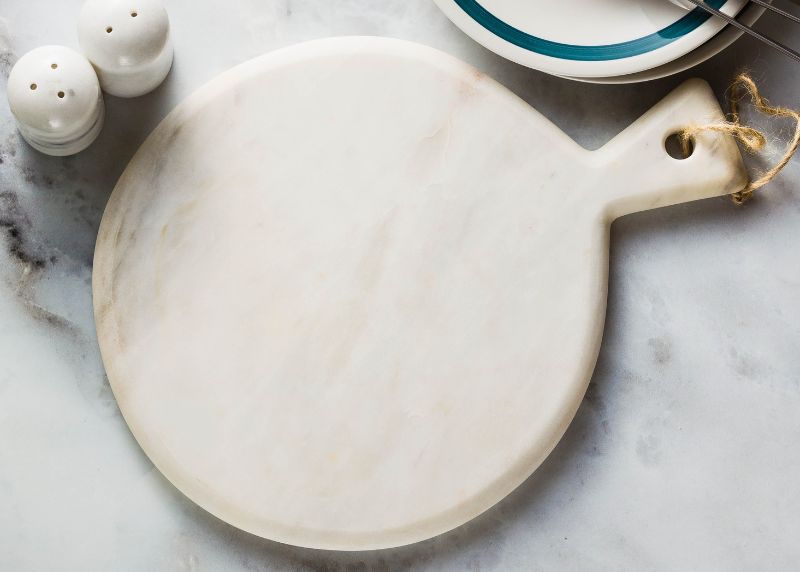
Marble and granite boards are gorgeous for serving things like charcuterie, but I wouldn’t use them as everyday cutting boards.
They’re extremely hard, which means they’re tough on knife edges, and they’re also heavy and awkward to move around.
Marble has another downside: acidic foods like lemon juice, tomatoes, and vinegar can etch the surface, leaving dull spots and tiny imperfections over time. Granite is generally more resistant, but it can still absorb moisture or stain if it isn’t properly sealed.
So while stone is a non-toxic option, I think it makes much more sense for serving, rolling dough, or other prep that doesn’t involve much chopping.
Paper Composite: Not Just Paper
Paper composite boards are typically made from layers of paper or wood fiber that are saturated with resin, then fused together under heat and pressure to create a dense, nonporous surface.
People like them because they’re thin, durable, dishwasher-safe, and easy to sanitize. But from a materials standpoint, they’re not as simple as they sound.
The cutting surface isn’t just paper – it’s paper held together and hardened with resin. So, you’re not really cutting on paper – you’re cutting on a resin-bound composite.
In some cases, that resin is proprietary, which means there’s only so much you can learn about what’s actually in the material.
I prefer cutting surfaces made from materials that are fully disclosed, so I’m willing to reconsider this category if more information becomes available. For now, if I’m choosing between a solid piece of wood and a paper composite held together with an undisclosed resin system, I’m going with the wood.
Top Recommendations
After sorting through a lot of materials, construction methods, finishes, and price points, these are the boards I think are most worth considering.
🌲 Adirondack Kitchen: Best Handcrafted Value
Materials: Maple, cherry, or black walnut
Construction: One solid piece; no glue
Finish: Organic coconut oil + beeswax
Made in: Adirondack Mountains, New York
Price: About $25-$75+
Why It Made The Cut
Adirondack Kitchen cutting boards have a gorgeous, warm design that adds beauty and character alongside functionality. They are definitely the kind of boards you’ll want to display on your counter instead of tucking away after dinner prep.
They’re made from one solid piece of maple, cherry, or walnut, finished with organic coconut oil and beeswax, and available in a wide range of shapes and styles. Some have juice grooves, some have looped handles, and many can be personalized or engraved.
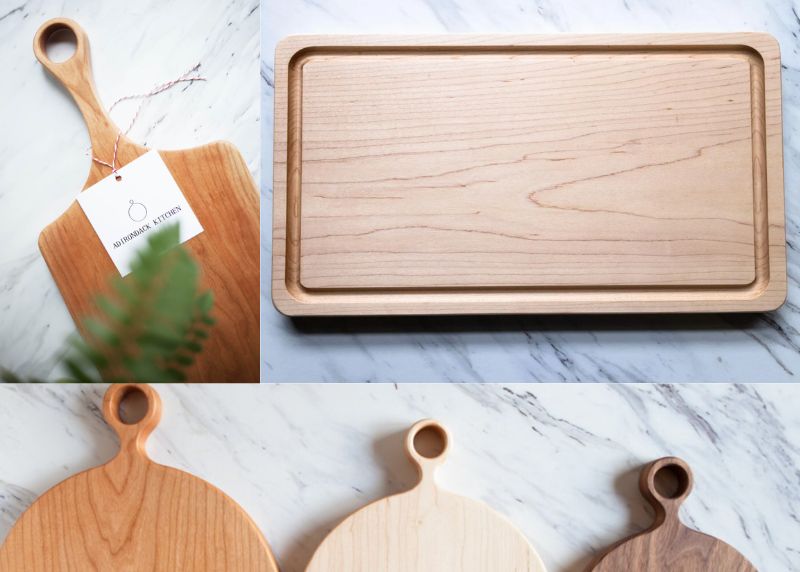
This large maple board is about an inch thick and can be ordered with or without a juice groove. This cottage-style board has looped handles and feels a little more special, and this round board is unlike almost anything else I came across – it’s so pretty.
Each one would make a beautiful wedding, housewarming, or holiday gift, especially with the engraving option.
Also for handmade, solid-wood boards with this much character, many of the options from this shop are much more affordable than I expected.
🍋 Mamma Mangia: Best Modern Heirloom
Materials: Maple or black walnut
Construction: One solid piece; no glue
Finish: Organic fractionated coconut oil + beeswax
Made in: USA
Price: $99-$289
Why It Made The Cut
Mamma Mangia also comes in a range of styles and options that feel a little more modern.
The boards are made from one solid piece of maple or black walnut with no glue or synthetic sealers, then conditioned with coconut oil and beeswax.
They offer a different handle style than Adirondack Kitchen, which may appeal more if you prefer an integrated grip rather than a looped or farmhouse-style handle. Like most boards made from one solid piece of hardwood, they can also be lightly sanded and refinished as they wear, which gives them the potential to last for many years – or even be passed down.
🪵 Sten Wood Lab: Best Basic Solid-Wood Board
Materials: Hard maple, black walnut, or white oak
Construction: One solid piece; no glue
Finish: Mineral oil/beeswax
Made in: Wisconsin, USA
Price: About $37+
Why It Made The Cut
Remember when I said “basic” is a selling point when it comes to cutting boards? Sten Wood Lab is a good example.
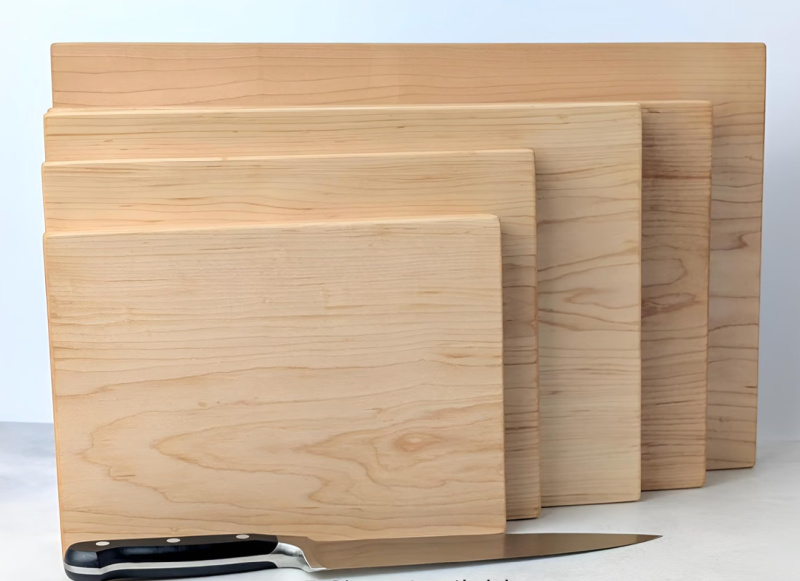
Their boards are simple, solid slabs of wood with no glue or laminations, handmade in Wisconsin. They’re also available in several smaller sizes, which is useful if you don’t need a giant board taking up half the counter every time you want to slice an apple.
The standard maple boards and walnut options are finished with food-grade mineral oil and beeswax, which isn’t my first-choice finish, but it wouldn’t stop me from buying an otherwise good solid-wood board.
They also offer white oak. It’s durable and naturally resistant to moisture, but it has a coarser grain and tends to shrink and swell more as its moisture content changes, which may make it more prone to warping than other options.
If you want a straightforward, no-frills solid hardwood board at a relatively affordable price, this is a good one to look at.
🔪 Shun Hinoki Boards: Best For Knife Lovers
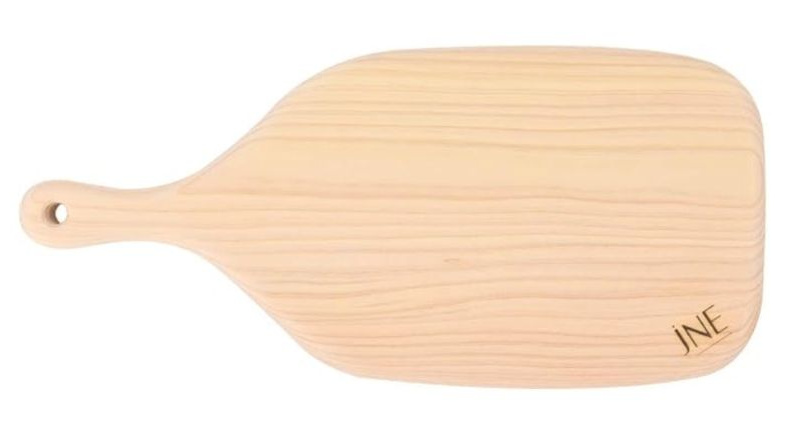
Materials: Hinoki wood
Construction: One solid piece; no glue
Finish: Unfinished
Handmade in: Japan
Price: $35+
If protecting your knife edges is a top priority, hinoki is one of my favorite options.
Unlike the hardwood boards above, hinoki is a Japanese cypress softwood, so it has a little more give under the blade. That’s one reason it has traditionally been paired with fine Japanese knives.
It’s also lightweight, naturally aromatic, and easy to move around the kitchen – especially compared with a thick hardwood board.
The tradeoff is that it needs a little more thoughtful care. Because the wood is soft, heavy chopping can leave deeper marks, and it’s important to let the board dry evenly so it doesn’t warp.
If you own good knives and want a cutting surface that’s especially gentle on them, though, hinoki is hard to beat.
The cutting board below is made from one solid piece of hinoki cypress – no joints, no glue.
🎋 Greener Chef: Best Budget-Friendly Bamboo
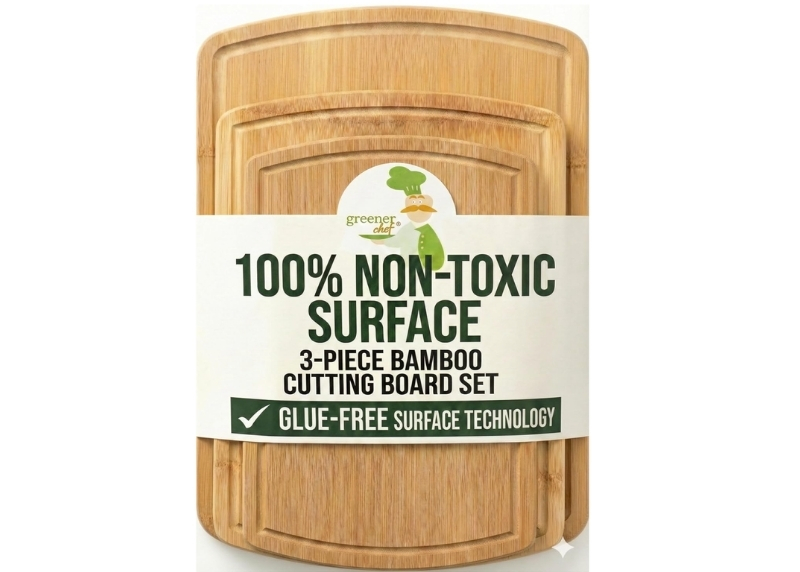
Best for: Families who want to get away from plastic for around $20.
Material: FSC-certified bamboo
Construction: Glue-free cutting surface
Adhesive:
Price: Under $20
Why It Made The Cut
Wood is easier on knives, but bamboo is easier on the budget.
What I like about Greener Chef is the way they’ve addressed one of my biggest concerns with bamboo boards: glue at the cutting surface.
Instead of making the board from lots of narrow strips with exposed glue lines, the outer surfaces are made from flattened bamboo cylinders that create a continuous cutting surface. Greener Chef says the board has three layers, with any adhesive confined to the inner construction where it doesn’t come into contact with food.
The boards also arrive raw and untreated, so there’s no mineral oil or synthetic sealer to work around. The company recommends seasoning them at home with walnut oil or another food-grade oil.
I’ve reached out to ask for more information on the internal construction of the board, and will update when I hear back. Overall, this design makes me much more comfortable recommending it than a conventional laminated bamboo board.
💵 304 Stainless Steel: Best Budget-Friendly Metal Option
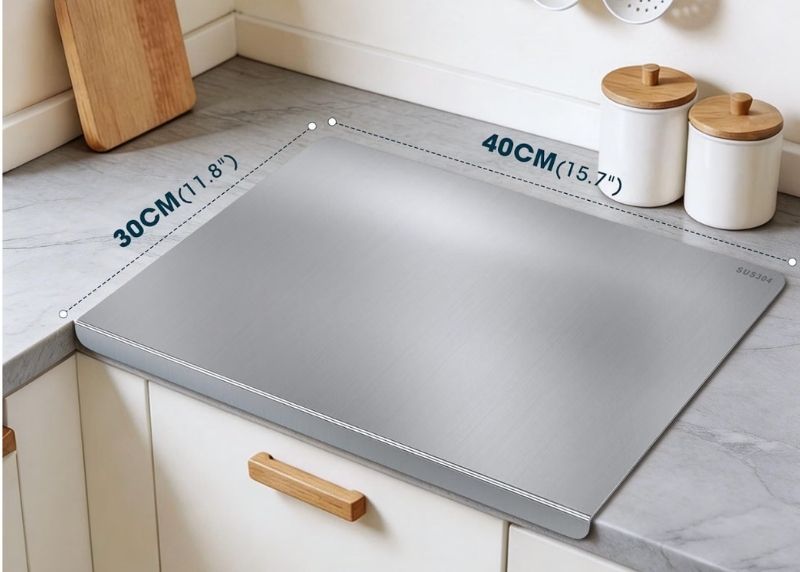
Material: 304 stainless steel
Construction: Solid stainless steel cutting surface
Non-slip: Silicone edging/pads
Dishwasher-safe: Yes
Price: About $25+
Why It Made The Cut
If you like the idea of a nonporous metal cutting board but don’t want to spend titanium prices, 304 stainless steel is the more practical option.
It’s widely used for food-contact applications, won’t absorb odors or food juices, and is easy to clean. This style also comes with a silicone mat to help keep the board from sliding around on the counter.
The tradeoff is the same one I mentioned earlier: metal is much harder on knife edges than wood. I haven’t personally used a stainless steel cutting board, so I can’t speak to how this particular one feels in everyday use, but I’d view it as a specialty board for messy prep rather than my main chopping surface.
💧 Taima: Best Dishwasher Safe Option
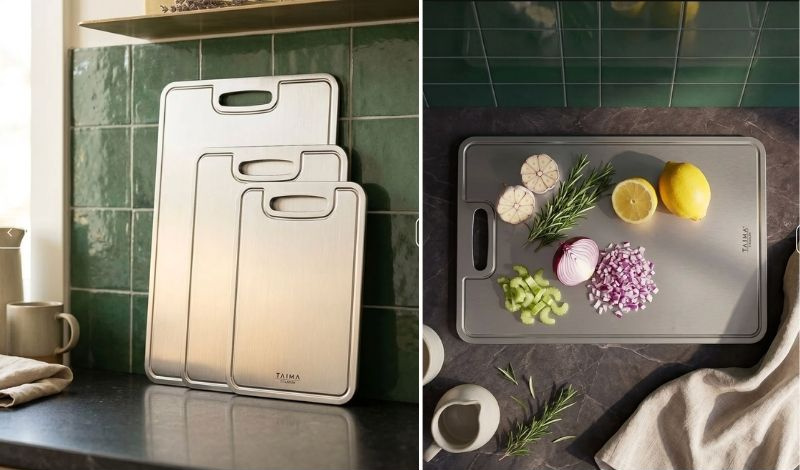
Material: Grade 1 titanium
Purity: 99.89% titanium (per SGS testing reported by Taima)
Construction: Solid titanium cutting surface
Dishwasher-safe: Yes
Price: From about $99
If dishwasher-safe cleanup is a priority, I think titanium has a slight advantage over stainless steel because it’s exceptionally resistant to corrosion – even with repeated exposure to water, salt, and acids.
Taima is one of the few titanium boards I found that clearly identifies the grade and purity of the metal, which is especially helpful in a category where some products labeled “titanium” are actually coated or made from other metals.
It’s also much lighter than stainless steel.
The challenge with this category is knowing whether you’re actually getting titanium. Taima is one of the few companies I found that clearly discloses the material used in its cutting boards. They say an SGS test found 99.89% titanium, and their certification page says readers can request the full report by email. They have a pretty enthusiastic customer following for all their products (including cookware).
The tradeoff is knife wear. Metal is less forgiving than wood, so I personally prefer wood as my main everyday chopping surface.
How to Care for Your Non-Toxic Cutting Board
First, check the manufacturer’s care instructions, because hinoki, hardwood, bamboo, and titanium all have slightly different needs.
For most wood and bamboo boards, the basics are pretty simple: wash with warm water, a mild dish soap, and a natural fiber scrubbing sponge. Avoid soaking them, and let them dry thoroughly after washing.
For stubborn odors or stains – garlic, I’m looking at you – coarse salt and half a lemon can help scrub and deodorize the surface.
Wood boards also have one advantage I really love: when they start looking worn, they can often be restored instead of replaced.
A solid board can be sanded to remove knife marks and rough spots by working from medium- to fine-grit sandpaper until the surface is smooth again. After that, just condition it with your preferred oil or wax and put it right back to work.
That’s part of why wood cutting boards are my favorite. A good one can pick up scratches, stains, and a little character over the years, but with basic care it can last a very long time – and when the surface starts showing wear, you don’t necessarily have to throw it away and start over.
Sources
- Yadav, H., Khan, M. R. H., Quadir, M., Rusch, K. A., Mondal, P. P., Orr, M., Xu, E. G., & Iskander, S. M. (2023). Cutting Boards: An Overlooked Source of Microplastics in Human Food?. Environmental Science & Technology.
- Culpepper, J. R. (2023). Making Meals Without Microplastics: Tips for Safer Cutting Boards. Environmental Working Group.
- Ak, N. O., Cliver, D. O., & Kaspar, C. W. (1994). Cutting Boards of Plastic and Wood Contaminated Experimentally with Bacteria. Journal of Food Protection.
- Vega Gutierrez, S. M., Vega Gutierrez, P. T., Waite-Cusic, J., & Robinson, S. C. (2023). Wood Cutting Board Finishes and Their Effect on Bacterial Growth. Coatings.
- Spagnuolo, M. (2022). Stop Using Mineral Oil for Cutting Boards and Utensils. The Wood Whisperer.
- U.S. Department of Agriculture, Food Safety and Inspection Service. Cutting Boards. USDA Food Safety and Inspection Service.
- Kamdem, D. P., McIntosh, D., & Sinha, A. (2025). Survival of Escherichia coli on Sugar Maple and High-Density Polyethylene Cutting Boards. Journal of Food Protection.
- Kaminski, A. (2025). I Tested Titanium vs. Stainless Steel Cutting Boards: One Destroyed My Knife. Prudent Reviews.
- Murray, T. (2026). Do You Need a Titanium Cutting Board? We Reviewed One – Here’s What You Should Buy Instead. Serious Eats.




Can I use organic castor oil to moisturize a cherry wood cutting board?
I personally wouldn’t. It will leave a sticky/tacky finish and tends to go rancid fairly quickly.
This is soooo helpful! Thank you! I am loving your recommendations series.