So, you swapped your plastic water bottles for stainless ones, minimized your exposure to BPA-laden cash register receipts, and made lots of other changes to avoid toxic chemicals . . . . only to find out you are literally wearing them?
Same.
We know that our skin is our largest organ and that it can absorb both good and bad compounds – that’s why so many of us have been making non-toxic skincare and makeup a priority for years. (It’s also why things like topical hormone replacement creams and patches exist.)
If you’ve ever picked up a tube of sunscreen, read the label, and put it back, you know the power of making mindful choices. Unfortunately, when it comes to reading the label on a piece of conventional clothing, you’re probably not getting the whole story.
Unraveling The Truth Behind The Label
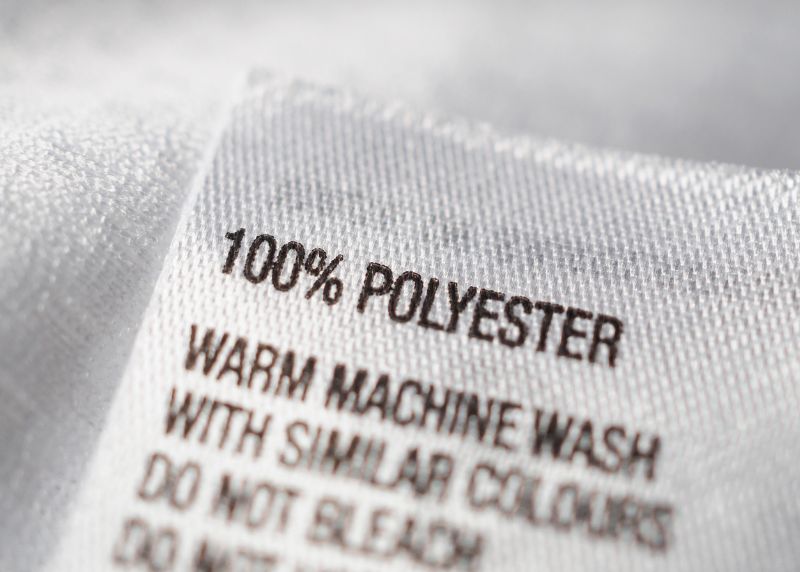
Over 8,000 chemicals are used to produce and treat fabric – for moisture wicking properties, flame resistance, etc. – and while those things sound good in theory, the result is clothing that contains microplastics, PFAS “forever chemicals,” toxic heavy metals, endocrine disruptors and more. (1)
We’re not just talking about a little bit, either. Multiple investigations by government agencies and independent labs have found toxins in concentrations that are alarmingly high.
Let’s take a look at the most common problematic chemicals in our clothing.
#1 – Phthalates: The Plasticizers That Mess With Hormones
Phthalates are added to clothing to make synthetic fabrics softer, stretchier, and more durable. They’re also used to help prints stick, make materials stain or odor-resistant, and give garments a “performance” finish.
The problem is, phthalates don’t actually bond to the fabric itself – they sit on the surface and can be absorbed through skin contact . . . especially when heat, friction, and sweat are involved. (2)
Studies link phthalates to disrupted thyroid function, reduced sperm count, early puberty, increased body fat and metabolic changes, and other endocrine impacts. (3) (4) (5) They’re also associated with an increased risk of some types of cancer. (6)
Research suggests that clothing may be a significant route of exposure. (2) In one recent investigation, Shein sandals and shoes were found to contain up to 229 times the legal limit. (7)
This isn’t a problem limited to fast fashion brands, though. A recent review of textile research found that phthalates show up in coatings, prints, and synthetic blends across the industry – even mainstream brands. (2) That’s why a regulatory action plan from Washington State names “textiles and apparel” among the key categories where phthalate exposure occurs. (8)
#2 – Microplastics: Small Pieces, Big Impact
Roughly 70% of the clothing produced today is made with synthetic fibers such as polyester, nylon, acrylic, and spandex/elastane. Every time we wash or wear these materials, small fibers shed and enter the environment as microplastics – a source that’s estimated to make up about 35% of all primary microplastics released globally. (9) (10)
Microplastics have now been detected in human blood, lungs, liver, kidneys, and reproductive organs, as well as other areas like the brain, heart, and placenta. (11) (12) (13) (14)
Here’s why that matters:
Because of their chemical structure, microplastics attach easily to known endocrine-disrupting chemicals – including dioxins, pesticides (like DDT), brominated flame retardants, phthalates, and bisphenol A (BPA) – in the environment. That means that the endocrine disruptors go everywhere that microplastics do.” – Center for Environmental Health (10)
With that said, not all synthetic fibers are contaminated with BPA, flame retardants, etc., and many sustainable clothing companies blend a small amount of elastane or nylon (usually around 5-10%) with 90–95% natural material to make them more supportive and/or long-lasting.
That’s especially true with activewear, which is usually blended with a small of elastane to provide stretch and support.
These blends significantly cut microplastic shedding while maintaining the fit and feel we love, and many companies are transitioning toward natural rubber or elastane that is biodegradable.
#3 – BPA: Still Showing Up Where We Least Expect It

After all the effort to keep BPA out of our kitchens, it turns out the chemical may still be hiding in our closets. A recent investigation by the Center for Environmental Health (CEH) found high levels of BPA in sports bras and athletic wear from brands such as Athleta, Nike, The North Face, Asics, and others – in some cases up to 40 times the safe limit set by California law. (15)
BPA can mimic estrogen and interfere with hormone signaling, and research links exposure to metabolic changes, infertility, heart disease, certain cancers, and developmental effects during pregnancy. (16)
And while most of us think of BPA as something we ingest, it can also be absorbed through skin. CEH scientists note that measurable absorption occurs after only brief contact with BPA-coated receipts, so tight, sweat-absorbing activewear worn for hours could be a more significant route of exposure.
For a deeper look at the findings and which safer options are available – you can read the full article here.
#4 – Heavy Metals: When Color Comes With a Cost
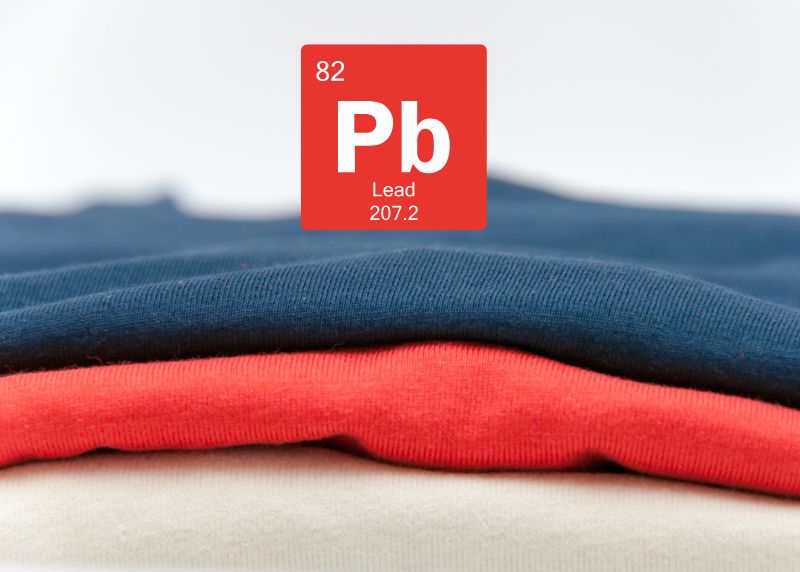
According to a paper published by Yale University’s School of Medicine, “heavy metals such as lead, cadmium, and mercury are frequently used to stabilize pigments and improve colorfastness by preventing color degradation over time.” (4)
It adds that while skin absorption “depends on factors such as chemical binding, manufacturing quality, and wear conditions, their documented presence in clothing remains a toxicological concern. Poor fixation during dyeing, degradation of fabric over time, and exposure to sweat may increase the potential for metal migration.”
Heavy metal accumulation in the body can cause skin irritation, allergic reactions, cognitive impairment, organ damage, developmental problems and cancer. (17) (18) (19) (20) (21) (4)
A 2022 study found that two common pieces of clothing – red and blue T-shirts – contained elevated levels of lead (up to ~3.4 mg/kg). (22)
Also, a Shein toddler jacket tested positive for nearly 20 times the amount of lead that Health Canada (where the investigation was done) says is safe. According to Miriam Diamond, an environmental chemist and professor at the University of Toronto, “This is hazardous waste.” (23)
The jacket was recalled. (24)
#5 – PFAS “Forever Chemicals”
Unfortunately, the nickname “forever chemicals” isn’t an exaggeration. PFAS, which is short for per- and polyfluoroalkyl substances, are synthetic compounds designed to resist water, oil, and stains. Bacteria can’t break them down, so they persist in the environment for hundreds, possibly even thousands of years, leaching into soil, water, and, increasingly, our wardrobes. (25)
PFAS are commonly used to make fabrics water or wrinkle-resistant, so it’s no surprise that testing finds them in a wide range of clothing – from outerwear and athletic gear to everyday basics. In one global survey, about 64% of clothing samples contained measurable levels of PFAS. (26)
That’s a problem, because PFAS chemical don’t just stay on the surface of fabric – research shows they can be absorbed through skin. A 2024 study from the University of Birmingham found measurable absorption for 15 of 17 PFAS compounds tested using human skin models, with some short-chain types showing up to 60% uptake. (27)
“We know today that even very low concentrations can impact the reproductive system, [have] developmental effects, increase risk of certain cancers, reduce immune response, as well as increase cholesterol levels,” says Carsten Prasse, PhD, MSc, assistant professor in Environmental Health and Engineering at Johns Hopkins University. (25)
For more PFAS and what you can do to reduce it, you can read my full article on PFAS in drinking water here.
#6 – Formaldehyde: The Hidden “Freshly Pressed” Finish
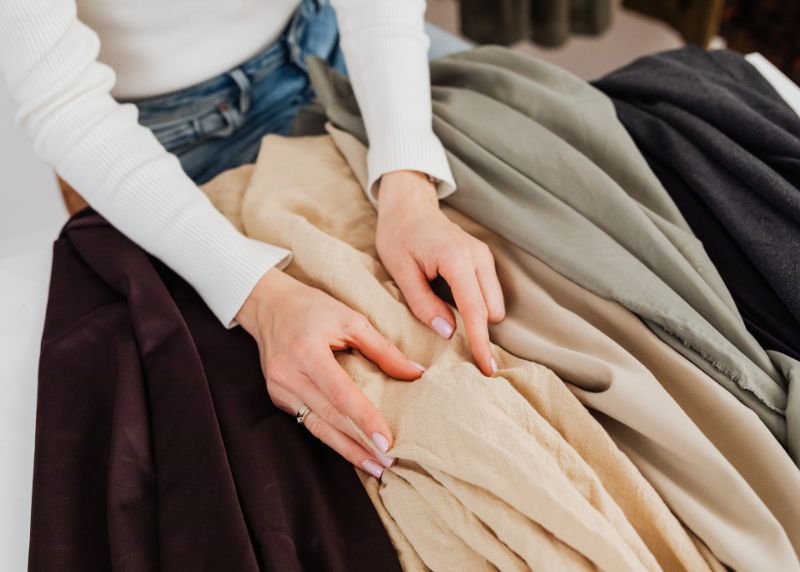
Formaldehyde-based resins are often applied to fabrics – especially cotton and cotton blends – to keep them wrinkle-free. (28) Formaldehyde is also used to extend shelf life by helping fabrics resist mildew during storage and shipping. (29)
Unfortunately, this convenience comes with a downside. Clothing treated with formaldehyde can trigger contact dermatitis, eczema, allergic reactions, and skin sensitization, and has also been shown to increase abnormal cell activity in the skin. (30)
Fortunately, there are several effective ways to reduce exposure:
- Wash new clothes – Washing new garments before wearing can significantly reduce levels. Cold water is effective, and washing multiple times can further reduce the amount. (30)
- Avoid “wrinkle-resistant” labels – Fabrics labeled as “wrinkle-free,” “no iron,” or “permanent press” are the ones most likely to have been treated with formaldehyde.
- Look for certifications – Choose brands that carry third-party certifications like OEKO-TEX® Standard 100, which verifies that textiles are free from harmful levels of formaldehyde and other chemicals.
#7 – Flame Retardants: Designed for Safety, Linked to Health Risks
Many fabrics and furnishings are treated with flame-retardant chemicals to meet safety standards. But mounting evidence suggests these additives may not always deliver the fire-protection they promise – and in some cases may worsen situations.
For example, some organohalogen flame-retardants (used in foams, upholstery, and textiles) have been shown to increase the production of toxic smoke and gases when the material burns without meaningfully improving safety under realistic fire conditions. (31) (32)
Unfortunately, flame retardants don’t just stay in the fabric – we can absorb them directly through skin contact. (33)
Research from the National Institute of Environmental Health Sciences (NIEHS) notes that exposure to flame retardants can disrupt endocrine and thyroid function, impair immune response, interfere with reproduction, and negatively affect fetal and child development, including learning and behavior. (34)
In short, while they were introduced to make clothing like pajamas safer, research suggests the risks often outweighs the benefits – especially now that there are much safer ways to increase flame resistance.
#8 – Azo Dyes: Bright Colors, Hidden Concerns

Azo dyes are some of the most widely used colorants in the textile industry. They’re inexpensive and colorfast, which makes them appealing for mass-produced garments. Unfortunately, when dyed fabrics come into contact with sweat or bacteria on the skin, some of them can break down into aromatic amines. (35)
According to dermatology research, exposure to certain azo dyes and the aromatic amines they break down into can cause contact dermatitis, eczema, and allergic sensitization – especially from disperse azo dyes used in synthetic fabrics. (36)
Some azo dyes form specific aromatic amines that have been linked to bladder cancer, prompting the European Union and several other countries to restrict or ban dozens of the most hazardous varieties. (37)
To minimize exposure, choose clothing made from natural, undyed, plant-dyed or low-impact dyed fibers whenever possible, and look for certifications like GOTS or OEKO-TEX® Standard 100 to verify that fabrics meet strict limits for harmful substances.
Progress Over Perfection: Choosing Better Fabrics

You don’t have to overhaul your whole closet to start lowering your exposure. Every small swap – choosing natural fibers more often, skipping “wrinkle-free” finishes, or upgrading one pair of leggings for a safer version – helps cut down your exposure to unwanted chemicals.
If you love your activewear (and who doesn’t?), I’ve got you covered: check out my article on non-toxic leggings to find options you’ll feel good wearing (literally, because they’re comfy).
The goal is progress, not perfection. With that in mind, here are two articles on low-toxin choices:
- 🧵 The Natural Clothing Fiber Handbook – Learn what to look for when you shop.
- 👚 15+ Non-Toxic Clothing Brands That Look, Feel & Do Good – Real-life favorites for different styles and budgets.
- 🌱 Is bamboo viscose sustainable? – What to look for, and what to skip.
Sources
- Nimkar, U. (2018). Sustainable chemistry: A solution to the textile industry in a developing world. Current Opinion in Green and Sustainable Chemistry
- Aldegunde-Louzao, N., Lolo-Aira, M., & Herrero-Latorre, C. (2024). Phthalate esters in clothing: A review. Environmental Toxicology and Pharmacology.
- Trasande, L., & Sargis, R. M. (2024). Endocrine-disrupting chemicals: Mainstream recognition of health effects and implications for the practicing internist. Journal of Internal Medicine.
- Pinto, V. C. D., & Peleg Mizrachi, M. (2025). The Health Impact of Fast Fashion: Exploring Toxic Chemicals in Clothing and Textiles. Encyclopedia.
- Peng, M. Q., Karvonen-Gutierrez, C. A., Herman, W. H., et. al. (2023). Phthalate exposure is associated with more rapid body fat gain in midlife women: The Study of Women’s Health Across the Nation (SWAN) Multi-Pollutant Study. Environmental Research.
- Ahern T. P., Broe A., Lash T. L., et. al. (2019). Phthalate Exposure and Breast Cancer Incidence: A Danish Nationwide Cohort Study. Journal of Clinical Oncology.
- Bharade, A. (2024, August 15). Shein and Temu shoes and sandals were found with 11 to 229 times the legal limit for toxic substances, South Korean officials say. Business Insider.
- Washington State Department of Ecology. (2023). Phthalates Action Plan.
- Boucher, J., & Friot, D. (2017). Primary microplastics in the oceans: A global evaluation of sources. Gland, Switzerland: International Union for Conservation of Nature.
- John, Denise. Do Your Workout Clothes Contain Endocrine-Disrupting Microplastics? Center for Environmental Health (CEH).
- Roslan, N. S., et al. (2024). Detection of microplastics in human tissues and organs: A scoping review. Journal of Global Health.
- Leslie H.A., van Velzen M.J.M., Brandsma S.H., et. al. (2022). Discovery and quantification of plastic particle pollution in human blood. Environment International.
- Campen, M., Nihart, A. J., Garcia, M. A., et. al. (2024). Bioaccumulation of microplastics in decedent human brains. medRxiv.
- Dzierżyński, E., Gawlik, P. J., Puźniak, D., et. al. (2024). Microplastics in the human body: Exposure, detection, and risk of carcinogenesis — A state-of-the-art review. Cancers.
- Difrisco, Emily. (2022). New Testing Shows High Levels of BPA in Sports Bras and Athletic Shirts. Center for Environmental Health (CEH).
- Peng, M. Q., Karvonen-Gutierrez, C. A., Herman, W. H., et. al. (2023). Phthalate exposure is associated with more rapid body fat gain in midlife women: The Study of Women’s Health Across the Nation (SWAN) Multi-Pollutant Study. Environmental Research.
- Balali-Mood, M., Naseri, K., Tahergorabi, Z., et. al. (2021). Toxic mechanisms of five heavy metals: Mercury, lead, chromium, cadmium, and arsenic. Frontiers in Pharmacology.
- Jomova, K., Alomar, S. Y., Nepovimova, E., et. al. (2025). Heavy metals: toxicity and human health effects. Archives of Toxicology.
- Althomali, R. H., Abbood, M. A., Saleh, E. A. M., et. al. (2024). Exposure to heavy metals and neurocognitive function in adults: a systematic review. Environmental Sciences Europe.
- Khoshakhlagh, A. H., Mohammadzadeh, M., & Gruszecka-Kosowska, A. (2024). The preventive and carcinogenic effect of metals on cancer: A systematic review. BMC Public Health.
- Jan, A. T., Azam, M., Siddiqui, K., et. al. (2015). Heavy Metals and Human Health: Mechanistic Insight into Toxicity and Counter Defense System of Antioxidants. International Journal of Molecular Sciences.
- Sima, M. F. (2022). Determination of some heavy metals and their health risk in T-shirts printed for a special program. PLOS ONE.
- Cowley, J. & Matteis, S. (2021). Experts warn of high levels of chemicals in clothes by some fast-fashion retailers. CBC News / Marketplace.
- Cowley, J. & Matteis, S. (2022). Health Canada recall: SHEIN kids jacket over lead exposure risk. CBC News.
- Rosen, M. (2024). What to Know About PFAS. Johns Hopkins Bloomberg School of Public Health.
- Watson, A. (2024). New study finds banned “forever chemicals” being used in children’s clothing worldwide. CHEM Trust.
- Oliphant, L. & Griffiths, S. (2024). New study confirms forever chemicals are absorbed through human skin. University of Birmingham News.
- United States Government Accountability Office. (2010). Formaldehyde in Textiles: While Levels in Clothing Generally Appear to Be Low, Allergic Contact Dermatitis Is a Health Issue for Some People
- Green Seal. (2024). Understanding Ingredients: A Guide to Formaldehyde.
- Herrero, M., et al. (2022). Early-life exposure to formaldehyde through clothing. Environmental Health Insights.
- Page, J., et al. (2023). A new consensus on reconciling fire safety with environmental & health impacts of chemical flame retardants. Environmental International.
- Shaw, S. D., Blum, A., Weber, R., et al. (2010). Halogenated flame retardants: do the fire safety benefits justify the risks? Reviews on Environmental Health.
- McLendon, R. (2024). Humans can absorb toxic flame-retardants through skin, study finds. ScienceAlert.
- National Institute of Environmental Health Sciences. (2024). Flame retardants.
- Brüschweiler, B. J., & Merlot, C. (2017). Azo dyes in clothing textiles can be cleaved into a series of mutagenic aromatic amines which are not regulated yet. Regulatory Toxicology and Pharmacology.
- Carlsson, J., Åström, T., Östman, C., et al. (2022). Disperse azo dyes, arylamines and halogenated dinitrobenzene compounds in synthetic garments on the Swedish market. Contact Dermatitis.
- European Chemicals Agency (ECHA). (n.d.). Substances restricted under REACH Regulation (Annex XVII).