
While researching non-toxic clothing, you’ve probably come across descriptions like “organic bamboo viscose” and “rayon made from bamboo.” The first one sounds more natural than the second, but they’re usually describing the exact same thing.
So what is bamboo fabric, and is it a good option for clothing?
The answer, friends, is . . . it’s complicated.
A few years ago, the Federal Trade Commission fined several major retailers – including Amazon, Macy’s, and Sears – for falsely labeling products as various vague forms of “bamboo” when they were actually rayon. (1)
Some were labeled “100% Organic Bamboo” and “100% knit bamboo,” while others were just “bamboo fiber.”
Bamboo’s controversial reputation as a textile comes down to two things:
First, the bamboo plant is famous for growing fast and thriving without pesticides, fertilizers or irrigation. Second, while the plant itself is sustainable, the process used to turn it into fabric usually isn’t.
There are exceptions, though, so let’s dive in.
How Bamboo Becomes Fabric (And Why It Matters)
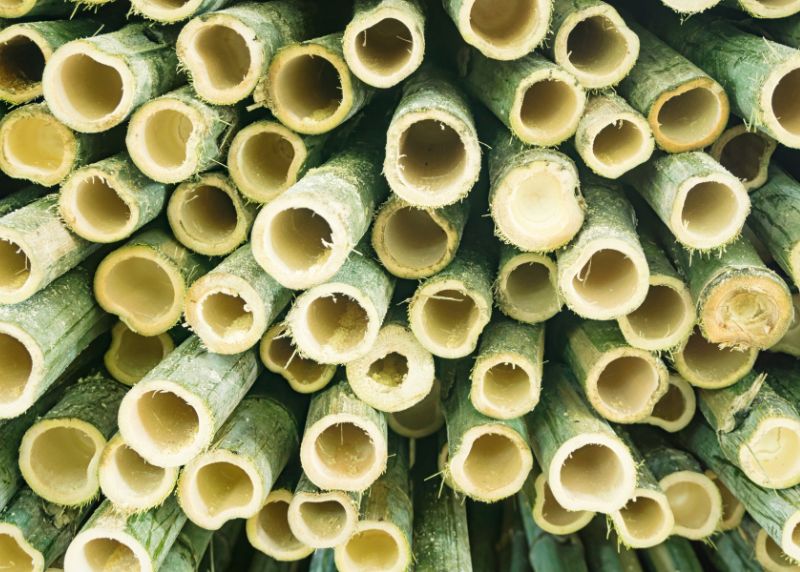
There are two main ways to turn bamboo into fabric: mechanical and chemical.
The mechanical method is the cleanest and most traditional. The stalks are crushed, the fibers are naturally softened using enzymes, and then spun into a yarn similar to linen. The result – sometimes called bamboo linen – is durable and fully natural. However, the process is time-intensive expensive, and not super soft, so it only represents a tiny fraction of the “bamboo” products on the market. (2)
Most bamboo fabric is made using the chemical method. In this process, bamboo is reduced to pulp and dissolved in a mix of caustic soda (sodium hydroxide) and carbon disulfide. The resulting solution is pushed through a spinneret (a kind of showerhead for fibers), creating filaments that are later spun into yarn.
The result is a cellulosic fiber that’s in the rayon family of fabrics.
Rayon is considered a semi-synthetic material because it doesn’t fit neatly into the “natural” or “synthetic:” categories. Instead being made from a natural material that requires minimal processing (like cotton) or a synthetic plastic like polyester, it’s made from natural materials using a man-made chemical process.
How that processing is handled makes all the difference – both for our health and for the world we’re leaving to our kids.
Here’s why: You might recognize sodium hydroxide (NaOH) as lye, which is the compound that transforms fats and oils into natural soap through a process called saponification. During soapmaking, it reacts completely with fatty acids so that – when done correctly, no free lye remains in the final product. Soapmakers have used it safely for centuries.
In other words, sodium hydroxide isn’t a “villian,” but when it’s used in huge industrial quantities and then disposed of without neutralization, it can kill aquatic life and damage soil and waterways.
Carbon disulfide, on the other hand, is neurotoxic (linked to nerve damage, mood changes, Parkinson-like symptoms), volatile (easily released into the air), and can build up in workplaces over time. It’s often considered the main toxic driver behind rayon production. (3) (4) (5)
Even though most residues are removed before the final fabric reaches consumers, the impact of manufacturing is often far from safe. These chemicals can – and do – contaminate rivers, harm wildlife, and threaten nearby communities that depend on those waters.
Better Alternatives: Lyocell and TENCEL™
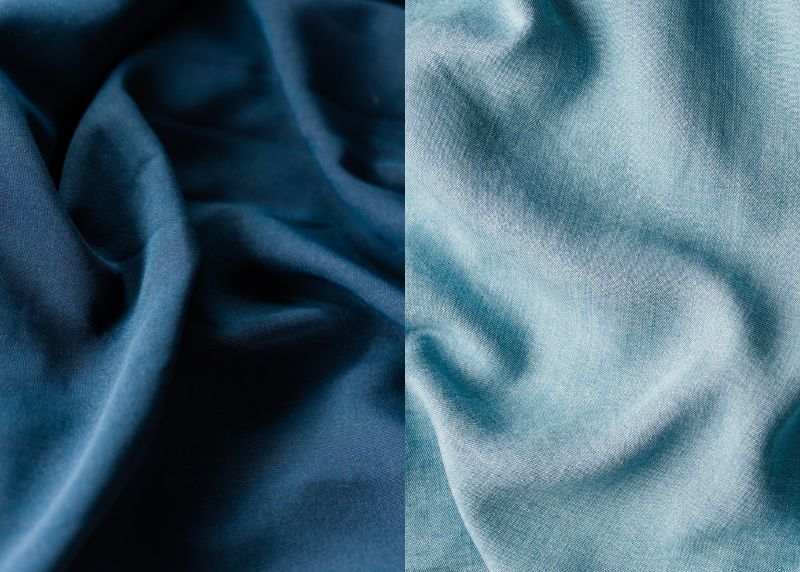
Most clothing brands still use conventionally produced bamboo viscose fabric (and are probably hoping you don’t ask too many questions), but there are now better ways to turn plant pulp into soft, durable fabric.
The lyocell process is the most well-known way to make safer semi-synthetics. Instead of using carbon disulfide, lyocell dissolves plant pulp (from bamboo, eucalyptus, or beech trees) in a non-toxic solvent within a closed-loop system. This means 99% of the non-toxic solvent and water are captured, purified, and reused, making it a much safer method for workers and our environment.
Lenzing’s TENCEL™ lyocell is the most widely recognized lyocell fiber, known for its silky texture, breathability, moisture-wicking properties and strength. It’s biodegradable, gentle on sensitive skin, and often blended with organic cotton or wool for softness and durability.
However, there are other closed-loop processes out there, so even if a brand doesn’t use TENCEL™ it’s possible they still might be worth considering. As a starting point, I recommend checking whether the brand mentions closed-loop manufacturing.
The Real Sustainability Question Isn’t Bamboo – It’s Processing
Bamboo itself is an amazing, renewable plant – but much of the “bamboo” clothing out there isn’t what companies claim. The difference between an eco-friendly fiber and an environmental problem comes down to how it’s made.
If you love the idea of plant-based clothing, TENCEL™ and other responsibly made lyocell fabrics are some of the best modern alternatives. They offer the softness people love about bamboo viscose – without the environmental impact.
For more on choosing safer, sustainable textiles, check out:
- The Natural Clothing Fiber Handbook
- 15+ Non-Toxic Clothing Brands That Look, Feel & Do Good
- Best Non-Toxic Leggings
- The Hidden Chemicals In Modern Clothing
Frequently Asked Questions
Is TENCEL™ lyocell the same thing as TENCEL™ modal?
No. TENCEL™ modal is a modified version of the traditional viscose rayon process that uses different chemicals. It has a higher chemical recovery rate than conventional processes, but I think the lyocell fabric is the better option.
Is bamboo fabric antimicrobial?
Bamboo has some natural antimicrobial properties, but they are not retained when it is processed into fabric.
Does LENZING™ Lyocell shed microplastics?
No. Bamboo lyocell is a cellulose-based fabric and does not contain plastic.
Sources
- Federal Trade Commission. (2013, January). Four national retailers agree to pay penalties totaling $1.26 million for allegedly falsely labeling textiles. FTC Press Release.
- Carter, K. (2008, August 12). Pandering to the green consumer: Bamboo is touted as a super-sustainable fabric, but do its ethical credentials hold water? The Guardian.
- Agency for Toxic Substances and Disease Registry (US). (2025). Toxicological profile for carbon disulfide. National Center for Biotechnology Information, U.S. National Library of Medicine.
- Medbery, C., & Therriault, C. (2025). Carbon disulfide toxicity. StatPearls Publishing. National Center for Biotechnology Information, U.S. National Library of Medicine.
- Agency for Toxic Substances and Disease Registry. (2025). Toxicological profile for carbon disulfide. National Center for Biotechnology Information, U.S. National Library of Medicine.




Hi Heather!
So grateful for all your detective work and experimenting! I’ve followed you for over a decade and use many of your recommendations, constantly sharing your site with friends and clients. Have you ever looked into the bamboo toilet paper and which brands are best from an environmental, health, and cost perspective?
Hi Moneca, based on reader feedback I’m currently testing or have plans to test a bunch of products for 2026 guides – bamboo toilet paper is on the list!