“WHAT’S THE PASSWORD!?!?!?” I peek around the corner and find my son shouting at the toilet, apparently miffed by its inability to suck giant swaths of paper into the vortex under our house. Of course I grabbed the plunger and voila! No big deal.
If only all potty struggles were that easily solved, right?
Unfortunately, issues like constipation can be quite the challenge with children. I’ve written about several research-backed natural constipation remedies before, but recently my friend Robyn shared a tip for supporting healthy bowel function that I thought was genius.
Before we dive in, though, I want to mention that none of these statements have been evaluated by the FDA, this article is not medical advice, and it is not meant to diagnose or treat any condition.
Please talk with your healthcare provider about any natural remedies you are considering. Now that we’ve got that out of the way, let’s dive in.
What Causes Constipation?
Constipation can occur for a variety of reasons, including holding a bowel movement because you’re feeling shy in a public restroom, a change in diet, stress, dehydration and other reasons, but there’s a difference between occasional constipation and chronic constipation.
If constipation is ongoing, it’s worth checking in with a healthcare practitioner to look for possible underlying causes.
What What About MiraLAX?
According to pediatrician Dr. Scott Cohen, MiraLAX is often prescribed to children for months, sometimes years. “We literally give it like water,” he told the New York Times.
That may be surprising for two reasons:
- MiraLAX is labeled for adults and children ages 17 and older. For children 16 and under, the label says to ask a doctor.
- The directions say not to use it for more than seven days unless advised by a doctor.
So when doctors recommend it for younger children – especially for longer-term use – they’re using it off-label.
Over the years, parents have reported neurological and behavioral symptoms in children taking PEG 3350, which is the active ingredient in MiraLAX. The FDA reviewed reports that included symptoms such as anxiety, aggression, mood changes, tremors and seizures, although those reports did not establish that MiraLAX caused the symptoms.
The concerns were taken seriously enough to prompt further research. The FDA funded a Children’s Hospital of Philadelphia study looking at PEG 3350 components and metabolites in the blood and urine of children taking it, along with behavioral assessments. The study has now been completed, but as of October 2026 the researchers say laboratory and data analysis are still underway and results have not yet been posted.
Interestingly, the makers of MiraLAX now offer MiraFAST Kids for children ages 4 and up. It contains a different active ingredient – magnesium hydroxide – rather than PEG 3350.
For occasional constipation, I prefer to start with simple measures like adequate fluids, fiber-rich foods, movement and other gentle forms of support when appropriate.
Persistent or recurring constipation is different, though, especially in children. Chronic constipation can sometimes point to an underlying cause and should be evaluated by a healthcare practitioner.

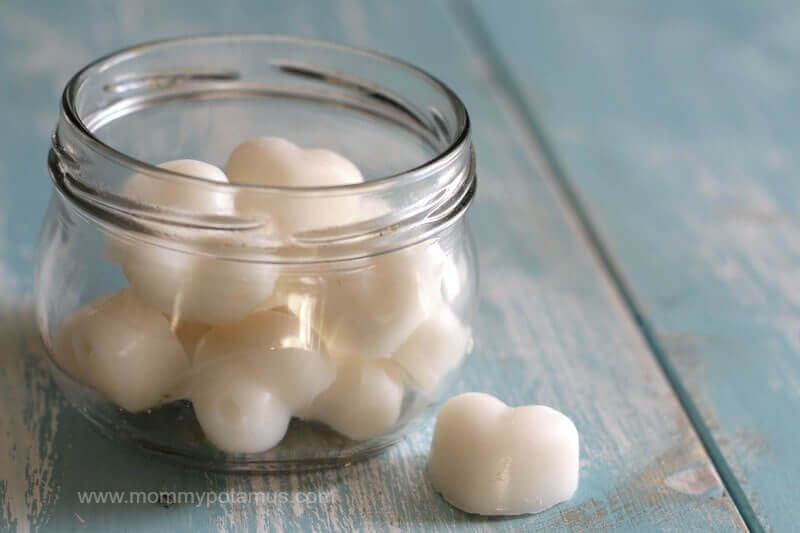
Getting Things Moving With Constipation Candy
Fortunately for the occasional bout of constipation there are ways to encourage normal bowel function. My friend Robyn shared this recipe with me after finding it helpful for her son.
About 13–15% of the fatty acids in coconut oil are the medium-chain fats caprylic acid (C8) and capric acid (C10). Research on concentrated MCTs suggests that these fats can increase intestinal motility and speed intestinal transit. Coconut oil contains them in much lower amounts than MCT oil, which may actually be a benefit here since larger amounts of MCTs can cause cramping, loose stools, or diarrhea.
Although coconut oil itself hasn’t been well studied as a remedy for constipation, the effects of medium-chain fats on the digestive tract may help explain why some people find it helpful for occasional constipation.
“Just two ‘constipation candies’ and then anywhere between 8 to 18 hours later, total relief without tears,” says Robyn.
Because silicone molds vary considerably in size, the amount contained in two pieces can vary, so the number of pieces that works well may vary too.
For children in particular, check with your healthcare provider about persistent constipation or before using food-based remedies therapeutically.
Constipation Candy
Equipment
- silicone mold (I used this one)
- Food processor or immersion blender
Ingredients
- ½ cup organic extra virgin coconut oil, melted
- 2-3 tbsp lemon juice (mix and taste as you go along)*
- 1 tbsp honey, maple syrup, sucanat or coconut sugar
- ⅛ tsp salt
Instructions
- Combine all ingredients in a food processor or with a handheld mixer and pour into the candy molds. Taste as you go along and make it as sweet or sour as you like. Everything has to be very well mixed into the oil, so make sure as you’re pouring the last bit in that it’s not sugar or honey-heavy.Tip: My first batch separated, so the second time I made them I put my silicone mold in the freezer for about 10 minutes prior to pouring. When it was time, I let the mixture whir in my food processor for sixty full seconds before pouring it into the molds, then set it in the freezer for an hour.
- Store in a covered container in the refrigerator and use within 48 hours, or freeze for longer storage. Because this recipe contains fresh lemon juice (and potentially puréed fruit), I don’t recommend storing it for extended periods in the refrigerator.
Notes
Other Things That May Help
In addition to the remedies I suggest here, you might also consider aloe vera juice and slippery elm bark powder. It’s slightly sweet so kids usually enjoy taking it.
Also, though it might seem a little odd, you might also consider getting a squatty potty if your child is old enough to use it. Dr. Bernard Jensen once wrote that “one of the bowel’s greatest enemies in civilized society is the ergonomic nightmare known as the toilet.
The stool allows for a more ergonomic approach – putting the body into a natural squatting position over the toilet. When positioned correctly, their body may be able to eliminate more quickly and completely. Squatty Potty stools come in two sizes: 7″ for standard toilets and 9″ for higher toilets.
Do you have a tried-and-true remedy for constipation? Please share it below!
Want more research-backed natural remedies?
No problem, I’ve created a free ebook for you – Kitchen Apothecary: 25+ Natural Remedies Using Ingredients From Your Pantry – as a gift for signing up for my newsletter. You’ll also get updates when I post about safe essential oils for pregnant/breastfeeding mamas, exclusive gifts and coupons (I was able to give away a jar of free coconut oil to anyone who wanted it recently!), plus other goodies.
Sign up using the form below.
This article was medically reviewed by Dr. Sheila Kilbane, MD, a board-certified pediatrician, trained in integrative medicine. As always, this is not personal medical advice and we recommend that you talk with your doctor.