Have you ever wondered why so many pairs of women’s underwear have a tiny bow sewn onto the front? 🎀
It’s a throwback to the days before elastic waistbands, when women’s undergarments were held up with ribbons or drawstrings tied at the waist.
Thankfully, we’ve come a long way in the stretch department since then . . . but not every change has been an upgrade.
Instead of simple natural fibers, many modern pairs are made with polyester and other synthetics – which are essentially forms of plastic. As they’re worn and washed, these fabrics can shed tiny plastic fibers known as microfibers or microplastics.
Also, depending on how a garment is dyed, finished, or treated, it may contain substances like PFAS, phthalates, formaldehyde, and certain heavy metals.
That’s especially important when it comes to foundational pieces like underwear because, well, they’re FOUNDATIONAL.
They’re worn directly against sensitive skin for hours every day, in an area that’s naturally warm, moist, and more absorbent than many other parts of the body – so this is one item where I think the materials deserve extra consideration.
Of course, none of that matters much if the underwear is destined to sit untouched in the back of a drawer because it digs in, rides up, falls down, or somehow manages to do all three.
So for this guide, I’ve put together a list of brands that check both boxes: thoughtfully made and actually comfortable to wear.
We’ll look at affordable organic cotton basics, other natural-fiber options, undyed choices for sensitive skin, and even underwear made without conventional elastic or spandex.
Along the way, we’ll also cover what certifications like GOTS and OEKO-TEX actually tell us, and when a little elastane might be a reasonable tradeoff.
Because if we’re going to rethink what’s in our underwear drawer, I’d really like the replacement pairs to be soft, flattering, comfortable . . . and capable of staying up without a drawstring.
✋ Quick Picks
If you’re short on time and want to skip to my top recommendations, here are the options I’d look at first. I’ve included additional recommendations for extra sensitive skin, colorful coastal basics, and more.
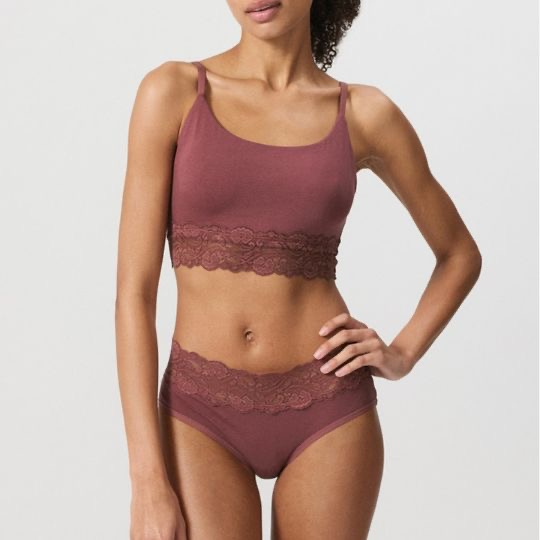
Best place to start
Pact
Soft, comfortable organic cotton basics with GOTS-certified fabric, lots of everyday styles, and prices that make replacing a few pairs at a time pretty reasonable.
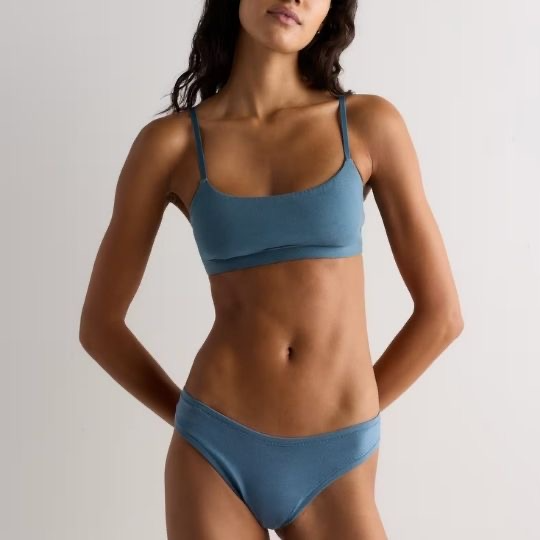
Best budget pick
Quince
Their organic cotton six-packs are by far one of the most affordable options I found, and the hipsters I tried are soft, lightweight, and stay put.
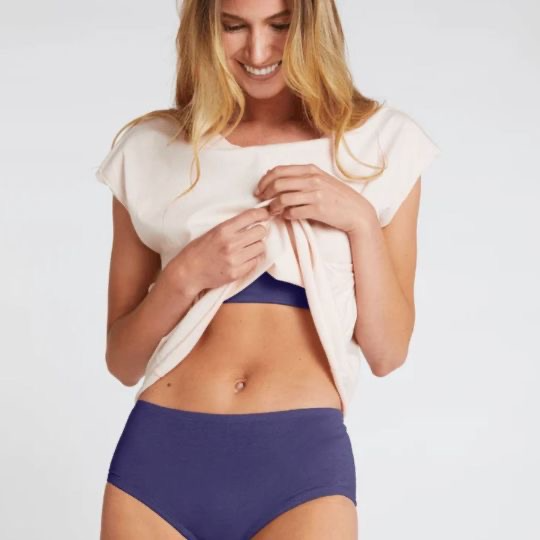
Best plastic-free pick
The Very Good Bra
Despite the name, they also make underwear and are a standout if you want to avoid conventional synthetic fibers altogether. 100% organic cotton or Lenzing TENCEL™.
Why Underwear Materials Matter More
Our skin is designed to protect us, but it’s also semipermeable. Certain substances can cross that barrier – which is why topical hormone creams and patches are able to deliver active ingredients through the skin and into the body.
The barrier isn’t the same everywhere, though. Some areas are more permeable than others, including the sensitive skin and tissue covered by underwear.
Part of the reason is structural. The tissue in this area tends to be more hydrated and, in some places, has a thinner or less keratinized protective layer than ordinary exposed skin. Researchers have also pointed to factors like prolonged coverage, moisture, friction, and increased blood flow as reasons the area may be more susceptible to substances that come in contact with it. (1) (2) (3)
In other words, underwear sits close to the body for hours at a time in an area that tends to be warm and moist, with plenty of movement and friction throughout the day. Whatever’s present in or on the fabric – from dyes and textile finishes to residues left behind by laundry products – can remain in close contact with sensitive tissue for a long stretch of time.
That doesn’t mean everything in our underwear is absorbed into the bloodstream. Whether a substance transfers from fabric and passes through the skin depends on what it is, how much is present, and other factors.
But taken together, there are enough reasons for me to give underwear more consideration than, say, an outer-layer coat.
That’s why I prioritize breathable natural fibers when possible, pay attention to how fabrics are dyed and finished, and look for third-party standards that tell me more about what went into making them.
What I Look For In Natural & Organic Underwear
When I’m comparing underwear, here are the details I pay the most attention to:
1. Natural fibers as the foundation
At this point, I pretty much stick with underwear that’s at least 90% natural fiber – and fortunately, there are plenty of options across a wide range of styles and price points.
Cotton is the most common option, and it makes a lot of sense for underwear because it’s soft, breathable, and comfy. Organic cotton is my first choice, but as I explain here, I think conventionally grown cotton is still a better choice than synthetics like polyester.
Hemp is another interesting choice because it’s breathable, moisture-wicking, durable and tends to resist odors well.
Bamboo viscose is a slightly different category. It’s considered a semi-synthetic because it doesn’t fit neatly under the “natural” or “synthetic” label – it’s made from natural materials but highly processed . . . and the type of processing is what I look for when I’m deciding whether to place an order.
Lenzing’s TENCEL™ lyocell is the most widely recognized and respected way of making bamboo into a fabric that is known for its silky texture, breathability, moisture-wicking properties and strength. It’s biodegradable, gentle on sensitive skin, and often blended with organic cotton or wool for softness and durability. I explain the differences between bamboo processing methods here.
For underwear especially, a little stretch can be useful, so you’ll see some options that are around 95% natural fiber with 5% elastane or spandex. That’s a tradeoff I’m comfortable making when the synthetic fiber is there to support the natural material rather than dominate the blend.
And for anyone looking to eliminate synthetics altogether, I’ve included some 100% natural-fiber options too.
2. Certifications ✅
GOTS (Global Organic Textile Standard) is one of the certifications I look for most often. It covers certified organic fibers along with processing requirements for dyes, finishes, and other chemical inputs, plus environmental and social criteria throughout the certified supply chain.
It’s the kind of third-party verification that follows a fiber from its certified organic origin through the sewing machine, instead of just telling us what percentage of the finished fabric is cotton.
OEKO-TEX® STANDARD 100 focuses on testing textile products and their components for harmful substances. Underwear falls into its direct-skin-contact category, which has stricter requirements than products with less skin contact.
OCS (Organic Content Standard) verifies the presence and amount of organically grown material in a finished product and tracks it through the supply chain. It doesn’t regulate textile processing in the same way GOTS does, but it does provide third-party verification that the organic fiber is actually there.
You’ll see different combinations of these certifications throughout the guide, so I’ll point them out with each brand.
3. Elastics, Dyes & Other Components
Elastic waistbands, sewing thread, dyes, and textile finishes can all introduce materials that aren’t obvious from a label that simply says “100% cotton.”
Some of those details matter more to me than others. I’m not going to lose sleep over 5% elastane, but I do love that some brands are switching to natural rubber – and I’d be happy to see more of that.
What I pay much closer attention to is transparency around dyes, finishes, and other treatments that stay in or on the fabric.
A few brands go unusually far in explaining exactly what’s in the finished garment, right down to things like thread, elastic, and dye choices, so I’ll highlight those details below.
The Best Non-Toxic Underwear Brands
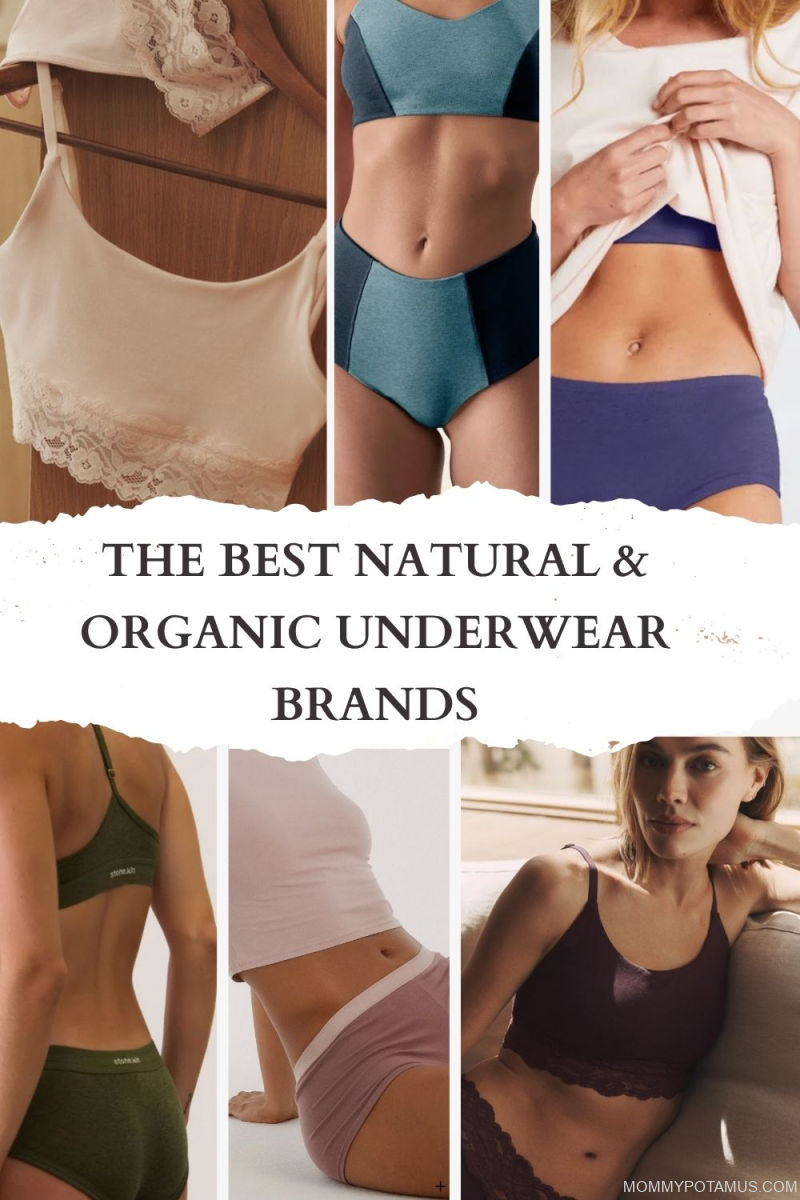
The most sophisticated certification system in the world can’t rescue a pair of underwear that’s constantly wedged somewhere it doesn’t belong.
I want natural and organic underwear to be something I reach for because it feels good – not something I tolerate because the material list looks impressive. That’s why I’ve only included brands I’ve personally tested or that are highly rated for comfort.
Whenever I’ve personally tried a brand, I’ll share what I think about softness, fit, coverage, support, and how it actually feels to wear.
For brands I haven’t personally tried yet, I’ll stick to what I can verify about the materials, construction, certifications, and company practices.
I’ve included additional recommendations for extra sensitive skin + different colors and styles later in the article.
Pact – Affordable Organic Cotton Basics
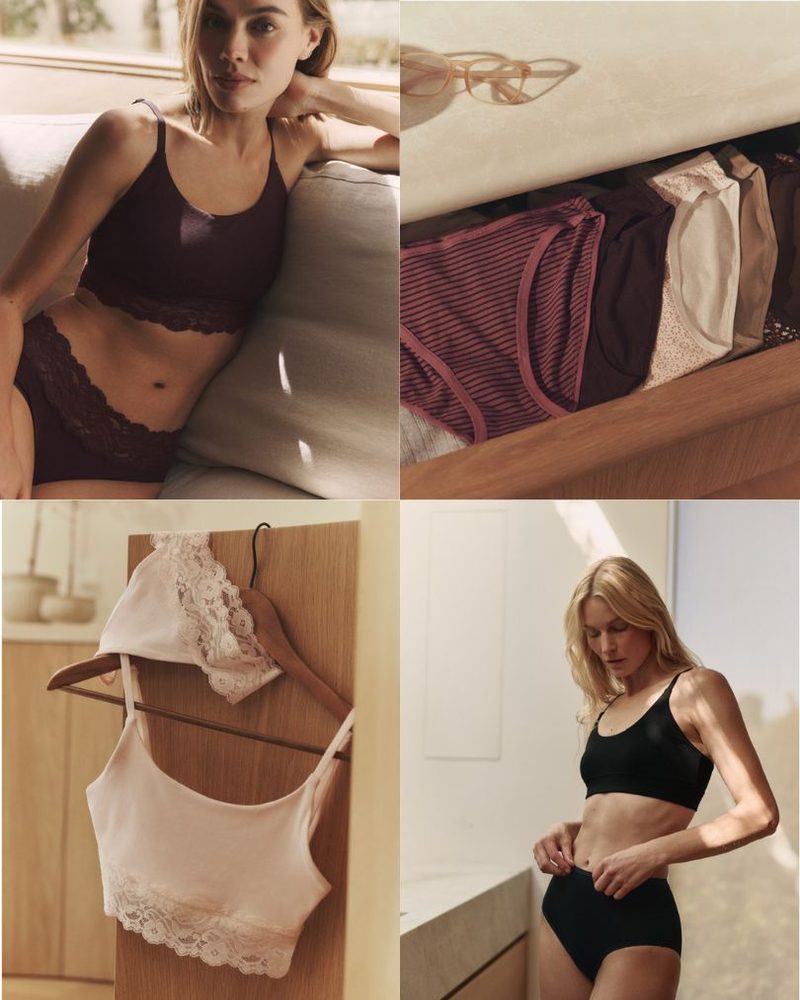
What it’s made of: Most Everyday underwear styles are 95% organic cotton and 5% elastane, with a 100% organic cotton gusset.
Certifications: GOTS-certified fabric; Fair Trade Certified production for the vast majority of core apparel.
Sizes: Many women’s underwear styles extend through 3X.
Price: Individual Everyday briefs have recently been listed around $16, while five-packs averaged to about $13/pair when I checked. Prices and promotions change frequently.
Best for: Affordable everyday organic cotton underwear with meaningful third-party certification.
Why Pact Made The List
Pact is probably the easiest starting point for someone who wants to switch to carefully sourced organic cotton without spending $25-$30 per pair.
Their Everyday collection comes in mid-rise hipster, classic bikini, high rise brief and thong styles, all made with a straightforward blend of 95% organic cotton with 5% elastane.
That’s a ratio you’ll see several times in this guide. It keeps the overwhelming majority of the fabric cotton, with just enough stretch to help everything fit well and stay where it’s supposed to. The gusset is 100% organic cotton.
Their Lace collection adds a pretty lace waistband, which gives it a slightly more special feel without sacrificing comfort. I have this style, and they’re so well made and comfortable. They also stay exactly where they’re supposed to, which is my most important requirement for underwear. 😄
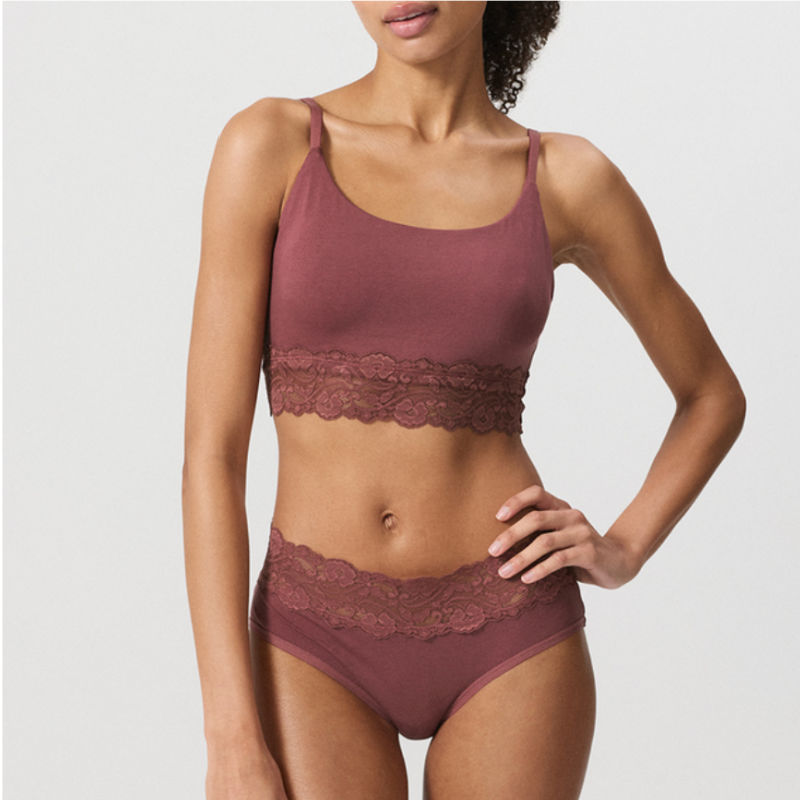
I also have this Classic T-Shirt Bra, which is soft and supportive with just the right amount of stretch. It has adjustable straps, which I love, and it’s wire-free, which I also love.
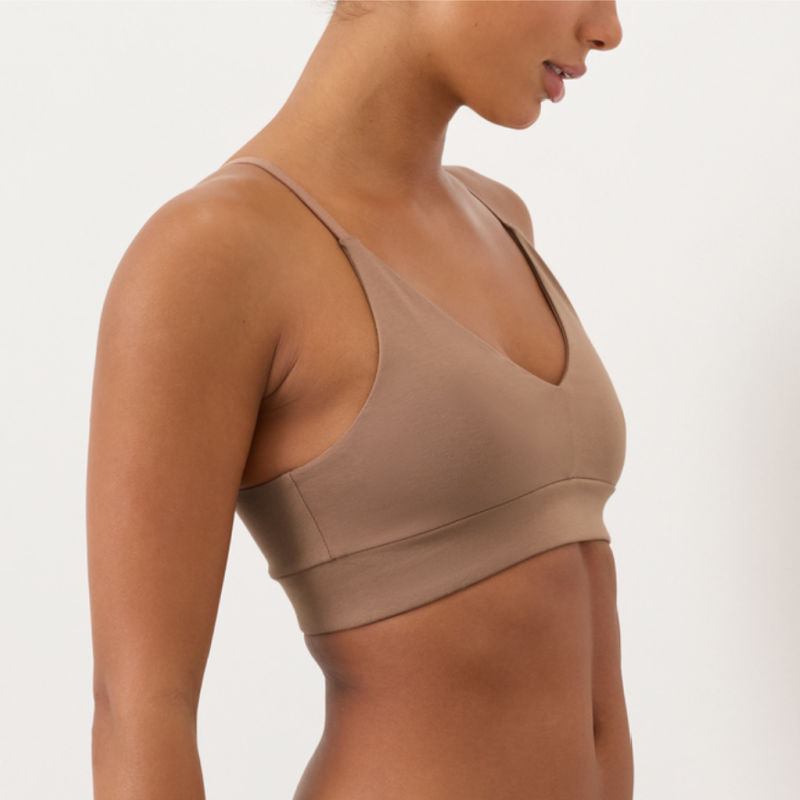
The fabric is double-layered, so it offers a pretty good amount of coverage, but it doesn’t come with pads. That may or may not matter depending on what you prefer, but it’s worth knowing before you order.
What sets Pact apart from some of the other budget-friendly brands is the combination of GOTS-certified organic cotton and strong labor standards. Pact says all of the cut-and-sew factories it works with are Fair Trade Certified, while a small number of specialty items are sourced separately and don’t carry that certification. You can read more about Pact’s standards here.
Quince – Best Budget Multipacks
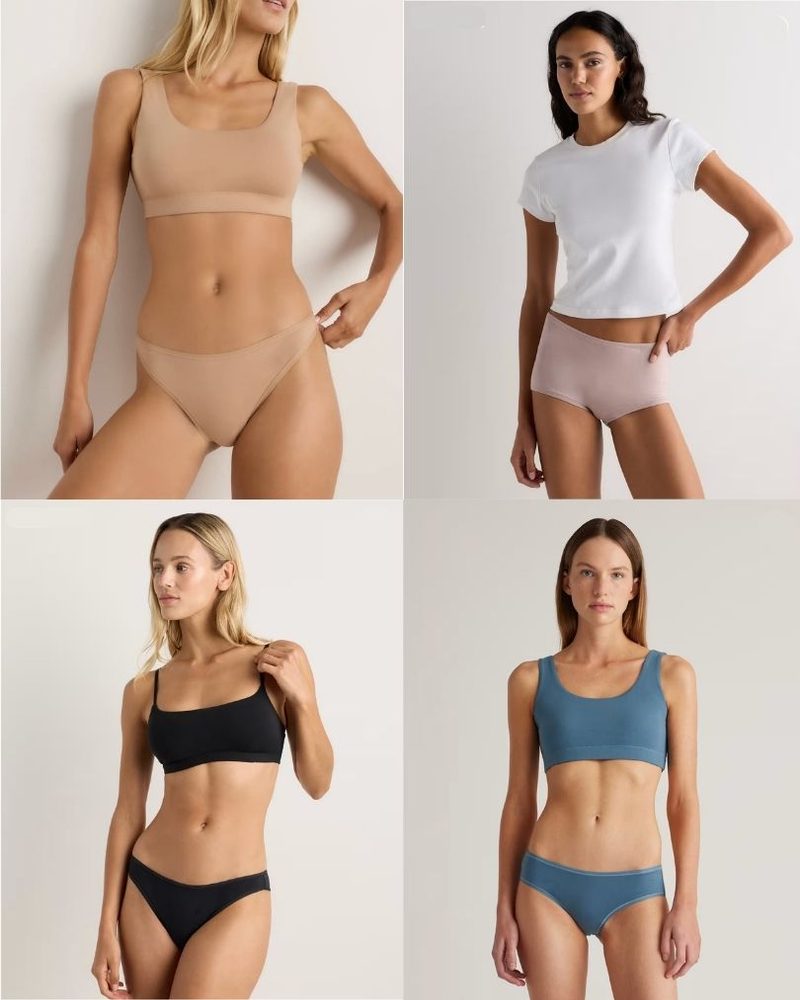
What it’s made of: Typically 95% organic cotton and 5% spandex, plus elastic at the waist/legs depending on the style.
Certifications: Organic Content Standard (OCS) certified cotton fiber and OEKO-TEX STANDARD 100 material..
Manufacturing: The hipsters I checked are made in a WRAP-certified facility in Sri Lanka.
Sizes: XS-XL for the organic cotton hipster.
Price: $29.90 for a six-pack when I checked – just under $5 per pair.
Best for: Building an organic cotton underwear drawer on a budget.
Why Quince Made The List
Quince is the budget outlier in this guide.
A six-pack of their organic cotton hipsters was $29.90 when I checked, which works out to less than the price of a single pair from some of the other brands I’ve included.
I first tried Quince when I recommended their swimsuits. Since then, the company has gifted me store credit to try several additional pieces, so I clicked “add to cart” on these hipsters and I have thoughts.
They’re soft and comfy with a “barely there” fit, but still substantial enough to feel well-made. They stay put and come in lots of soft neutrals, plus some standouts like ocean.
If hipsters aren’t your favorite, they also make high-waisted briefs, bikini, boyshort, and thong styles.
I’ve also tried their Organic Cotton Tank Bralette, which is also made with 95% organic cotton and 5% spandex. It’s so comfortable that I forget I’m wearing it, although I would love to see a version with adjustable straps someday.
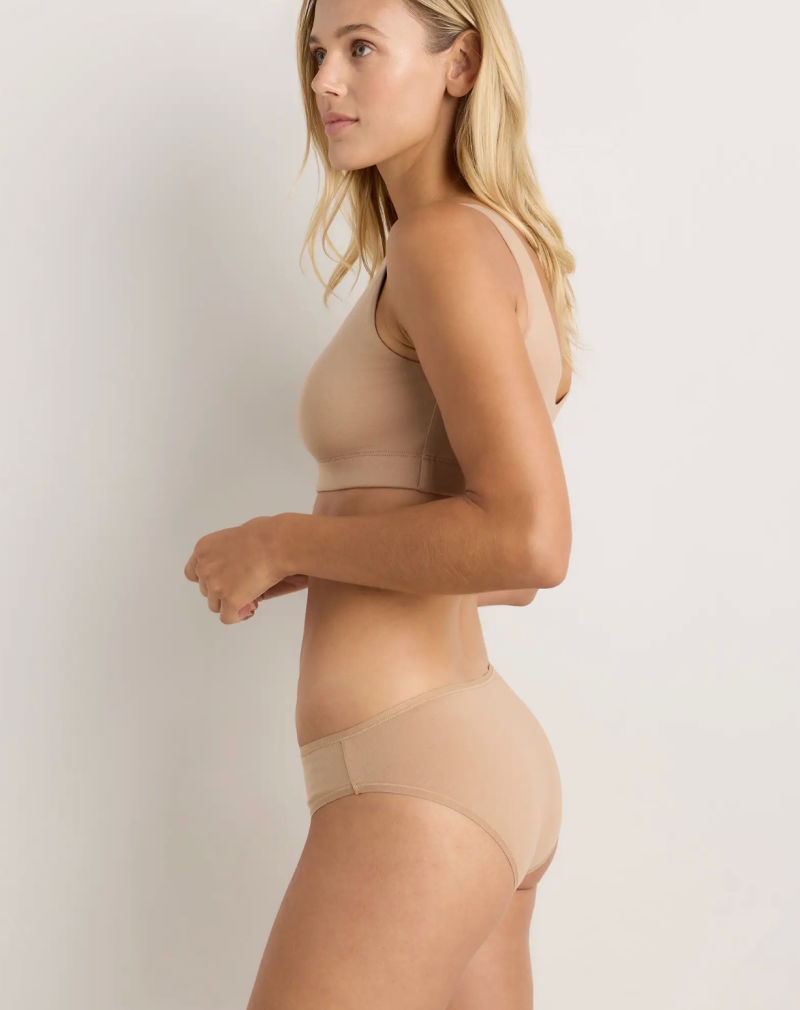
It’s unlined and doesn’t have removable cups, so if you prefer a little more shaping or coverage, I’ll point out some better options in the sections below.
They do offer a similar version with adjustable straps, which is on my list to test. I’m not in a huge rush, though, because the one I already have works really well for everyday wear.
Although Quince does offer some GOTS-certified products, these particular pieces are not, which is an important distinction from Pact and several others on this list.
Instead, they’re made with OCS-certified organic cotton fiber, and the material is certified to OEKO-TEX STANDARD 100. All the organic cotton underwear and bras I looked at were also produced in a WRAP (Worldwide Responsible Accredited Production) certified factory. WRAP Is an organization that trains and audits production facilities to ensure they are operating in a safe, responsible, and ethical way.
So although I consider GOTS certification to be the gold standard, there’s considerably more third-party verification here than you’ll usually see, and the overall value is hard to beat.
Also, just an overall note: Quince also sells products that are made with materials including 100% recycled polyester. Although that sounds like a good idea in theory, it can still shed microplastics, so I recommend checking the fabric description and certifications on individual products before purchasing.
Stonekin – Best For Colorful, Coastal Organic Cotton Basics
Best for: Colorful organic cotton underwear with a relaxed, coastal feel
Materials: Most women’s rib styles are 95% organic cotton and 5% elastane
Certifications: GOTS-certified organic cotton and OEKO-TEX® certification on the styles I checked
Synthetic content: Typically 5% elastane
Sizes: S-XL on the women’s styles I checked
Price: Bras are generally around $26-47 and briefs around $20-47 when I checked
Best for: Anyone who wants natural-fiber basics that don’t look quite so . . . basic 🙂
Why Stonekin Made The List
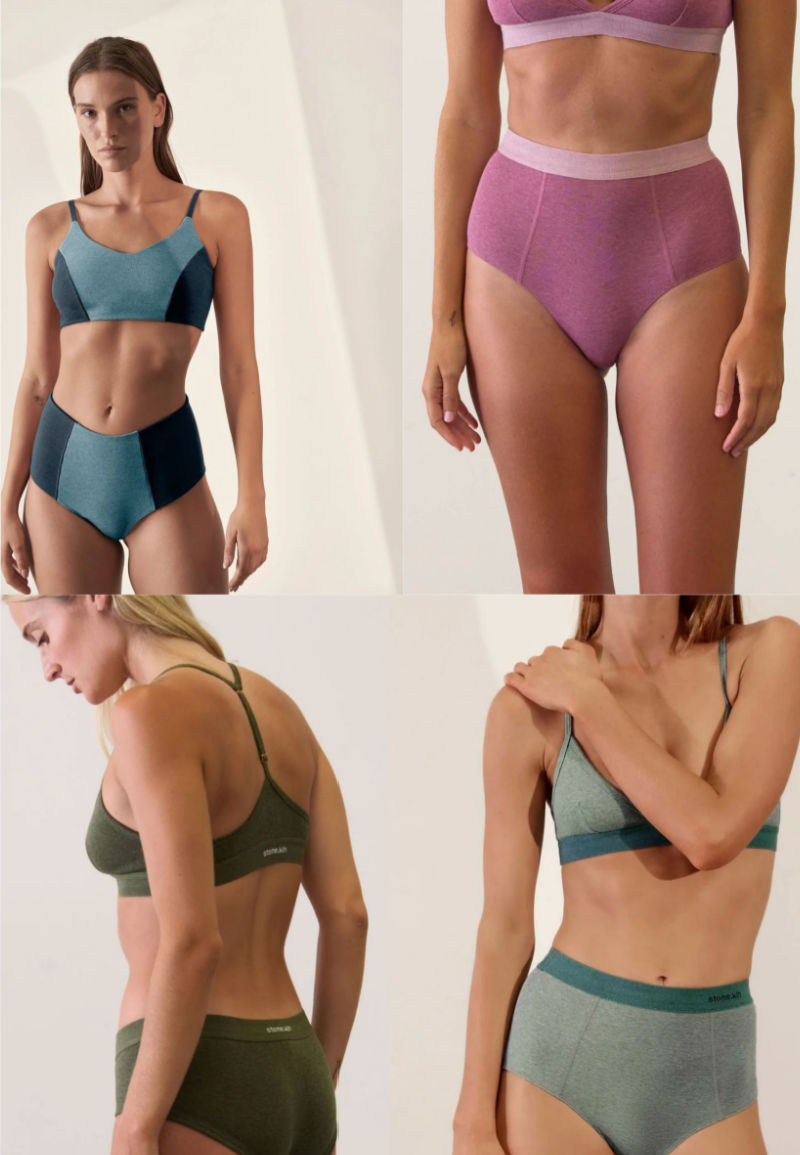
Stonekin makes plenty of earthy neutrals, but they also offer colors like Lake, Papaya, Rust, Mustard, Teal, and Pandanus – and some of my favorite pieces are the two-toned styles that mix them together. They feel a little more fun than the typical organic-cotton basic.
They’re Australian, they use Australian cotton, and the whole collection has a relaxed, coastal feel that makes sense for the brand.
Their briefs and bralettes are made with 95% GOTS-certified organic cotton and 5% elastane. That’s right in the range I’m comfortable with: mostly natural fiber, with just enough stretch to help with fit and shape retention.
They carry several different cuts, including low-rise briefs, high briefs, cheekies, thongs, triangle bralettes, scoop-back bralettes, and bodysuits that have a bit of a unique style compared with, for example, simple mid-rise briefs.
The brand emphasizes Australian-grown cotton and supports family-run farms, and they’ve put thought into the dyeing process, too. Their underwear is made with natural dyes, with third-party certification providing additional screening for substances like banned azo colorants, PFAS, lead, and cadmium.
One practical thing to know before ordering: Stonekin offers free shipping over its stated threshold, but international customers may still be responsible for import duties or customs charges depending on the destination country. Those fees aren’t included in the shipping price and can vary by location.
For me, Stonekin made the list because they’ve managed to combine the certifications and material standards I’m looking for with pieces that have a distinctive, fun style.
I especially like the two-toned bras and briefs – they’re beautiful, refreshingly colorful, and have an easy surfer/coastal feel that makes them stand out from the more minimalist undie options in this guide.
The Very Good Bra – Best Plastic-Free, Vintage-Inspired Basics
Best for: Plastic-free bras and underwear with a feminine, vintage-inspired feel
Materials: 100% organic cotton or Lenzing TENCEL™, depending on the style; natural rubber/organic cotton elastic; cellulose sewing thread
Certifications: Certified B Corp; OEKO-TEX-certified inks/components where noted
Synthetic content: None in the bras and underwear themselves; removable pads offered with some V for Victory bras are polyester
Sizes: Bras are available in 34 sizes, depending on style; underwear sizing varies by cut
Price: Bras are generally around $60-99 and briefs around $30-40 when I checked
Why The Very Good Bra Made The List
The Very Good Bra – which, as you’ve already figured out, also makes underwear – is one of the more unusual companies on this list.
Founder Stephanie Devine started looking for better options after going through breast cancer treatment and finding that she couldn’t source a wire-free bra made with natural fibers in a proper cup size. That experience eventually led her to create The Very Good Bra, with the goal of making lingerie without the polyester, nylon, spandex, and other synthetic materials.
And her investment in getting the details right really comes through.
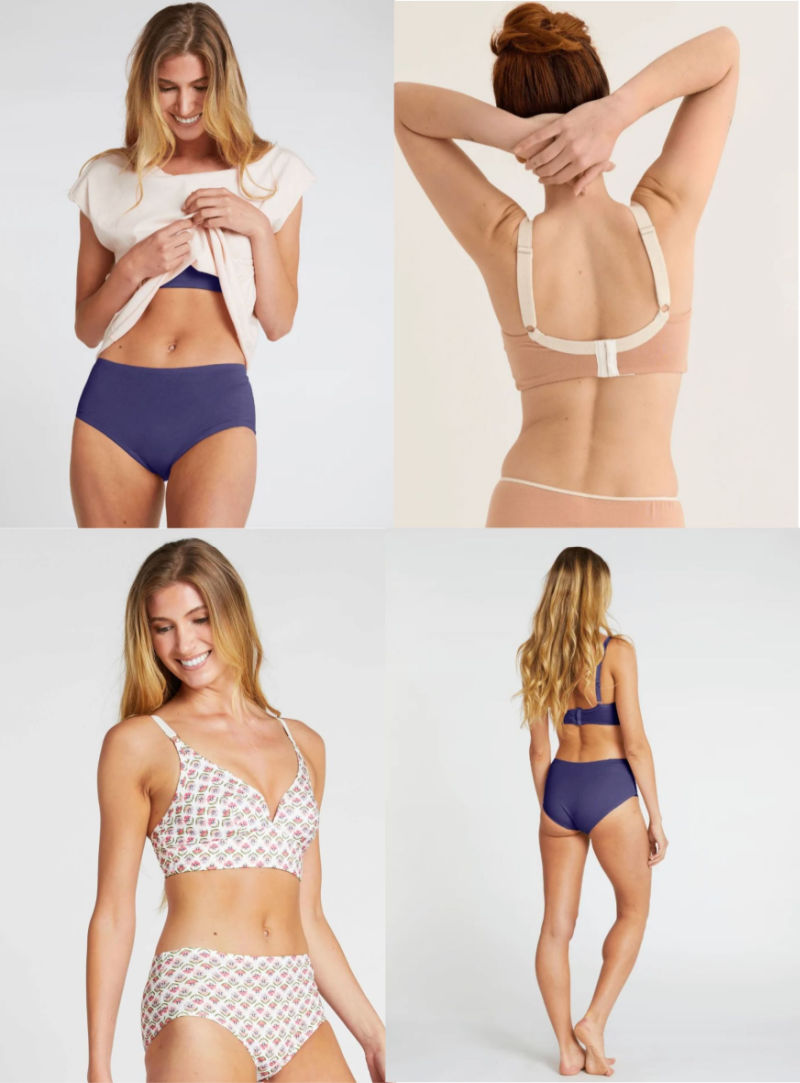
The bras have a beautiful vintage-inspired shape, but they don’t feel stuck in the past. Colors like Poppy, Sage, Wisteria, and Rum & Raisin give them a fresh, happy feel, and certain versions of the V for Victory Bra (latte and rum raisin) include removable pads – which is surprisingly hard to find in natural-fiber bras. The pads themselves are polyester, but they’re removable, so the rest of the bra remains plastic-free and can be separated from the pads at the end of its life.
The underwear lineup includes Very Big Knickers, Big Knickers, High-Leg Briefs, Regular Briefs, and The Very Good Undies, with options made from either organic cotton or 100% Lenzing TENCEL™, which is made from eucalyptus using a similar process to the bamboo I recommend.
What really sets this brand apart, though, is everything you don’t see on the main fabric label.
A garment that contains 5% elastane may still be mostly natural fiber, and that’s a tradeoff I’m generally comfortable with. But talking with Stephanie made me realize how much work goes into eliminating that last little bit of synthetic material.
Instead of conventional elastic, The Very Good Bra uses natural rubber knitted into organic cotton. They also use cellulose sewing thread and avoid synthetic components wherever possible, so the entire garment – not just the main fabric – is designed with what happens at the end of its life in mind.
When our kids were little, my husband and I ran a 40-acre farm with chickens, goats, a garden, mushroom logs, and some truly enormous compost bins.

I can confidently say I never put underwear in them, but if I’d owned pieces made this way and they’d reached the end of their useful life, I probably would have. 😄
Stephanie has actually tested the garments in a worm farm, where the worms were able to break them down completely. As she put it to me, worms are a pretty good test because they won’t eat synthetic fibers.
That doesn’t mean the company labels its products as “compostable,” though – and this is where the company’s commitment to integrity over marketing spink comes through.
Stephanie told me they spent a lot of time trying to develop a meaningful standard for post-consumer textile compostability. The problem is that once a garment has been washed and worn, detergents, fabric softeners, and other laundry products introduce variables that the manufacturer can no longer control.
So even if every component of a garment is capable of breaking down, there currently isn’t an agreed-upon testing standard that accounts for everything that may be added to it after purchase.
So, instead of relying on a broad “compostable” claim, The Very Good Bra focuses on removing synthetic materials in the first place and designing pieces that can break down at the end of their useful life under appropriate conditions.
Of course, the best part is they’ve managed to do all of that while making pieces with a beautiful vintage feel in gorgeous colors.
While Stephanie and I were emailing, she offered to send me the V for Victory Bra WIth Removable Pads in Latte along with a matching pair of Very Big Knickers.
The bra fit so much better than anything I’ve ever tried on in a store, even after going through the process of having someone help me find the “right “size. I was between sizes in the Very Big Knickers and decided to size up because I don’t like snug elastic around my thighs. That was the right call, and I really like the fit.
These pieces are unlike anything else I own, and I wasn’t sure if I’d like them as much in-person as I did in theory.
Turn out, I like them even more.
Subset – Best For Fit Variety & Recycling
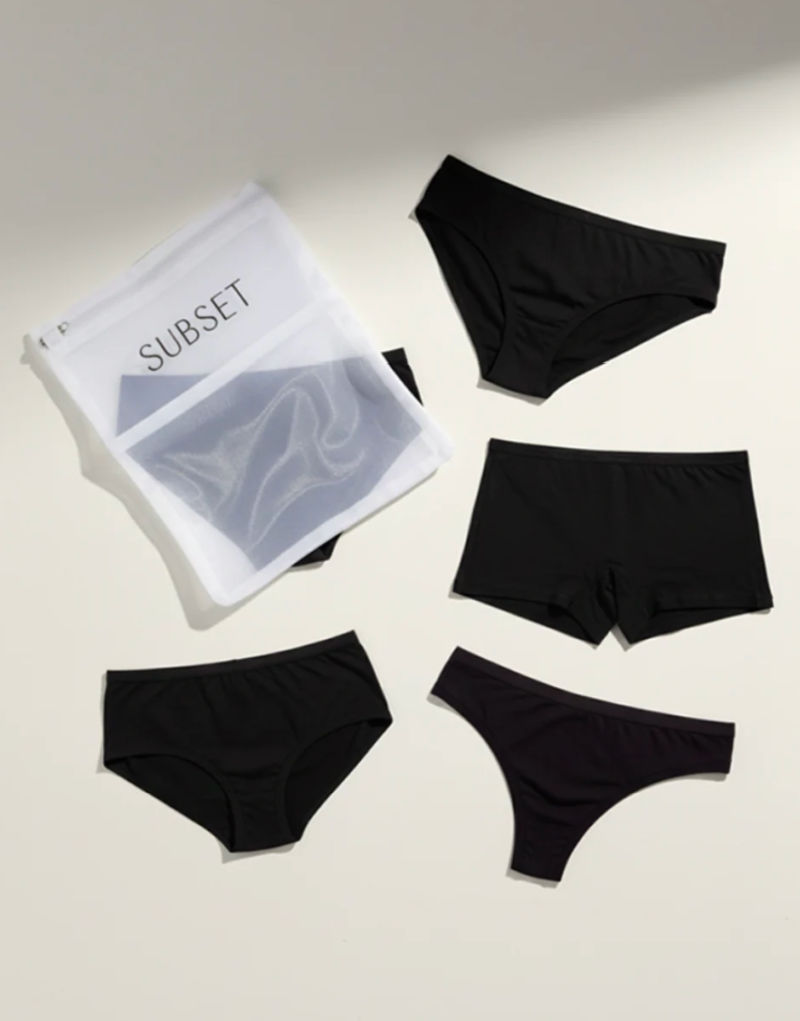
Best for: Trying different cuts to find your favorite fit, plus an easy textile recycling option
Materials: Underwear fabric is 95% certified organic cotton and 5% elastane; elastic components vary by style
Certifications: GOTS-certified supply chain; Fair Trade Certified manufacturing
Synthetic content: 5% elastane in the main fabric, plus nylon/elastane in waistbands and some leg elastics
Sizes: Most underwear styles are available in XS-3XL; bras offer additional sizes for more cup room
Price: Individual underwear is around $20; the five-style Starter Set is $85; Keyhole Soft Bras are around $62 when I checked
Why Subset Made The List
Subset is one of my favorite options for anyone who isn’t quite sure which underwear cut they actually like.
They make thongs, bikinis, hipsters, briefs, and shorties, and their Starter Set includes one of each plus a lingerie bag. So instead of ordering six pairs of a style and discovering that you’re apparently not a bikini person after all, you can try the whole lineup first.
I started with their Low-Rise Bikini because it came in a color I wanted to try The leg elastic felt a little snug when I first put it on, but it has relaxed over time and I like the fit much better now.
On my next order, I’m planning to try the hipster. Unlike the bikini I bought, it uses a self-edge leg hem instead of elastic, so I’m curious to see how that changes the feel and fit. Subset also uses that elastic-free leg construction on its thong and shortie styles.
The main fabric for all these styles is 95% certified organic cotton and 5% elastane. The waistband is nylon/elastane, and styles with leg elastic contain additional nylon and elastane there too.
They also make several soft bras, including the Keyhole Soft Bra, which has adjustable straps, a hook-and-eye back, double-lined cups, and an expanded cup size range . The bra fabric is also 95% organic cotton and 5% elastane, and the straps, band, closure, and hardware are made with recycled synthetic materials.
Another thing that sets Subset apart is its recycling program.
The company started recycling intimate apparel back in 2018 and has since expanded the program through Trashie. Their Take Back Bag costs $20 and can hold up to 15 pounds of clean clothing and textiles in any condition – including underwear, bras, socks, sheets, towels, and items from other brands.
Once you register and send the bag in, you earn 20% off your next Subset order. So if you were already planning to spend around $100 on underwear, the discount essentially covers the cost of the bag – while giving you a way to divert quite a lot of worn-out clothing and textiles from the landfill.
The items are sorted to find the best available next use. Depending on their condition and material, that may mean reuse or donation, downcycling into things like insulation or furniture batting, or – in some cases – recycling into new textiles.
Subset says its recycling program has now diverted more than 2 million items, which is pretty impressive (at least to me).
On the production side, Subset uses a GOTS-certified supply chain, and its manufacturing facility in India is Fair Trade Certified. The company also requires its Tier 1 and Tier 2 manufacturers to sign a Supplier Code of Conduct covering things like wages, working conditions, and the right to organize.
They also release limited-edition colors throughout the year, which is how they got me in the first place. 😄
Overall, I think Subset can be a good place to start if fit has been the frustrating part of switching to natural-fiber underwear. There are enough cuts to experiment with, the Starter Set makes that experimentation easier, and the recycling program gives you somewhere to send the pairs you’re finally ready to retire.
Organic Basics – Best For Mixing & Matching Styles
Best for: A wide range of natural-fiber underwear and bra styles
Materials: Many Core styles are 95% organic cotton and 5% elastane; Soft Touch styles use TENCEL™ Lyocell blends. Other collections use recycled synthetics, so check individual product details.
Certifications: Many products are GOTS certified; Organic Basics also uses OCS, GRS, and other product-specific certifications
Synthetic content: Varies significantly by collection
Sizes: Many underwear styles extend from XXS-XXXL or XXXXL; bra sizing varies by style
Price: Around $15-$28 for underwear and $24-$60 for bras when I checked
Why Organic Basics Made The List
Remember going to an actual store and digging through bins and racks of underwear until something caught your eye?
Shopping at Organic Basics feels a little like that to me.
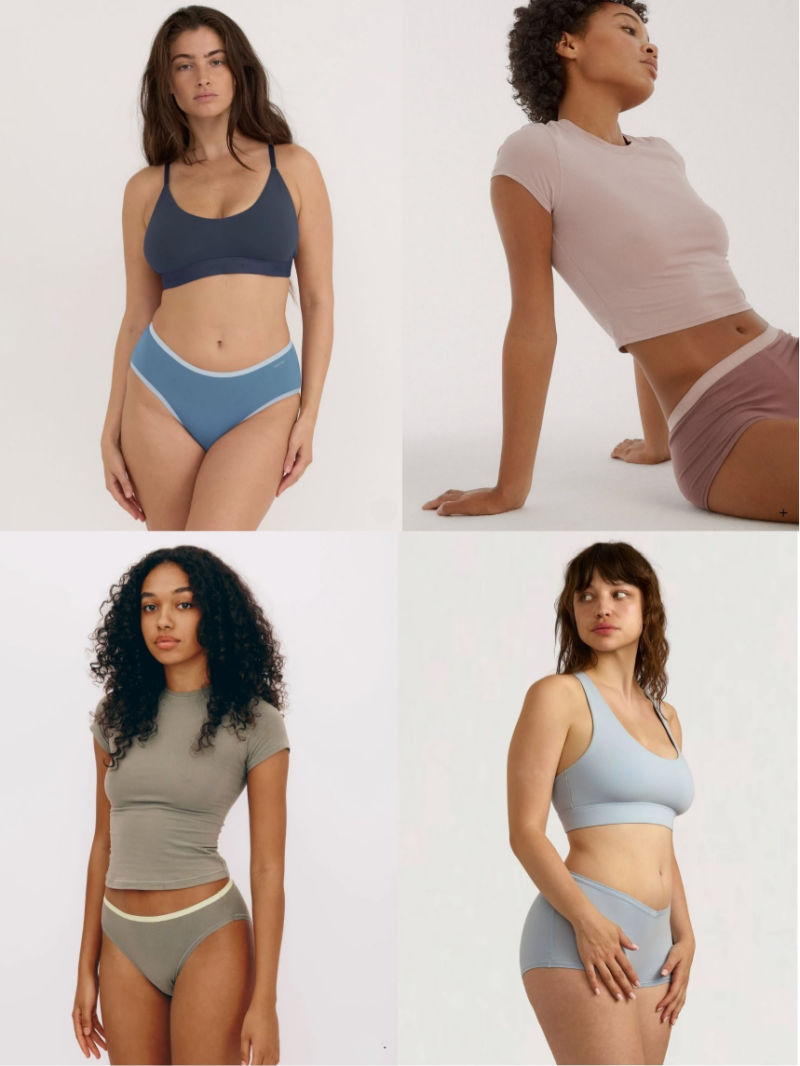
They have a lot of options – briefs, high-leg briefs, Brazilian cuts, thongs, ribbed styles, bralettes, wireless bras, padded bras, and more, often in several colors and multi-packs.
The one thing to know upfront is that, despite the name, not everything Organic Basics sells is made with organic cotton – or even necessarily natural fibers.
Some collections are made with recycled nylon and other synthetics, but they do also have a huge selection of styles that are made with 95% organic cotton and 5% elastane. They also offer a Soft Touch collection that uses TENCEL™ Lyocell, which gives you another low-plastic option with a smooth, silky feel.
In other words, this is definitely a brand where I recommend checking the materials on the individual product page rather than assuming everything fits the same criteria.
The good news is that they make that pretty easy.
Their Core underwear collection includes a wide range of organic cotton styles, and many are GOTS certified. The certified products are clearly labeled on the product page, which makes it easy to quickly check anything you’re interested in.
Their GOTS Certified Core Briefs, for example, are made with 95% organic cotton with 5% elastane, and they come in a wide range of sizes and colors. The same collection includes high-leg briefs, Brazilian styles, ribbed options, thongs and several different bra shapes.
If you find a style you like, they also offer discounted multi-packs for many of the basics, which makes it easier to stock up without paying full price for every pair.
For me, the best part about shopping at Organic Basics is that it feels like shopping in a bustling department store during the holidays. There are so many colors and styles, and a lot of clothing options worth browsing, too.
Just remember to read the product details before you hit “add to cart.”
Cottonique – Best For Ultra-Sensitive Skin
Best for: Anyone trying to avoid latex, spandex, dyes, conventional elastic, or other common clothing irritants
Materials: 100% GOTS-certified organic cotton on many styles; some products use latex-free/spandex-free elastic fully wrapped in organic cotton
Certifications: GOTS-certified organic cotton; OEKO-TEX® STANDARD 100 thread on many styles; selected products also carry MyMicrobiome textile certification
Synthetic content: Some styles contain none; others use synthetic elastic, polyester-core thread, or plastic bra components depending on the design
Sizes: Varies by style; women’s briefs extend through size 12 on some cuts, while bras are offered in band/cup sizing
Price: Around $36-$45 for most underwear 2-packs and $30-$50 for bras when I checked
Why Cottonique Made The List
Remember that little drawstring bow 🎀 I mentioned at the beginning of this article?
With Cottonique, the drawstring isn’t just a throwback.
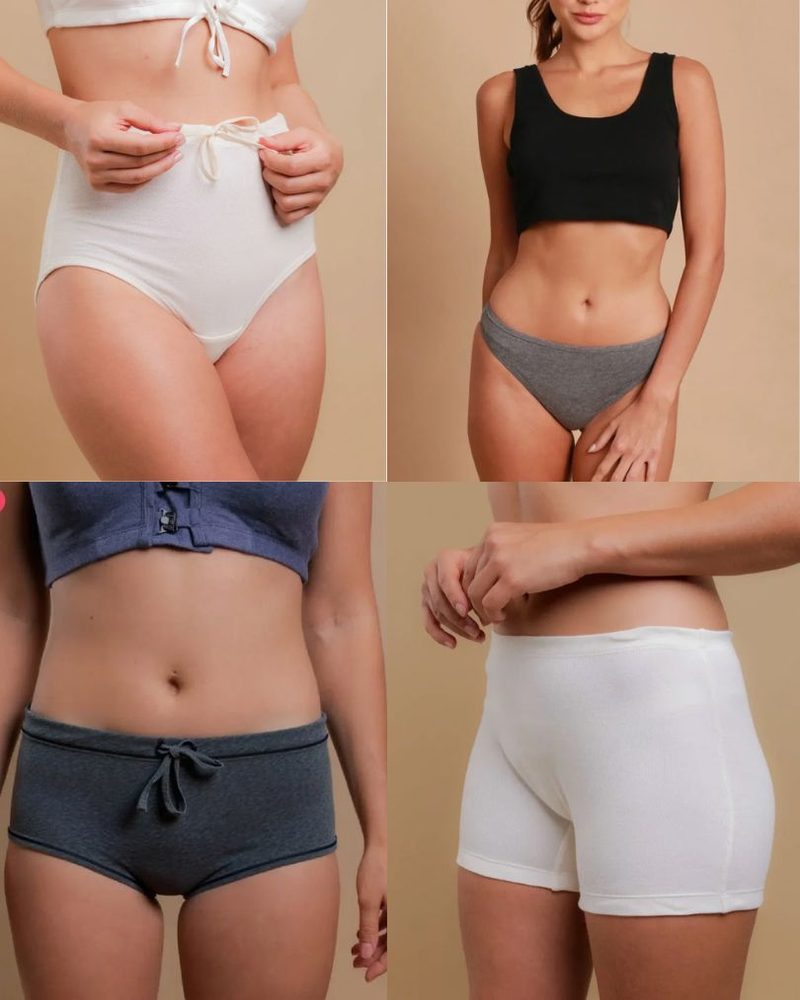
The brand makes several underwear and bra styles designed specifically for people who react to latex, spandex, elastic, dyes, or conventional textile finishes. Some of their natural-colored boyshorts and briefs are made entirely from organic cotton – including the fabric, sewing thread, labels, and drawstrings – with no elastic at all.
Other styles use a specially sourced latex-free and spandex-free elastic that’s completely wrapped in organic cotton, so the elastic itself doesn’t touch the skin.
The natural-colored collection is completely dye-free. Colored styles use GOTS-compliant low-impact dyes, and newer colorways are sewn with 100% cotton thread (some older colors use cotton-wrapped polyester-core thread).
Cottonique is very transparent about garment construction. They make it easy to find details like what kind of sewing thread is used, what the elastic is made from, which fasteners appear in the bras, and even what’s inside the removable pads.
Those pads are made with polyurethane foam, by the way. I haven’t found a brand using a truly natural alternative yet, so that seems to be one of the harder pieces to replace.
For me, Cottonique makes the most sense for someone whose priorities go beyond just choosing organic cotton – especially if latex, spandex, elastic, dyes, or textile finishes have been difficult to tolerate.
And if you want to go all-in on cotton, their drawstring styles are the best option I’ve found.
Maggie’s Organics – Best Employee-Owned Brand
Best for: Shoppers who like supporting a long-established, employee-owned organic clothing company
Materials: 90% organic cotton and 10% spandex
Certifications: GOTS certified
Synthetic content: 10% spandex
Sizes: S-XXL on the women’s bikini styles I checked
Price: Around $17 per pair or $33 for a two-pack when I checked
Why Maggie’s Organics Made The List
Maggie’s has been making organic clothing since 1992, which gives it a much longer track record than most of the brands in this guide.
One thing I really like about Maggie’s is that the company is employee-owned.
When the founder retired, ownership began transitioning to the employees. That means the people who work there have a real stake in the long-term health of the business – something I like because it naturally encourages a different kind of thinking than chasing short-term growth at all costs.
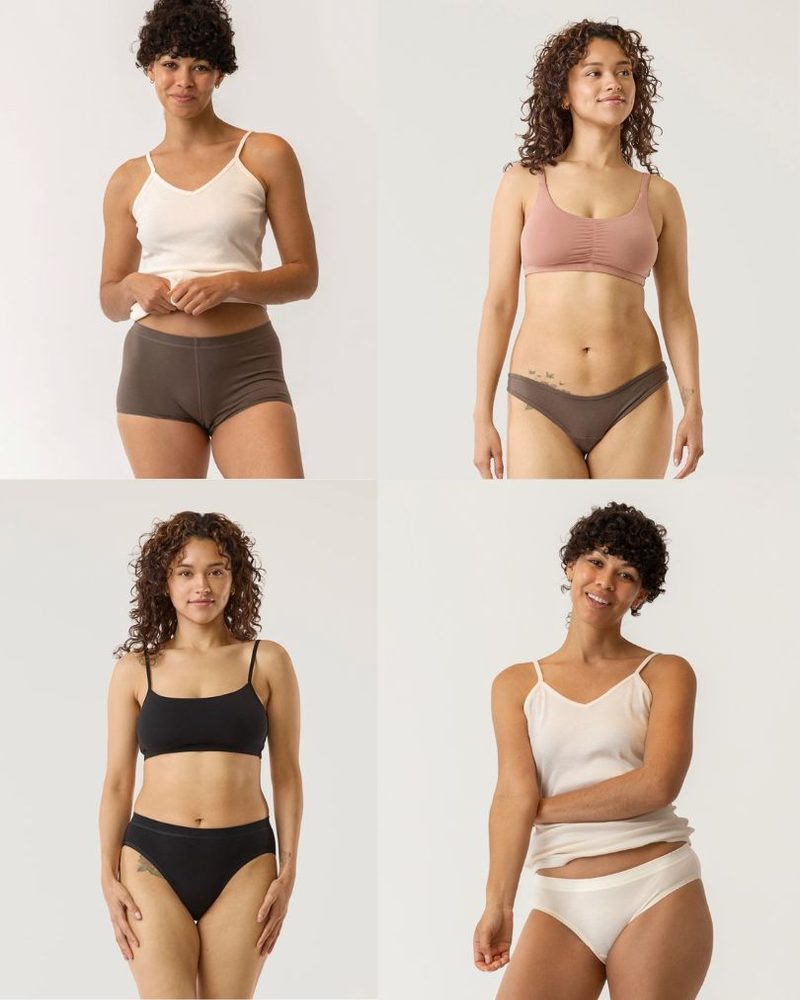
Their women’s underwear is made with 90% organic cotton and 10% spandex, which puts it within the natural-fiber percentage I look for. The styles are GOTS certified, and Maggie’s also offers a completely undyed “Natural” option. For colored styles, the company uses low-impact, colorfast dyes that meet GOTS requirements.
They make an elastic-free low-rise bikini, which could be worth a look if you dislike conventional waist or leg elastic. The fabric itself still contains 10% spandex, but the design skips separate elastic at the waist and leg openings, so there are fewer places for the garment to feel tight or dig in. The other two styles available are regular bikini and boyshort.
They also offer mens boxers and boxer briefs made with 95% organic cotton and 5% spandex.
For me, Maggie’s stands because it has been making organic basics for decades while building a company that its employees actually own.
That combination of longevity, thoughtful materials, and employee ownership is what earned it a spot here.
KENT – Plastic-Free Essentials
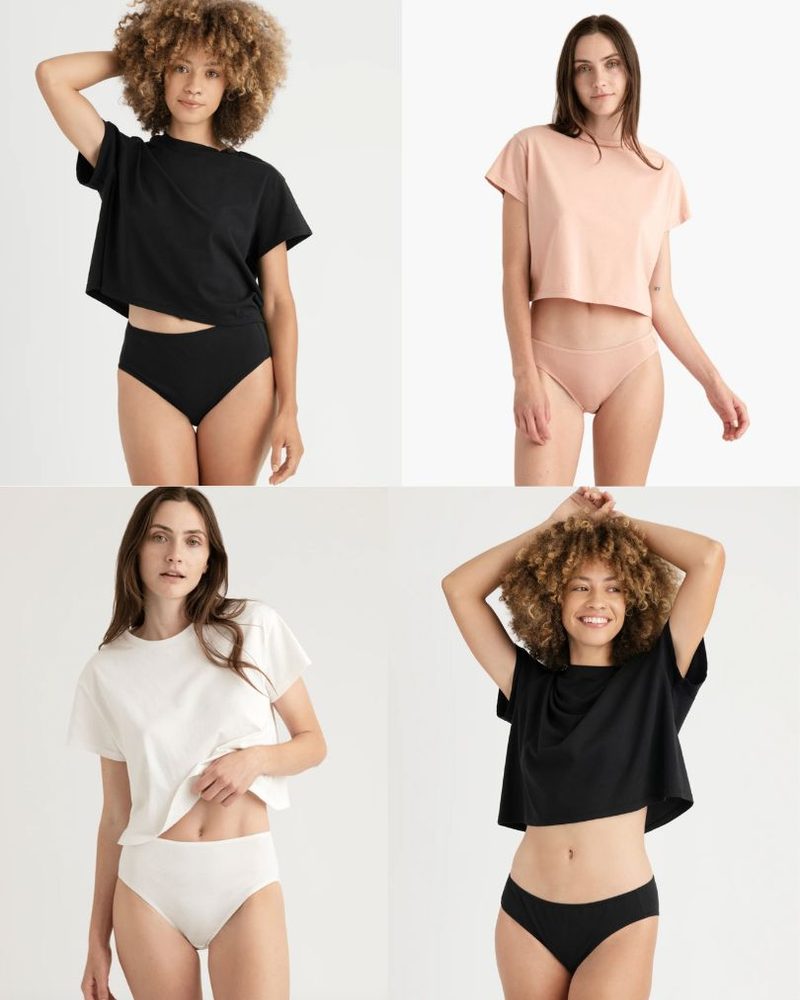
Best for: Anyone who wants underwear made without conventional spandex, elastane, nylon, or polyester
Materials: 100% GOTS-certified organic Supima cotton with plant-based thread and bio-based elastic
Certifications: GOTS-certified organic cotton; made in a Fairtrade and GOTS-certified facility
Synthetic content: No petroleum-based synthetics; uses biodegradable bio-based elastic
Sizes: XS-3XL on the women’s styles I checked
Price: Around $28 per pair; multipacks offer a lower per-pair price
Why KENT Made The List
Most of the organic cotton underwear in this guide contains a small amount of elastane or spandex blended directly into the fabric. That can make the whole garment feel smoother, stretchier, and more body-hugging.
KENT takes a different approach. The main fabric is 100% GOTS-certified organic Supima cotton, while separate bio-based elastic at the waist and leg openings helps the underwear stay in place.
That means the fit and feel are a little different from a 95% cotton, 5% elastane blend. Reviewers often describe KENT as more substantial, and the stitching as thicker or heavier than what they’re used to. Some love that sturdier feel, while others prefer something lighter and more seamless-feeling.
They offer bikinis, hipsters, boyshorts, high-cut briefs, tangas, high-waist briefs and thongs, along with undyed options. For dyed pieces, KENT uses GOTS-approved dyes, with some plant-dyed colors noted separately.
They also make soft, unlined triangle and scoop neck bras, as well as underwear and t-shirts for men.
KENT is very focused on what happens at the end of the garment’s life. KENT describes its underwear as compostable and says a pair tested with LA Compost broke down in about 90 days.
I would add one caveat, though.
As I mentioned earlier, I recently spoke with another natural-underwear founder who spent a lot of time trying to establish a meaningful post-consumer textile compostability standard. One problem is that detergents, fabric softeners, and other laundry products can introduce substances after purchase, and there still isn’t a broadly accepted testing standard that accounts for all of that variability.
So I personally think of KENT less as “guaranteed compostable in X number of days” and more as underwear designed entirely from materials that are capable of breaking down under the right conditions.
And just as importantly, that doesn’t mean the fall apart quickly. KENT underwear is designed to be stronger and last longer than conventional basics.
A Few Final Thoughts
After spending what is probably an unreasonable amount of time thinking about underwear, my biggest takeaway is that there isn’t one perfect option. 😄
For some people, 95% organic cotton with a little elastane is going to be the sweet spot because it’s gives fabric a soft, stretchy, barely-there fit. Someone else may really want to eliminate petroleum-based synthetics altogether, while someone with very sensitive skin may care most about dyes, elastic, or even sewing thread.
All totally reasonable priorities.
Thankfully, we now have quite a few options for all of those priorities without requiring a drawstring tied around the waist . . . though that’s an option too if you want it! 🎀
Keep Reading
If you’re curious about better options for the rest of your closet, I’ve got you covered there too.
My guide to non-toxic clothing brands covers everything from everyday basics to sweaters, dresses, and activewear, while my non-toxic leggings guide takes a closer look at the pairs I’ve actually worn and tested.
✋ Before You Go, Grab This Free Midlife Guide
If you’ve ever found yourself thinking, “Why doesn’t my body respond the way it used to?” . . . this guide was written for you.
Midlife can change the rules for everything from sleep and energy to workouts, recovery, body composition, and more. Knowing what’s changing can help you let go of strategies that no longer fit – and start focusing on what supports your body now.
Inside, I’ll walk you through 10 things I wish I’d known sooner, so you can make more sense of what you’re experiencing and get clearer about where to go from here.
Enter your email below and I’ll send it right over. You’ll also receive my weekly newsletter with practical wellness tips, recipes, and new guides like this one.
Sources
- Chen, Y., Bruning, E., Rubino, J., & Eder, S. E. (2017). Role of female intimate hygiene in vulvovaginal health: Global hygiene practices and product usage. Women’s Health.
- Farage, M. A. (2019). Sensitive skin in the genital area. Frontiers in Medicine
- Machado, R. M., Palmeira-de-Oliveira, A., Gaspar, C., Martinez-de-Oliveira, J., & Palmeira-de-Oliveira, R. (2015). Studies and methodologies on vaginal drug permeation. Advanced Drug Delivery Reviews