Women usually try seed cycling after hearing about it from a friend, or reading an article, or even talking to a practitioner. And once they do, many give it high marks for supporting smoother cycles, easing PMS, and feeling more balanced throughout the month.
Me? I accidentally started a loose form of seed cycling by inhaling my family’s stash of sunflower seeds in the weeks before my period . . . three months in a row.
Cravings can be cues that something needs extra support, so I always pay attention when one starts showing up consistently – beet kvass in the spring, dandelion when my detox pathways need extra love, chicken soup when my body needs easily digestible nourishment, and apparently sunflower seeds during my luteal phase.
So, when I realized my cravings aligned with the long-standing practice of seed cycling for hormonal balance, I decided to officially give it a try.
If you’re wondering what exactly seed cycling is, how it works and if there’s any research to support it, you’re in the right place. We’ll dive into all that below.
As always, none of these statements have been evaluated by the FDA, this article is not medical advice, and it is not meant to diagnose or treat any condition.
What is seed cycling?
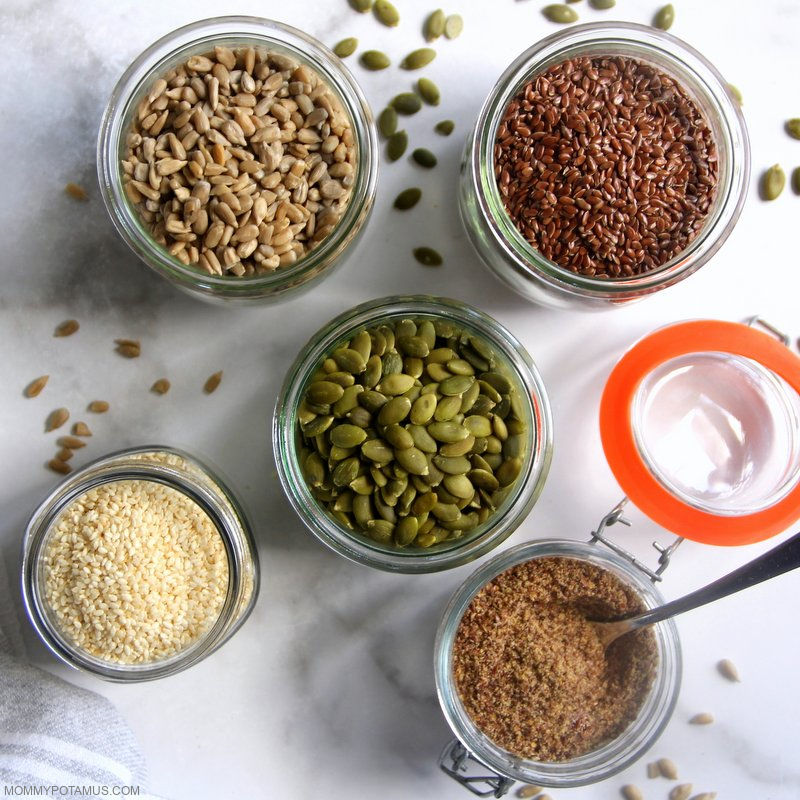
Seed cycling is the practice of eating specific seeds during the two main phases of the menstrual cycle, with the goal of supporting healthy hormone production and metabolism.
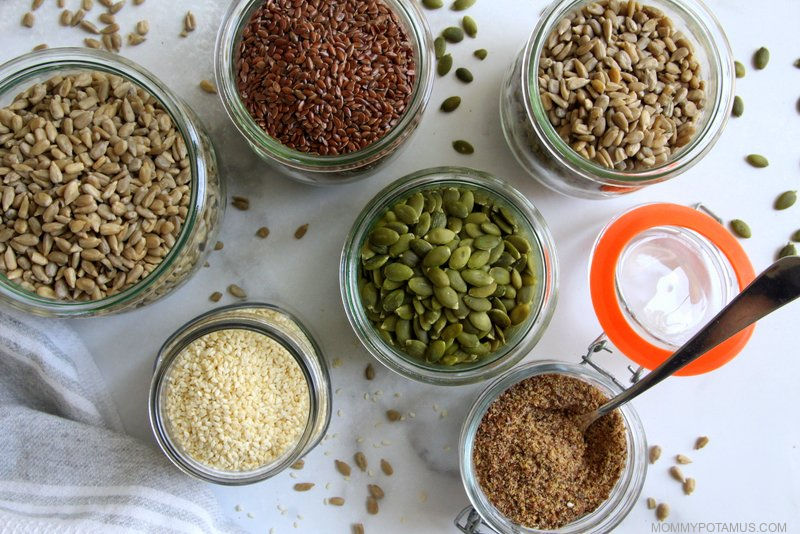
The seeds are eaten raw and freshly ground. Whole seeds often pass through the digestive tract without breaking down fully, so grinding is recommended to make their nutrients more accessible. You can enjoy them on their own or sprinkle them into smoothies, salads, or yogurt.
- Phase 1 – Follicular Phase: From the first day of your period until ovulation, pumpkin seeds and flax seeds are consumed to help support healthy estrogen levels. Some women track ovulation closely, while others simply follow a standard 14-day timeframe for this phase.
- Phase 2 – Luteal Phase: From ovulation until the day before your next period, sunflower seeds and sesame seeds are added instead, with the goal of supporting progesterone. Again, some follow their body’s cues while others stick to a standard 14-day phase.
Seed cycling can be used at any stage of a woman’s life, however, most women use it to support a specific goal – an easier perimenopause, the restoration of natural rhythms after coming off birth control, or as part of a broader hormone-support plan to address symptoms like acne, irregular periods or PMS, for example.
Even after menopause, when monthly cycles have ended, some women incorporate these seeds for their lignans and other nutrients that may influence estrogen metabolism. As a bonus, the seeds are rich in nutrients that promote overall vitality.
So, does it work?
There’s encouraging science behind the seeds themselves, but direct research on the full “seed cycling” protocol is still limited. Here’s what we know (and what we don’t).
1) Lignans may gently modulate estrogen activity
Flax and sesame seeds are rich in lignans (a type of phytoestrogen). In humans, lignans may influence estrogen metabolism and can also interact with estrogen receptors. (1)(2)(3)
For example, a small trial shows ground flaxseed increases the 2-hydroxyestrone:16α-hydroxyestrone ratio in postmenopausal women, a commonly discussed marker of favorable estrogen metabolism in the DUTCH Test. (1)
A similar effect has also been observed in premenopausal women. In a randomized crossover study of 16 women, consuming 10 grams of flaxseed daily significantly increased the urinary 2:16 ratio. (4)
In plain English, these studies suggest that flax and sesame seeds may influence the way your body metabolizes estrogen, potentially shifting it toward what’s generally considered a more favorable pathway.
Practical note: Most studies use ground (milled) seeds because they’re better absorbed. Whole seeds can pass through intact; grinding substantially increases enterolignan bioavailability.
2) Micronutrients may support luteal-phase progesterone
Seeds contain minerals and antioxidants that are tied to ovarian function. Pumpkin and sesame seeds are rich in zinc, which is involved in steroid hormone synthesis and follicle development. Zinc deficiency disrupts normal ovarian signaling. (5)
Sunflower seeds – one of our luteal-phase seeds – are rich in vitamin E, a nutrient linked in a small human study to improved luteal function, possibly by supporting blood flow to the corpus luteum. (6)
What human studies show so far
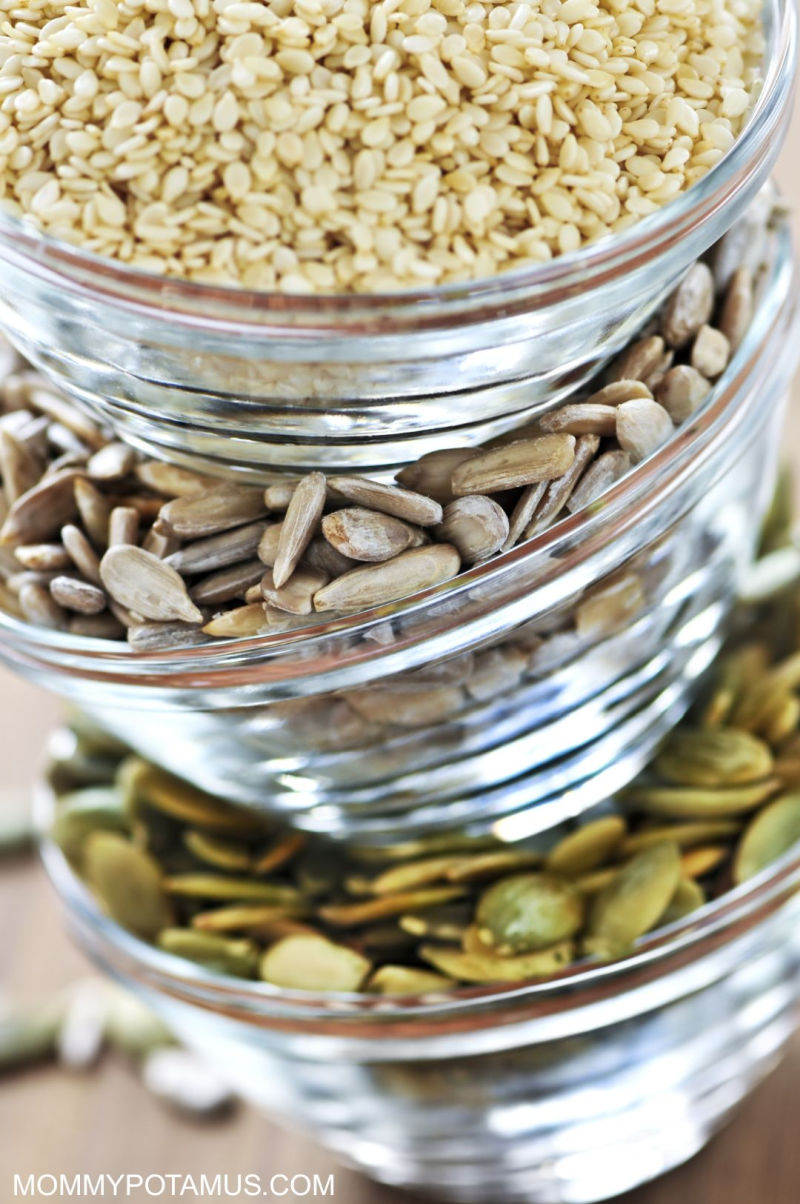
A small clinical trial testing seed cycling for menstrual regularity, cramps and premenstrual symptoms was recently completed, although results have not yet been posted. Here’s what we know so far:
Flaxseed & Cycle Quality
In a small study of 18 women, researchers compared 36 menstrual cycles with daily flaxseed to 36 cycles without it. All 36 flaxseed cycles included ovulation, while three of the no-flax cycles did not.
The luteal phase (the second half of the cycle) also averaged about one day longer with flaxseed, while overall cycle length stayed about the same. Progesterone itself did not significantly increase, although the progesterone-to-estradiol ratio did. (7)
Sesame In Postmenopause
In a small study of healthy postmenopausal women, consuming 50 grams of sesame seed powder daily for five weeks was associated with a 72% increase in urinary 2-hydroxyestrone, a less active estrogen metabolite produced through the 2-OH pathway. If you’ve ever done a DUTCH Test, you may be familiar with this pathway – it’s generally considered the more “favorable” or preferred pathway within the test’s framework. The study also noted improvements in antioxidant status and cholesterol, along with a modest rise in SHBG, although the SHBG difference compared with placebo did not quite reach statistical significance. (3)
The SHBG finding is interesting, but I wouldn’t automatically label the increase good or bad. SHBG binds hormones such as estrogen and testosterone and influences how much is freely available to tissues, so the significance of a change depends on the larger hormonal picture. That’s one reason some women choose to take a closer look at their overall hormone patterns through testing such as the DUTCH Test, sometimes paired with serum markers like SHBG that the DUTCH Test doesn’t measure.
PCOS & Seed Cycling
In a clinical trial of women diagnosed with PCOS, participants who followed seed cycling (rotating flax, pumpkin, sesame and sunflower seeds) alongside a portion-controlled diet for 12 weeks saw larger reductions in FSH and LH than those who followed a portion-controlled diet paired with metformin.
Since both groups changed portion size alongside another factor (seed cycling or metformin), it’s hard to say exactly how much the seeds directly contributed. Still, the seed-cycling combination produced more favorable changes in these hormone markers in this small study. (8)
Why These Seeds Pair with Each Phase
The reasoning behind the traditional pairings goes something like this:
Follicular (period start → ovulation): Flax + pumpkin. Flax lignans are thought to support estrogen metabolism as levels rise; pumpkin adds zinc, laying groundwork for healthy progesterone production later.
Luteal (ovulation → next period): Sesame + sunflower. Sesame brings more lignans (helpful when we don’t want estrogen dominance late in the cycle), while sunflower is naturally rich in vitamin E, a nutrient associated with luteal support in small trials.
How To Seed Cycle
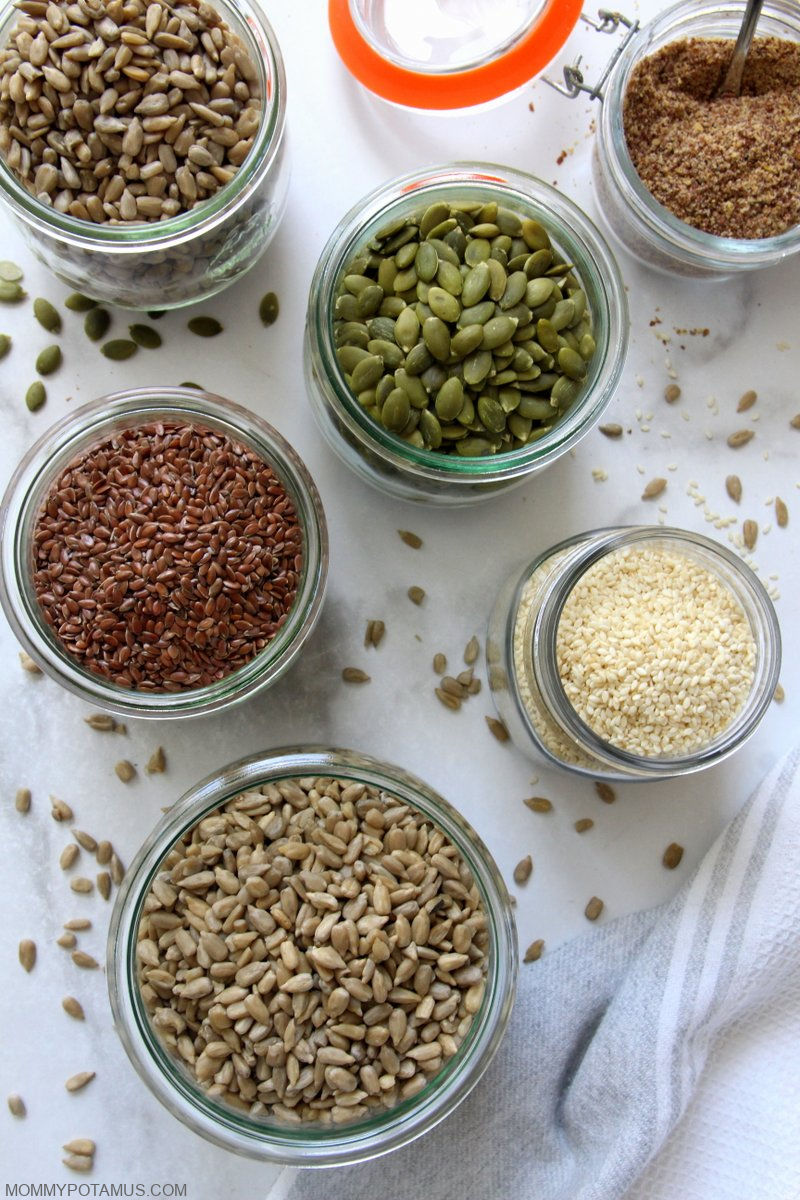
In principle, seed cycling is simple – but knowing a bit about your menstrual cycle helps you make the most of it. The cycle has two main phases: the follicular phase (before ovulation), when estrogen naturally rises, and the luteal phase (after ovulation), when progesterone rises substantially and estrogen typically has a smaller second peak before both decline ahead of menstruation.
Here’s how seed cycling typically works, alongside amounts used in research:
Phase 1 – Follicular (Day 1 of period → ovulation)
- Standard practice: 1–2 tablespoons each of ground flaxseed and pumpkin seeds daily.
- Research reference: Flaxseed studies have used 5–25 g/day (~1–4 tablespoons) of ground flaxseed. (9)(3)
Phase 2 – Luteal (Ovulation → day before period)
- Standard practice: 1–2 tablespoons each of ground sesame and sunflower seeds daily.
- Research reference: Traditional seed-cycling protocols generally use 1–2 tablespoons, which is substantially less than the 50 g/day (roughly 6 tablespoons) used in the sesame study. (3)
Tips for Best Results:
- Grind fresh every week — Whole seeds often pass through undigested; grinding increases nutrient availability.
- Store smart — Keep ground seeds in an airtight container in the fridge to preserve delicate fats and prevent rancidity.
- Timing: If you don’t track ovulation, follow a 14-day rotation for each seed pair. If you track ovulation (via your Oura ring, an app or cervical mucus / temperature tracking), you may prefer to switch seeds after ovulation has been confirmed.
Other Health Benefits of Seeds
There’s good nutritional logic – and some human data – behind using seeds for hormone support, but they’re also nutrient-dense foods that benefit overall well-being.
- Flaxseed – Rich in the omega-3 fat alpha-linolenic acid (ALA), several B vitamins, and minerals like copper, magnesium, and zinc.
- Sesame seeds – Provides minerals such as selenium, iron, copper, zinc, manganese, and calcium, plus lignans.
- Sunflower seeds – Excellent source of vitamin E and selenium, both important antioxidants.
- Pumpkin seeds – High in antioxidants, plus minerals like zinc and magnesium that support immune, heart, and metabolic health.
Dialing In Your Strategy
Women’s hormones work like a symphony, and they respond to everyday inputs – what we eat, how we move, how well we sleep, how we handle stress, and even what we’re exposed to in our environment. (10) Those levers can nudge our hormones toward balance and harmony . . . or out of it.
Seed cycling isn’t meant to stand alone. If you decide to try it it, pair it with other cycle-supportive habits:
- Prioritize restorative sleep – Support your circadian rhythm for better hormone regulation.
- Eat in sync with your cycle – Adjust protein, carb, and fat balance as energy and hormone needs change (more in my Infradian Rhythm guide).
- Move intentionally – Incorporate resistance or weight-bearing exercise (a weighted vest can be a great option) to support bone, muscle, and metabolic health. Also, if you’re walking daily and it hasn’t moved the needle as much as you hoped, this method may help.
- Manage stress – Vagus nerve exercises, breathwork, or grounding can help lower cortisol’s impact on reproductive hormones.
What about the hormones themselves?

The goal of seed seed cycling in perimenopause is to support the body as it adapts to a changing hormonal environment, but what about the hormonal environment itself?
As hormone production begins to change, some women also choose to consider hormone therapy alongside the foundational things they’re already doing.
The challenge is that “hormone therapy” isn’t just one hormone, one formulation, or one method of delivery.
That’s why I created The Informed Woman’s Guide to Hormone Therapy. In this self-paced course, I’ll walk you through why hormone therapy has become so confusing, explain the options in plain English, and help you sort through what matters most.
The goal is to help you reach the point where your next conversation with a provider feels less like trying to catch up – and more like discussing options you already understand.
✋ Before You Go, Grab This Free Midlife Guide
If you’ve ever found yourself thinking, “Why doesn’t my body respond the way it used to?” . . . this guide was written for you.
Midlife can change the rules for everything from sleep and energy to workouts, recovery, body composition, and more. Knowing what’s changing can help you let go of strategies that no longer fit – and start focusing on what supports your body now.
Inside, I’ll walk you through 10 things I wish I’d known sooner, so you can make more sense of what you’re experiencing and get clearer about where to go from here.
Enter your email below and I’ll send it right over. You’ll also receive my weekly newsletter with practical wellness tips, recipes, and new guides like this one.
Sources
- Brooks, J. D., Ward, W. E., Lewis, J. E., et. al. (2004). Dietary flaxseed alters urinary estrogen metabolites in postmenopausal women to a pattern more indicative of decreased breast cancer risk. American Journal of Clinical Nutrition.
- Penttinen, P., Jaehrling, J., Damdimopoulos, A. E., et. al. (2007). Diet-derived polyphenol metabolite enterolactone is a tissue-specific estrogen receptor activator. Endocrinology.
- Wu, W.-H., Kang, Y.-P., Wang, N.-H., et. al. (2006). Sesame ingestion affects sex hormones, antioxidant status, and blood lipids in postmenopausal women. Journal of Nutrition.
- Haggans, C. J., Travelli, E. J., Thomas, W., et. al. (2000). The effect of flaxseed and wheat bran consumption on urinary estrogen metabolites in premenopausal women. Cancer Epidemiology, Biomarkers & Prevention.
- Liu, W.-J., Li, L.-S., Lan, M.-F., et. al. (2024). Zinc deficiency deteriorates ovarian follicle development and function by inhibiting mitochondrial function. Journal of Ovarian Research.
- Takasaki, A., Tamura, H., Taniguchi, K., et. al. (2009). Luteal blood flow and luteal function. Journal of Ovarian Research.
- Phipps, W. R., Martini, M. C., Lampe, J. W., et. al. (1993). Effect of flax seed ingestion on the menstrual cycle. Journal of Clinical Endocrinology and Metabolism.
- Rasheed, N., Ahmed, A., Nosheen, F., et. al. (2023). Effectiveness of combined seeds (pumpkin, sunflower, sesame, flaxseed) as adjunct therapy to treat polycystic ovary syndrome in females. Food Science & Nutrition.
- Nowak, W., Jeziorek, M., Moschonis, G., et. al. (2023). The Role of Flaxseed in Improving Human Health. Healthcare (Basel).
- Sharma, R., Biedenharn, K. R., Fedor, J. M., et. al. (2013). Lifestyle factors and reproductive health: taking control of your fertility. Reproductive Biology and Endocrinology.